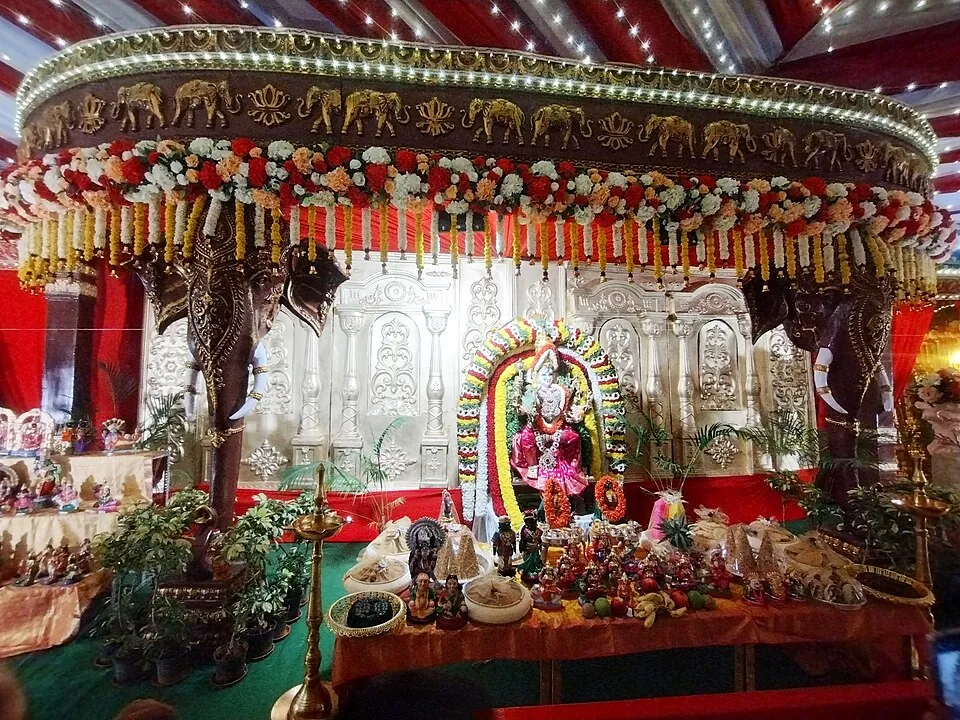
Navarātri, Nine Nights Honouring the Goddess
Navarātri · नवरात्रि
Navarātri is an annual Hindu festival of nine nights honouring Śakti through the worship of nine forms of the goddess Durgā. Four seasonal Navarātris exist in theory, but the autumn one in the month of Āśvina, called Śāradā Navarātri, is the one celebrated most widely.
Navarātri, meaning nine nights, is a Hindu festival that honours Śakti, the divine feminine power, through the worship of nine forms of the goddess Durgā. It is observed in many different ways across the Hindu cultural world. In principle there are four seasonal Navarātris, falling in the months of Māgha, Caitra, Āṣāḍha and Āśvina, that is, roughly January to February, March to April, June to July and September to October. In practice the post-monsoon observance in Āśvina, called Śāradā Navarātri, receives the grandest celebration. Customs range from fasting and nightly worship to recitation of the Devī Māhātmya, public dance, and regional performances. The festival's exact origin is not documented, and it probably grew out of older seasonal and goddess-centred practices. Texts that give prominence to the Goddess, such as the Devī Māhātmya within the Mārkaṇḍeya Purāṇa, belong broadly to the Gupta period, which is why the date shown is approximately 500 CE. It marks the era when goddess worship was becoming a major strand of Hindu life, not a fixed founding year.