Matsya Purāṇa and the Definition of a Purāṇa
Matsya Purāṇa · मत्स्य पुराण
The Matsya Purāṇa, named for Viṣṇu's fish incarnation, is among the older and better preserved of the eighteen Mahāpurāṇas. It offers one of the earliest definitions of the Purāṇa genre through five marks, and it is unusually encyclopedic in the subjects it covers.
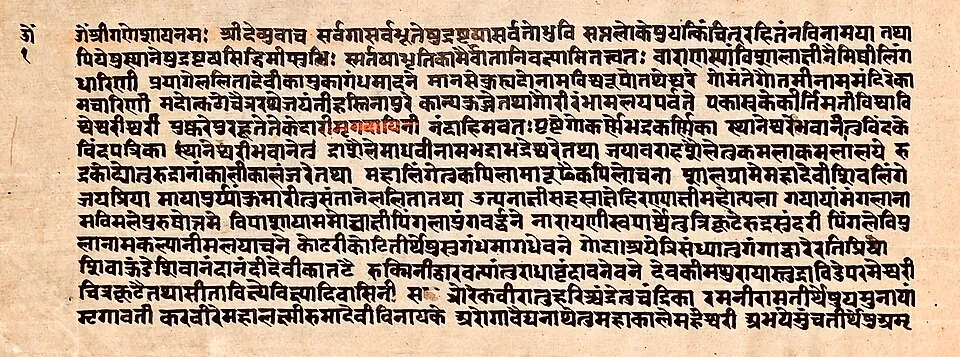
The Matsya Purāṇa is a Sanskrit work named after the half-human, half-fish form of Viṣṇu. It is counted among the oldest and best preserved Purāṇas, and while it has a Vaiṣṇava framing, Horace Hayman Wilson observed that it also contains Śaiva matter and praises many gods and goddesses together. It survives in numerous versions that differ in detail, though nearly all printed editions have 291 chapters; a Tamil recension in Grantha script has only 172. The text is valued for stating one of the earliest known definitions of a Purāṇa. A history having five features, it says, is a Purāṇa, and otherwise it is an ākhyāna, or tale. The five features are cosmogony, the later cycles of dissolution and re-creation, genealogies and stories of deities, the ages of the Manus, and accounts of the solar and lunar royal lines. Beyond these topics the Matsya ranges across many practical and religious subjects, giving it an encyclopedic character. Its composition is placed within the early centuries of the common era, but the exact period is uncertain because the text was revised repeatedly.
Sources
- Matsya Purana Wikipedia · CC-BY-SA-4.0
- Q2355918 Wikidata · CC0-1.0