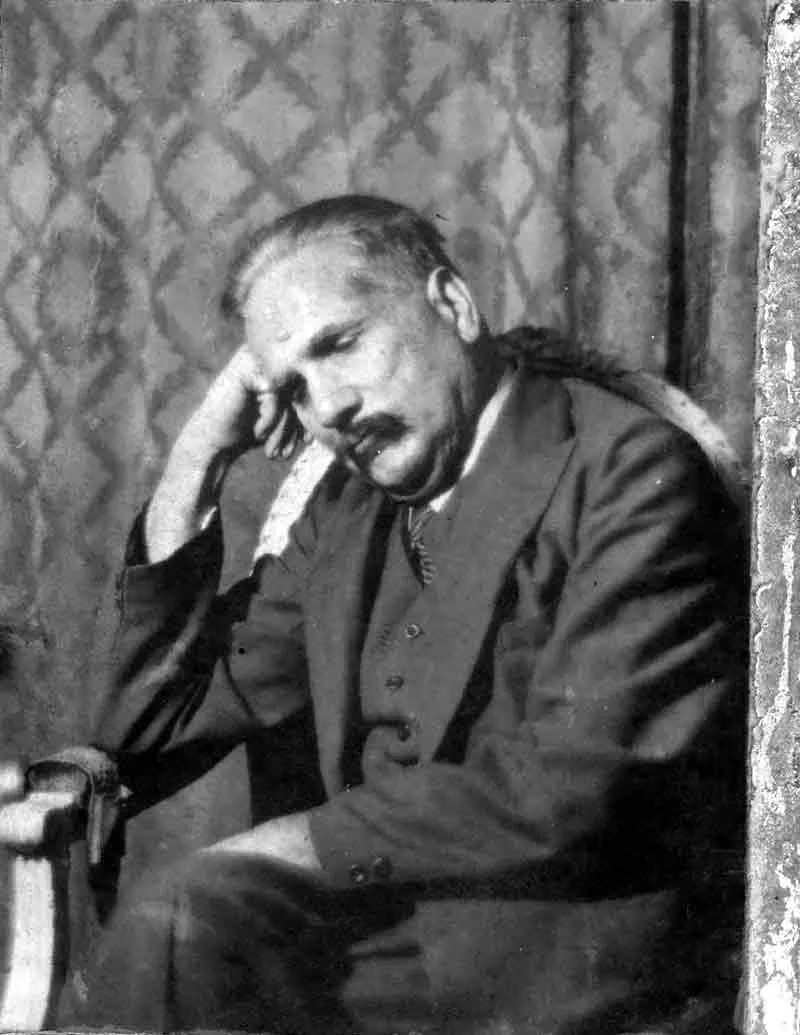
Muhammad Iqbal, Poet-Philosopher of the Subcontinent
Muḥammad Iqbāl · محمد اقبال
Muhammad Iqbal (1877 to 1938) was a poet and Islamic philosopher from Sialkot, among the most influential Urdu poets of the twentieth century. After studies in England and Germany he returned to Lahore, and his vision for Muslims in British India later inspired the Pakistan movement.
Born on 9 November 1877 in Sialkot, Punjab, Iqbal studied at Scotch Mission College there and at Government College in Lahore, then taught Arabic at the Oriental College in Lahore from 1899 to 1903, a time of prolific writing. Poems of this early phase include Parinde ki Faryād, a child's poem about a caged bird, and the patriotic Tarāna-e-Hindī. In 1905 he went to Europe, earning a second degree at Trinity College, Cambridge, qualifying as a barrister at Lincoln's Inn and taking a doctorate in philosophy at Munich with a thesis on the development of metaphysics in Persia. Returning to Lahore, he became known as Allāma, a scholar's title, and wrote in Urdu and Persian on selfhood, spiritual renewal and the destiny of the Muslim community. His vision of a cultural and political future for India's Muslims is often credited with inspiring the Pakistan movement, though how far he foresaw a separate state remains debated. He died in 1938. The date here marks his return and rise as a major voice in the decade after 1905.
Sources
- Muhammad Iqbal Wikipedia · CC-BY-SA-4.0
- Q484141 Wikidata · CC0-1.0