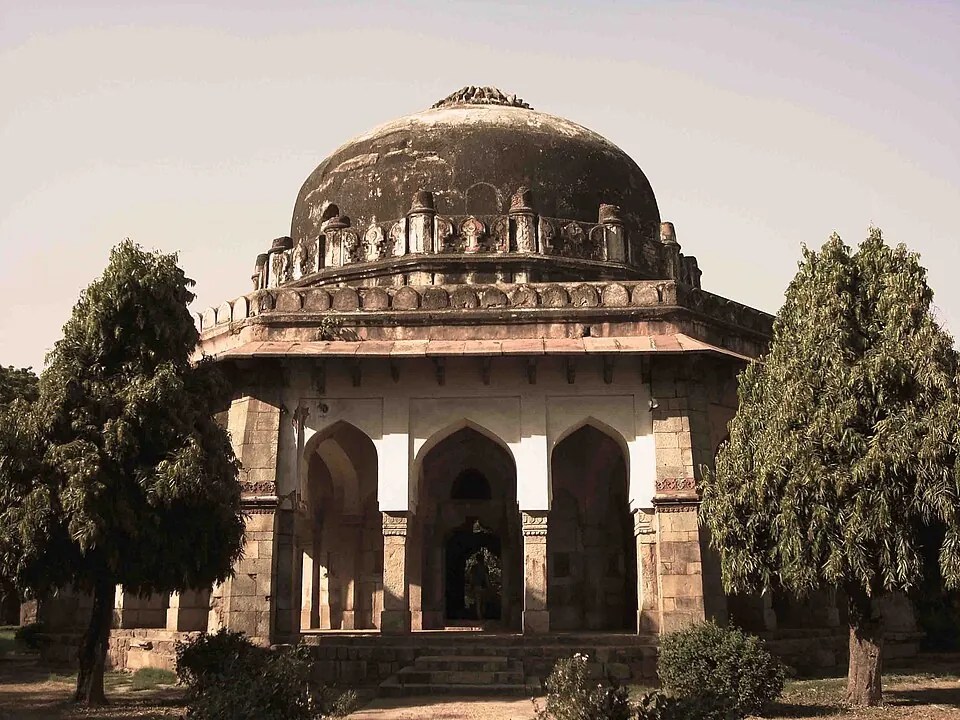
Sikandar Lodī Succeeds Bahlūl and Expands the Sultanate
Sikandar Lodī · سکندر لودی
Sikandar Lodī, second ruler of the Lodī dynasty, held the Delhi throne from 1489 to 1517. He recovered lost territory, enlarged the sultanate's reach and wrote Persian verse, leaving a diwan of about nine thousand couplets. He was also a Persian poet.
Sikandar Khān Lodī, born Niẓām Khān, succeeded his father, Bahlūl Khān Lodī, who died in July 1489, and governed from the Delhi throne until 1517. An Afghan by descent, he is considered the second and most successful sultan of the Lodī dynasty. He worked to win back lands that had once belonged to the Delhi Sultanate, and he succeeded in widening the area his dynasty controlled, bringing parts of Bihar and the middle Gangetic region under firmer authority. He also moved his court towards Agra, which later became an important city. Besides being a ruler, he composed poetry in Persian under the pen name Gulrukhī and assembled a diwan of nine thousand verses. His reign is remembered for administrative reforms, as well as for harsh religious policies in some districts. He died in November 1517 and was succeeded by his son Ibrāhīm, whose defeat at Pānīpat in 1526 would end the Delhi Sultanate and lead to the Mughal era. Sikandar's rule therefore marks the last period of real strength for the sultanate before its fall.
Sources
- Sikandar Khan Lodi Wikipedia · CC-BY-SA-4.0
- Q2597227 Wikidata · CC0-1.0