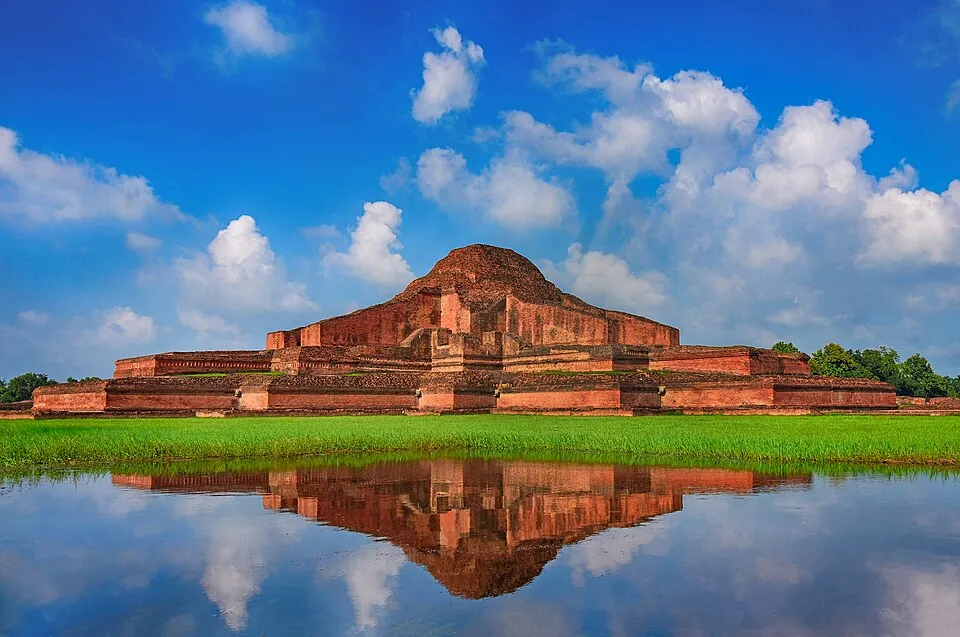
Somapura Mahāvihāra at Paharpur
Somapura Mahāvihāra · सोमपुर महाविहार
Somapura Mahāvihāra, also called Paharpur Buddhist Vihara, is a large Mahāyāna and Vajrayāna monastery in Naogaon, Bangladesh, among the best-known vihāras of the subcontinent. It was built under the Pālas in the late eighth century and entered the UNESCO World Heritage list in 1985.
Somapura Mahāvihāra, or the Paharpur Buddhist Vihara, stands at Paharpur in Badalgachhi, Naogaon District, in Bangladesh. It was a major monastery for both Mahāyāna and Vajrayāna Buddhism and is counted among the best-known vihāras of the subcontinent and a leading archaeological site in Bangladesh. Its foundation is conventionally attributed to the Pāla king Dharmapāla around 781 CE, during the period when the Pālas patronised Buddhist learning across Bengal and Bihar. The complex is regarded as one of the finest examples of pre-Islamic architecture in Bengal. Its plan, a vast square court of monastic cells around a central terraced shrine, influenced Buddhist building well beyond Bengal, with echoes later seen in Southeast Asia. Related sites in the region include the Halud Vihāra and the Sītākoṭ Vihāra in Nawabganj, Dinajpur. UNESCO designated Somapura a World Heritage Site in 1985, citing its significance as a masterpiece of monastic design that reflects the Buddhist culture of its era and its role as a centre of learning and pilgrimage.
Sources
- Somapura Mahavihara Wikipedia · CC-BY-SA-4.0
- Q305044 Wikidata · CC0-1.0