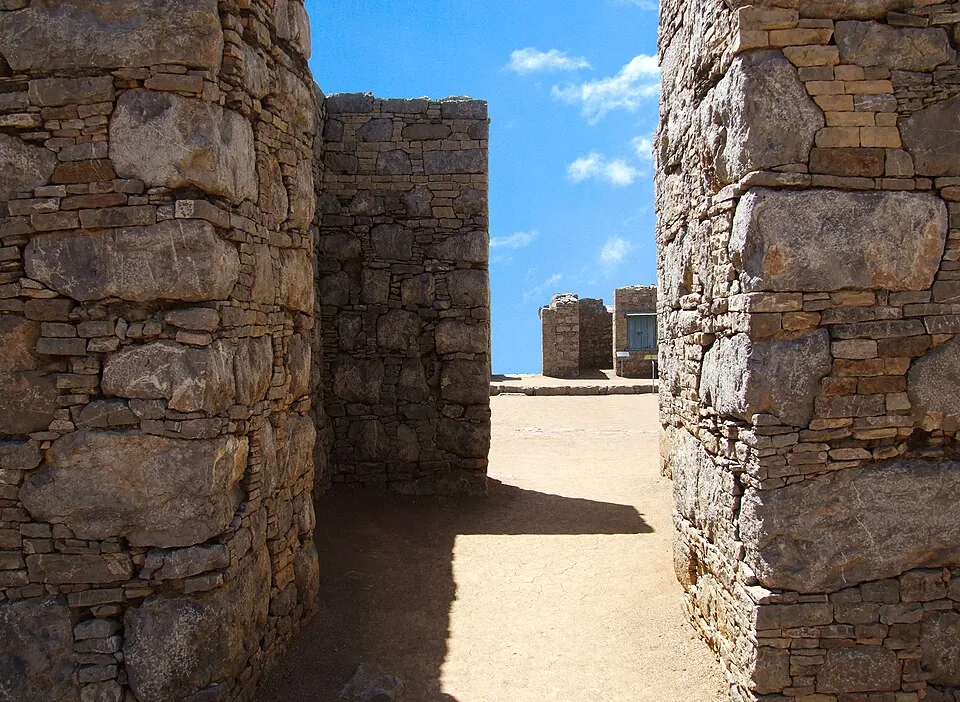
Jaulian Monastery Rises at Taxila
Jaulian, whose name means seat of saints, is a Buddhist monastery at Taxila in present-day Pakistan, dated to the second century CE. With nearby Mohra Muradu it forms part of the Ruins of Taxila, listed by UNESCO as a World Heritage Site in 1980.
Jaulian stands on a hilltop near Taxila, in the Punjab province of modern Pakistan, and is the ruin of a Buddhist monastery from the second century CE, in the era of Kushan rule over the north-west. Its Urdu name, meaning seat of saints, preserves the memory of its religious use. The complex centred on a main stupa surrounded by many smaller votive stupas and shrines, together with a monastic quadrangle with cells for monks, a refectory and an assembly hall. Stucco images of the Buddha and bodhisattvas, in the Gandhāran style that blended Indian themes with Greek and Roman artistic habits, once decorated the stupas, and a number of the sculptures have survived. Together with the monastery at Mohra Muradu, Jaulian is part of the Ruins of Taxila, a group of excavated sites added to UNESCO's World Heritage List in 1980. Taxila was a great centre of learning and commerce, and Jaulian shows how Buddhism flourished along the trade routes that linked the subcontinent with Central Asia. The date is approximate, based on archaeological and stylistic evidence.