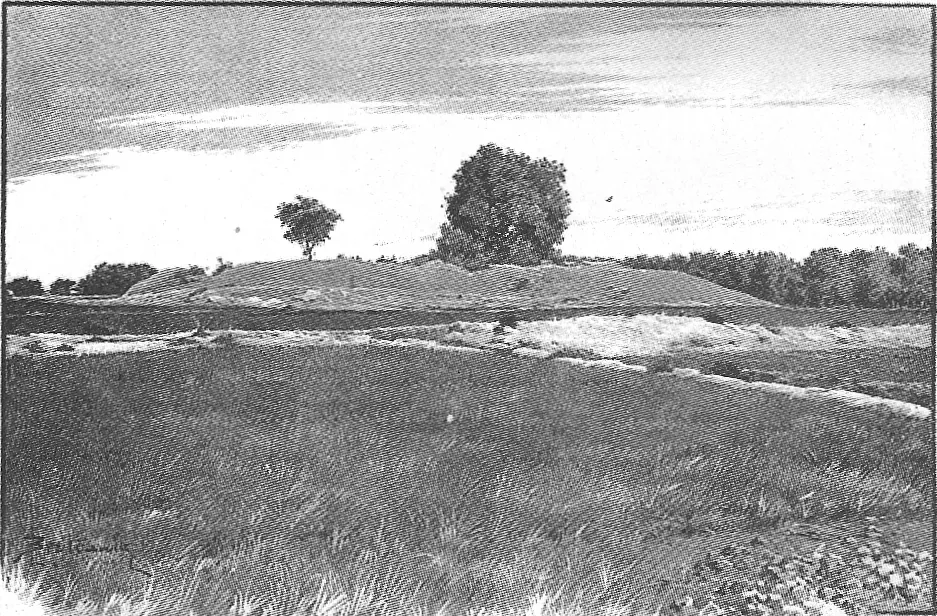
Kanishka's Great Stupa Near Peshawar
The Kanishka Stupa was a monumental Buddhist stupa raised by the Kushan king Kanishka in the second century CE at Shaji-ki-Dheri near Peshawar. Counted among the tallest structures of the ancient world, it housed relics that were later moved to Mandalay Hill in Burma.
The Kanishka Stupa was a monumental stupa established by the Kushan king Kanishka in the second century CE. Its remains lie at Shaji-ki-Dheri, at the edge of Peshawar in Pakistan. It is thought to have ranked among the loftiest structures anywhere in the ancient world. Raised in Kushan times, it was meant to hold Buddhist relics. After those relics were discovered in modern times, they were transferred to the U Khanti Hall on Mandalay Hill in Burma, where they are now kept. Kanishka ruled over a wide territory that linked Central Asia and northern India, and his patronage of Buddhism and of the Gandhāran art tradition is a major theme in the history of the religion. The year 127 CE is used here as an approximate marker linked to the start of his reign, and the exact date of the stupa's completion is not known. Chinese pilgrims who visited the region in later centuries described a very tall tower, which scholars have connected with this monument and its famous setting.
Sources
- Kanishka Stupa Wikipedia · CC-BY-SA-4.0
- Q842918 Wikidata · CC0-1.0