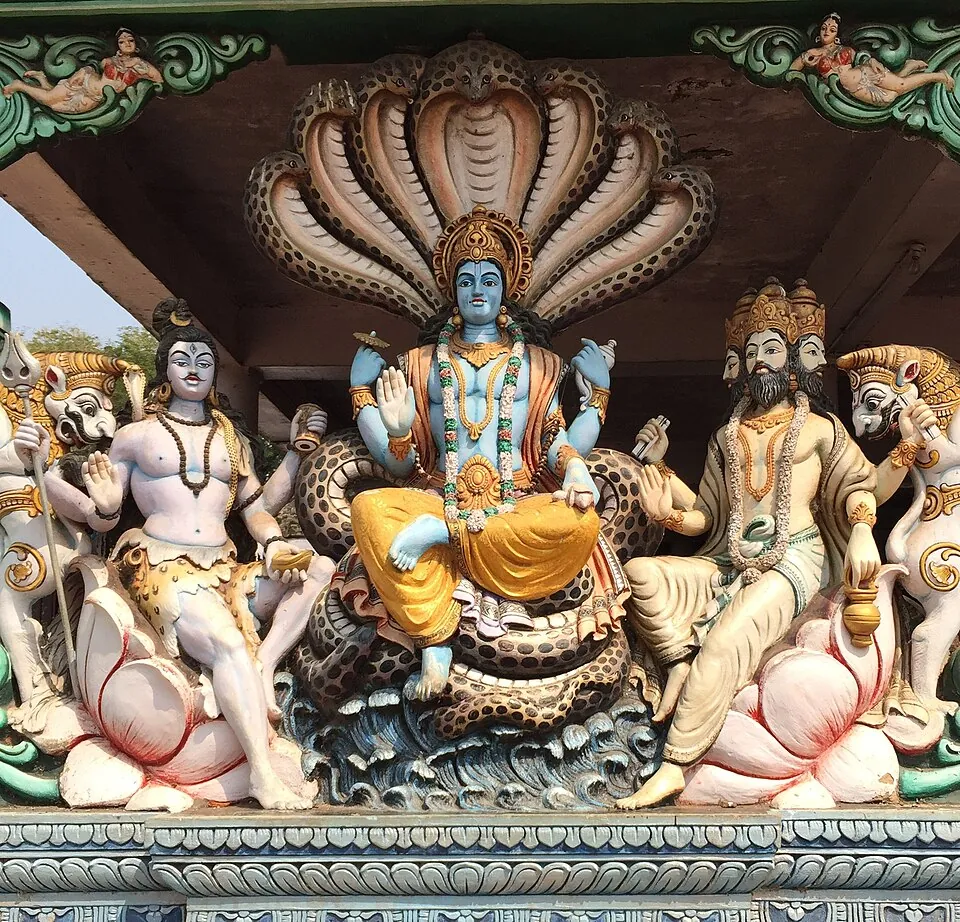
The Trimūrti: Three Faces of the Divine
Trimūrti · त्रिमूर्ति
Purāṇic theological concept set in cosmic time; not dated history.
The Trimūrti is a Hindu concept of a triple deity in which creation, preservation and dissolution are personified as Brahmā, Viṣṇu and Śiva. The Tridevi, the three goddess consorts, is sometimes presented as a parallel or feminine form of the same idea.
Trimūrti means 'three forms'. In its best-known formulation, supreme divinity is expressed through three deities, each presiding over a cosmic function: Brahmā as creator, Viṣṇu as preserver and Śiva as the one who dissolves. The scheme appears in Purāṇic literature, where it offers a way of holding together traditions that centre on different gods. It should not be read as a universal doctrine, because Vaiṣṇava, Śaiva and Śākta communities each regard their own deity as supreme and may subordinate the other two. A companion idea, the Tridevi, groups the goddesses Sarasvatī, Lakṣmī and Pārvatī as consorts of the three, and in some devotional currents the goddesses are instead treated as the triad itself. Sculptural depictions, such as three-headed images, appeared in temples and cave shrines and made the concept visible to worshippers. The notion is a theological symbol rather than an event, and the cosmic-age placement here reflects its Purāṇic setting, not a historical date for its formation.