Dakṣa, Prajāpati and the Fateful Sacrifice
Dakṣa · दक्ष
Figure of Vedic and Purāṇic narrative; placed at the conventional cosmic marker, not dated history.
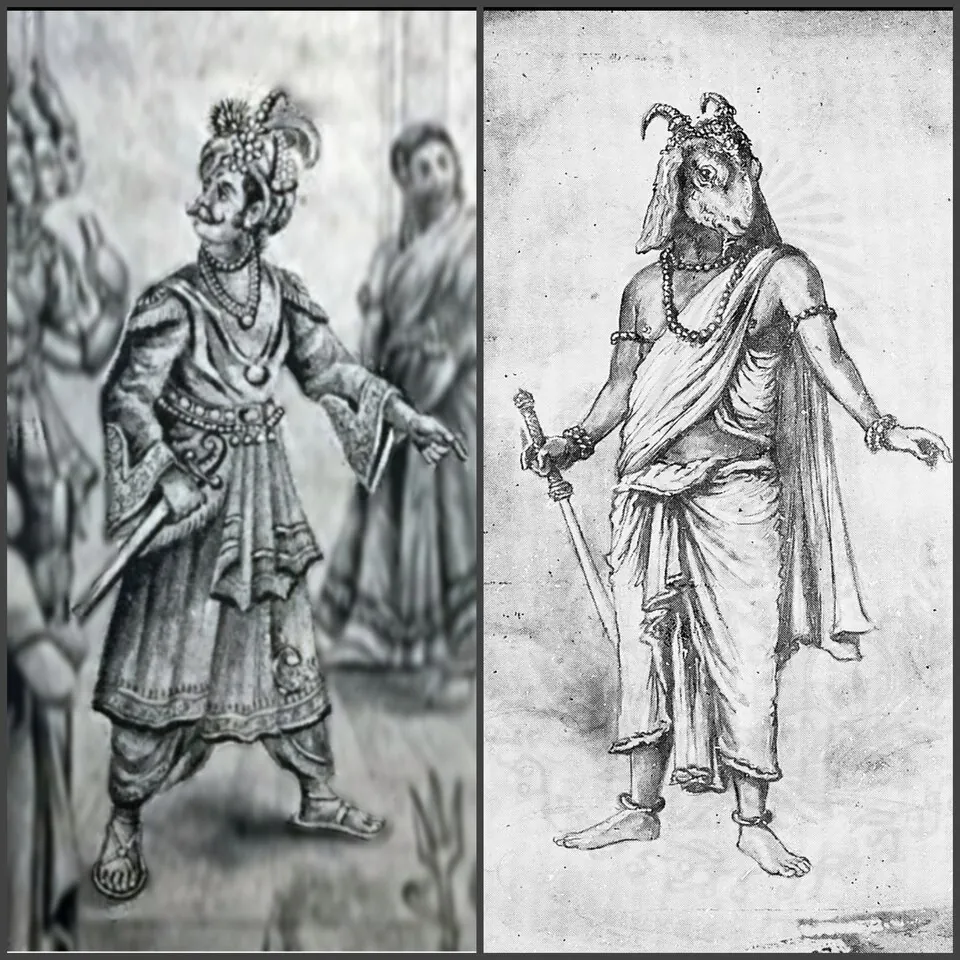
Dakṣa is a Vedic Āditya who becomes, in epic and Purāṇic tradition, a son of Brahmā and one of the prajāpatis who populate creation. His best-known story is the sacrifice to which he did not invite his daughter Satī and her husband Śiva, a slight with dire results.
In the Ṛgveda, Dakṣa is counted among the Ādityas and is linked with priestly skill. Later literature recasts him as a mind-born son of Brahmā and one of the prajāpatis, the progenitors who fathered many kinds of beings through his numerous daughters. The most famous legend concerns a great yajña he arranged. Dakṣa chose not to invite his youngest daughter Satī or her husband Śiva, and he insulted Śiva as well. Satī, grieving and furious, ended her life in the fire. In the account of the Liṅga Purāṇa, the fearsome Vīrabhadra, a form of Śiva, then cut off Dakṣa's head. The gods pleaded for mercy and Dakṣa was revived with the head of a goat, which is how sculpture sometimes shows him. Several Purāṇas add that he was reborn as a son of Prācetas in a later manvantara. The tale has long served as a teaching about pride, ritual and devotion, and it is part of the sacred narrative rather than a dated record.