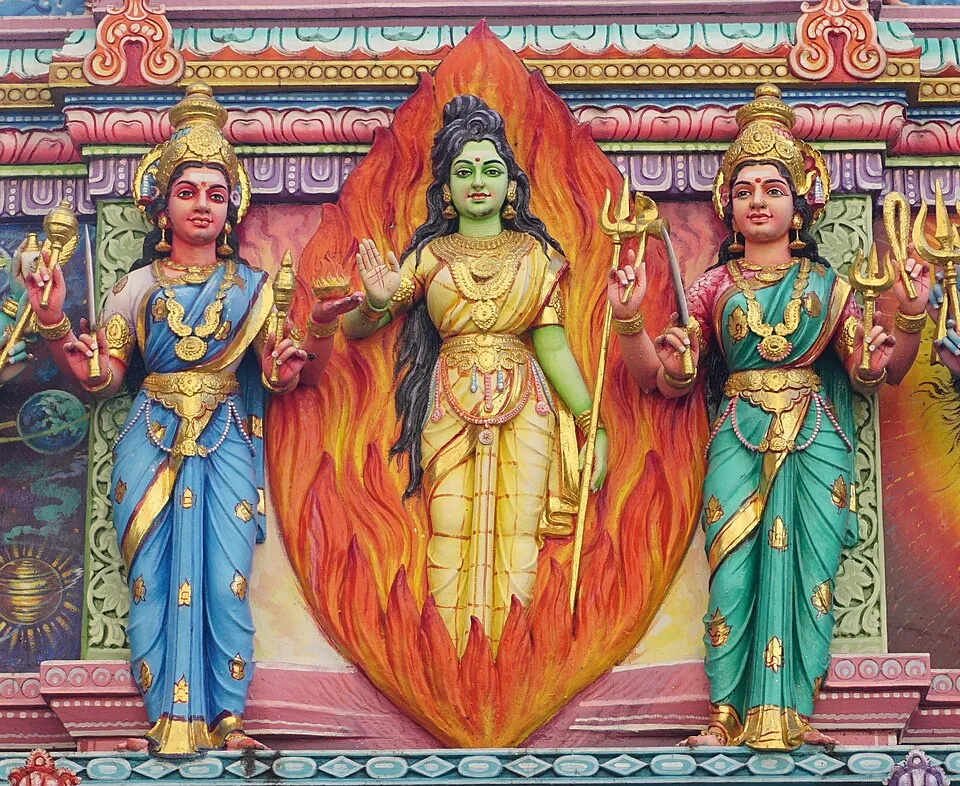
Satī and the Sacrifice of Dakṣa
Satī Dakṣayajña · सती दक्षयज्ञ
Purāṇic narrative placed at the start of the cosmic timeline; not dated history.
In Purāṇic tradition Satī, daughter of Dakṣa and first wife of Śiva, attends her father's fire-sacrifice uninvited, is humiliated, and gives up her life in protest. The story shapes Śaiva and Śākta devotion and explains the sacred sites known as Śakti Pīṭhas.
The story of Satī, also called Dākṣāyaṇī, is told chiefly in the Purāṇas, though she is already mentioned in the age of the epics. She is the favourite daughter of the patriarch Dakṣa and marries the ascetic Śiva against her father's wishes. When Dakṣa holds a great yajña and leaves out both his daughter and her husband, Satī goes anyway. Insulted before the assembly, she ends her life by fire as a protest against her father. In the tradition's telling, Śiva, overcome with grief, carries her body across the world and begins the fierce Tāṇḍava dance. To halt the destruction, the gods ask Viṣṇu, who uses his Sudarśana Cakra to divide the body. The pieces fall at fifty-one places, now revered as Śakti Pīṭhas. Satī is later reborn as Pārvatī, who again becomes Śiva's wife. Together the two figures draw the withdrawn ascetic god back into the life of the world. The narrative is important to both Śaivism and Śāktism, and it gave pilgrims a sacred geography across the subcontinent. It is a traditional account, not a dated historical event.
Sources
- Sati (Hindu goddess) Wikipedia · CC-BY-SA-4.0
- Q1796078 Wikidata · CC0-1.0