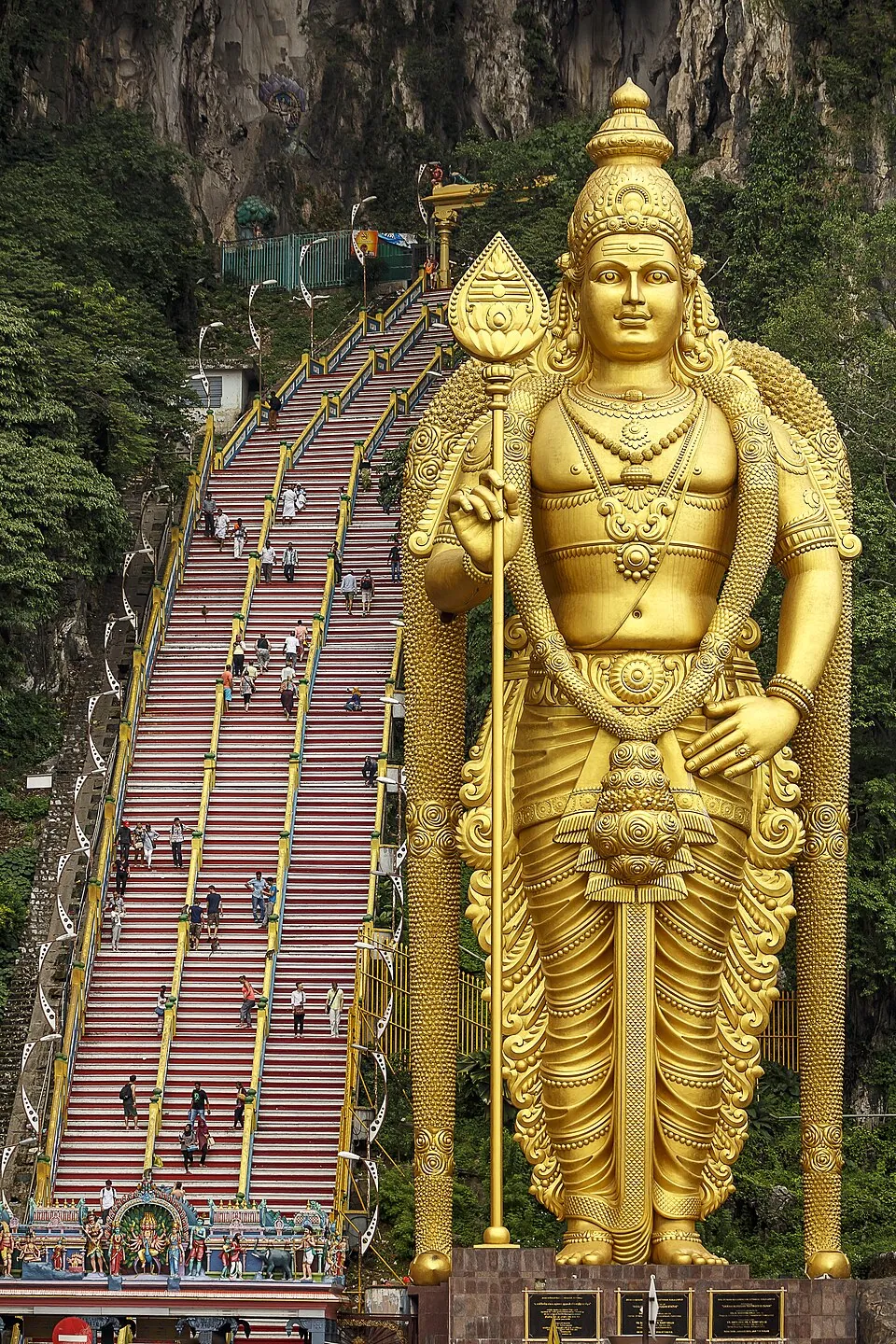
Kārttikeya, the Youthful God of War
Kārttikeya · कार्त्तिकेय
Traditional placement in puranic cosmic time; not dated history.
In Hindu tradition Kārttikeya, also called Skanda, Murugan and Subrahmaṇya, is the ever-youthful god of war and a son of Śiva and Pārvatī. Literary and archaeological evidence shows his worship was well established in early India, and in the Tamil south he merged with the older deity Murugan.
Kārttikeya is known by many names: Skanda, Subrahmaṇya, Śaṇmukha, Kumāra, Mahāsena and, in Tamil lands, Murugan. Puranic tradition describes him as a son of Śiva and Pārvatī and as brother of Gaṇeśa, a divine commander who leads the gods' armies. He is usually shown as a young man with a peacock mount and a spear. Scholars note that Skanda appears in Sanskrit literature by roughly the fifth century BCE, that his myths spread widely in the north by about the second century BCE, and that early images link him with the fire god Agni. In the south, Murugan was a Sangam-era deity of the hill country, and historians of religion see the Tamil and Sanskritic figures as gradually blending. He is honoured as patron of the Tamil language, with devotional works such as the Tirumurukāṟṟuppaṭai and the Tiruppukaḻ. The Kaumāram tradition centres on his worship, and temples to him stand across India. His placement here follows puranic cosmic time and is a matter of sacred tradition, not of dated history.