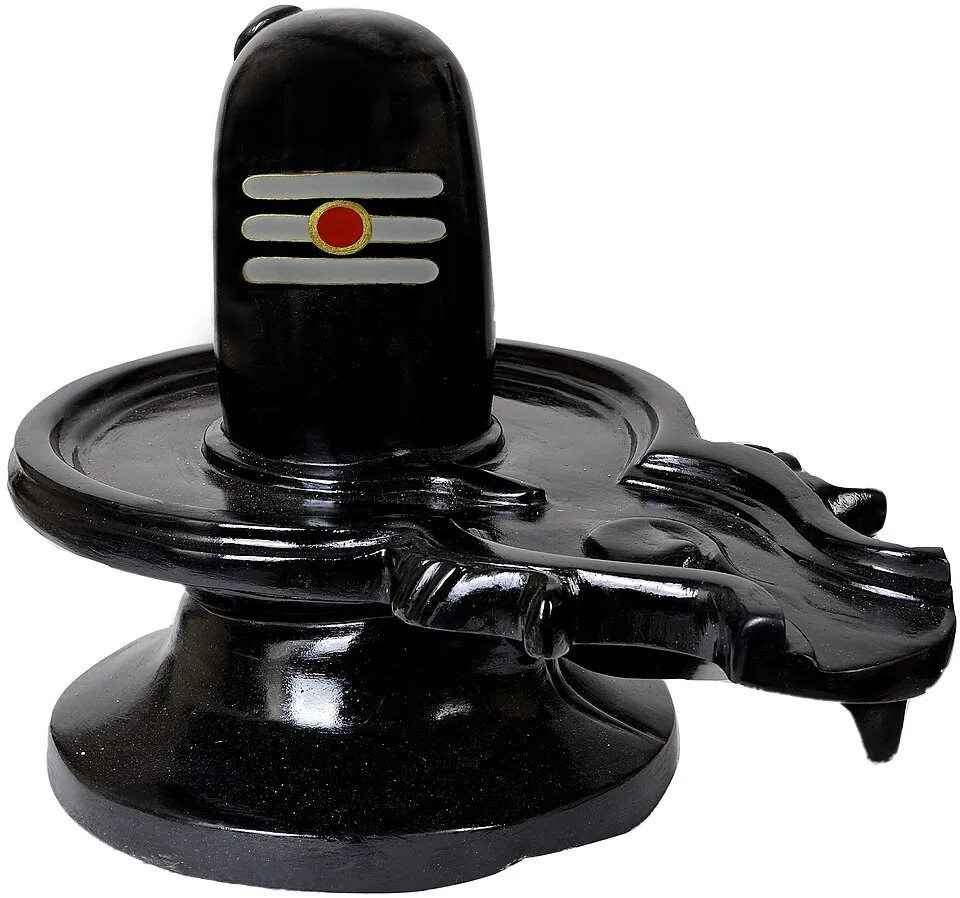
The Śiva Liṅga as Emblem of the Formless
Śiva liṅga · शिवलिङ्ग
Traditional cosmic reckoning of the Purāṇas; not dated history.
The liṅga is the aniconic form in which Śiva is most widely worshipped in Śaiva tradition. The Sanskrit word means sign or mark. Placed in a pedestal called the yoni, it is honoured as a symbol of creative and dissolving power. Its mythic setting belongs to Purāṇic time, not dated history.
The word liṅga, meaning a sign, mark or distinguishing characteristic, occurs in the Upanishads and the epics long before it became the name of Śiva's principal emblem. In Śaiva practice it is a short upright pillar of stone, metal, crystal, wood or even clay, usually seated in a round or flat base, the yoni, which carries away the water, milk and other offerings poured over it. Because it is abstract rather than a figure with a face and limbs, many devotees treat it as a pointer to the formless Absolute behind the many divine forms. Interpreters have also read it as an image of generative and destructive power, a reading that appears in the Purāṇas, where tales such as the endless pillar of light humble even Brahmā and Viṣṇu. Liṅgas are enshrined in the sanctums of temples across the subcontinent, from household altars to the twelve celebrated jyotirliṅga sites. Because the Purāṇas place such narratives in primordial time, this entry carries a symbolic date in the cosmic layer, not a historical one.