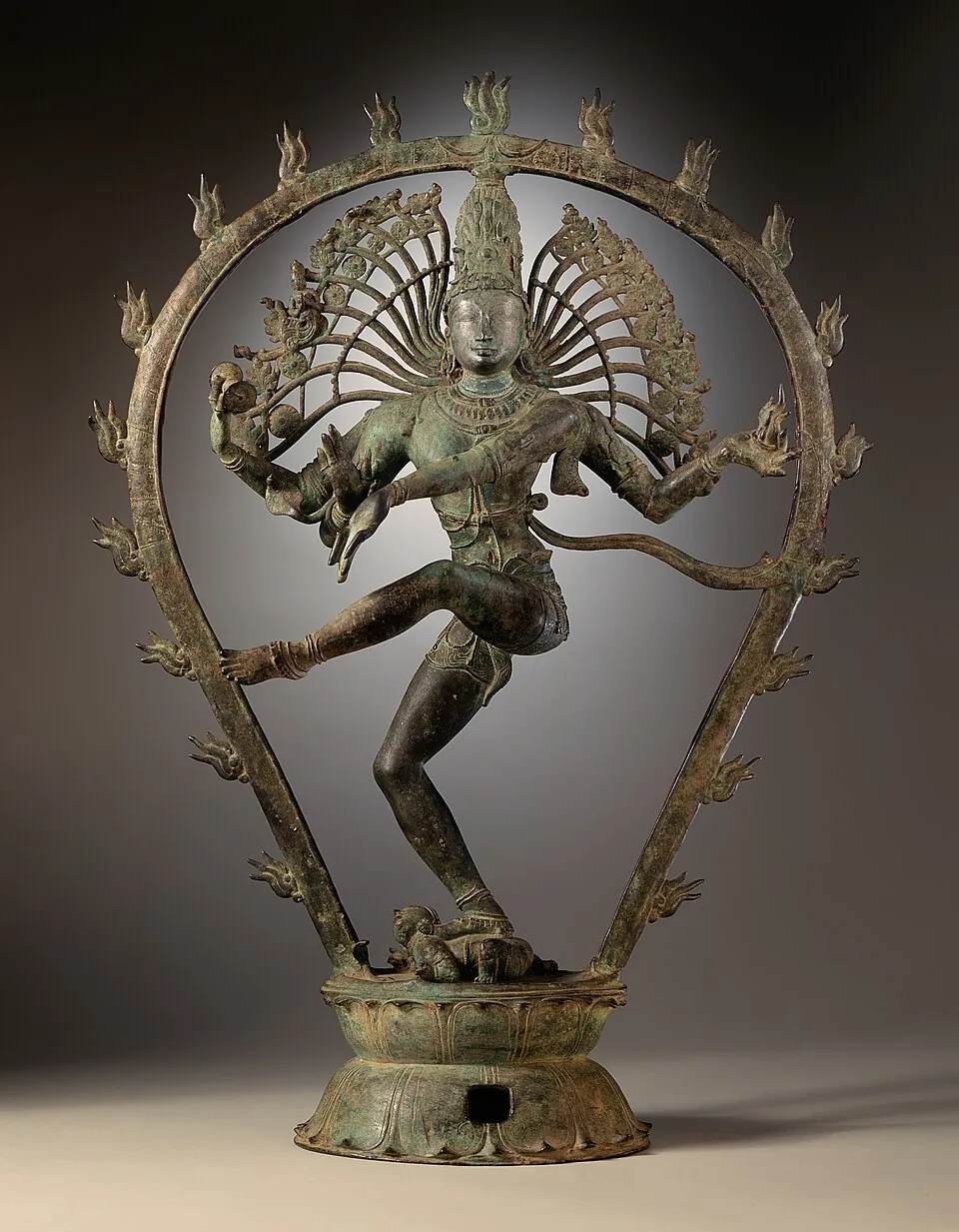
Śiva Naṭarāja, Lord of the Cosmic Dance
Naṭarāja · नटराज
Sacred form placed in puranic cosmic time; sculptures date from c. 6th century CE.
Naṭarāja is the depiction of Śiva as the divine cosmic dancer, whose dance is called the tāṇḍava. Described in Tamil and Sanskrit texts, the form appears in rock-cut reliefs by about the sixth century and in famed Chola bronzes from the eighth to tenth centuries, becoming a lasting emblem of Indian art.
Naṭarāja, 'Lord of the Dance', presents Śiva as the cosmic dancer whose movement is called the tāṇḍava. The pose is laid out in many texts, among them the Tamil Tēvāram and Tiruvācakam and Sanskrit works such as the Aṃśumadāgama and Uttarakāmika Āgama. Images of the dancing Śiva appear in major Shaiva temples, and the figure has become one of the best-known sculptural symbols of Indian culture. Among the earliest surviving examples are stone reliefs at the Ellora and Bādāmi caves, usually dated to around the sixth century CE. In Tamil Nadu, the Chola period from roughly the eighth to the tenth century produced the celebrated bronze Naṭarājas, cast with remarkable balance and fluid detail. Related reliefs have also been found in Southeast Asia, including Angkor and Bali, as well as in Central Asia, showing how widely the image travelled. The form is rooted in sacred tradition, so its cosmic setting here is a traditional placement, while the sculptural history is documented separately by art historians.