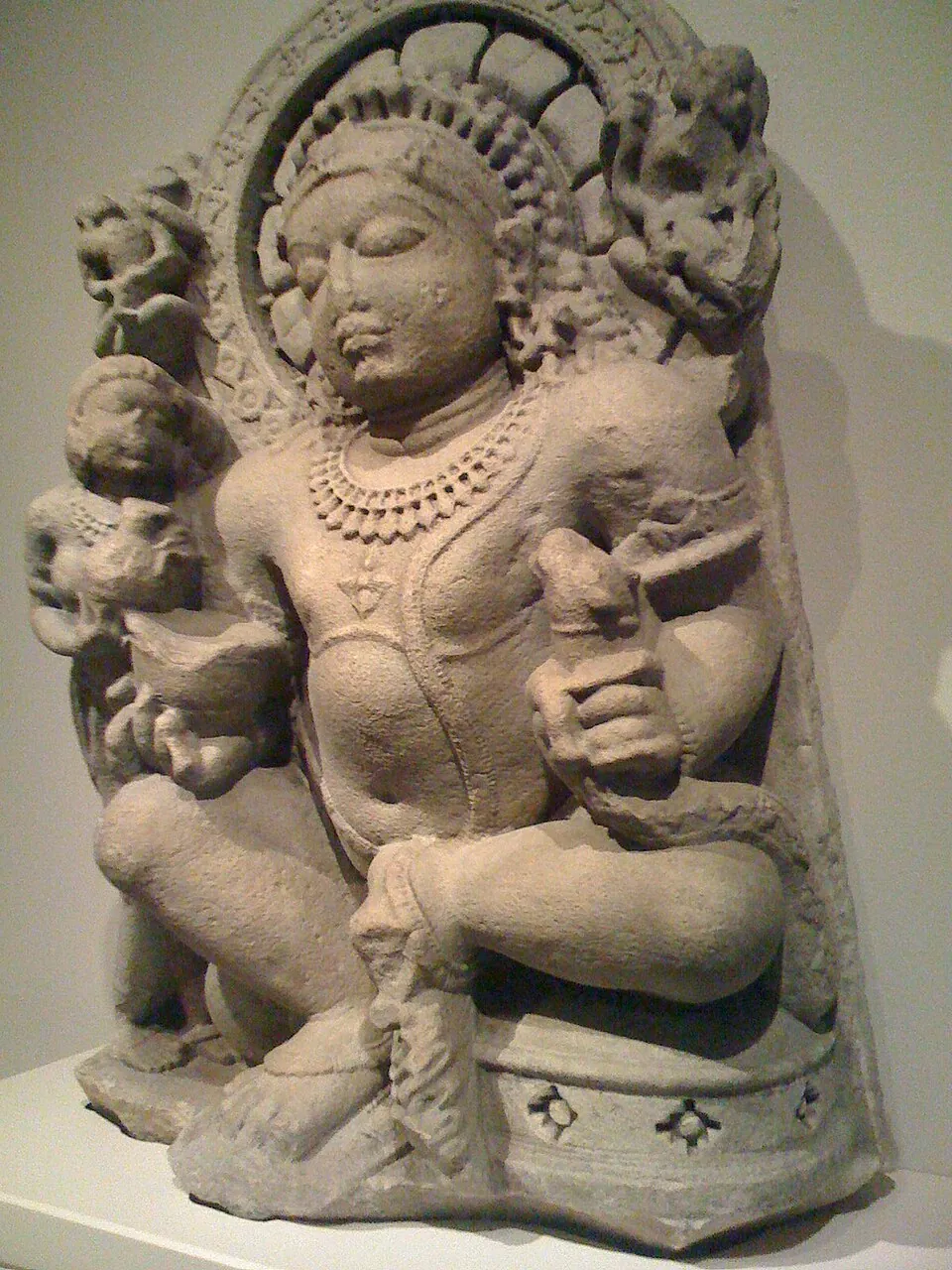
Kubera, Lord of Wealth and King of the Yakṣas
Kubera · कुबेर
Placed at the start of the traditional cosmic span; mythic figure, not dated history.
Kubera is the Hindu god of wealth and king of the yakṣas, guardian of the northern direction. Once seen in early Vedic texts as a chief of spirits, he became a deva in the Purāṇas and epics, ruling from Alakā after losing Laṅkā to Rāvaṇa.
Kubera, also called Kuvera or Kuber, is honoured as the lord of riches and the sovereign of the yakṣas, a class of semi-divine beings who guard hidden treasure. He is named the regent of the north among the dikpālas and counted as a lokapāla, a protector of the world. Images usually show a stout figure heavy with jewellery, holding a money-pot and a club. His standing changed over time: early Vedic-era writing treats him as a leader of malevolent spirits, but by the period of the Purāṇas and the great epics he had risen to the rank of a god. Traditional narrative says he once governed Laṅkā until his half-brother Rāvaṇa drove him out, after which he settled at Alakā in the Himalayas, a city whose splendour is praised in many scriptures. Kubera also entered other religions: Buddhists know him as Vaiśravaṇa, and Jains as Sarvānubhūti. The date given here follows the start of the traditional cosmic span; it marks his place in sacred narrative rather than any datable event.