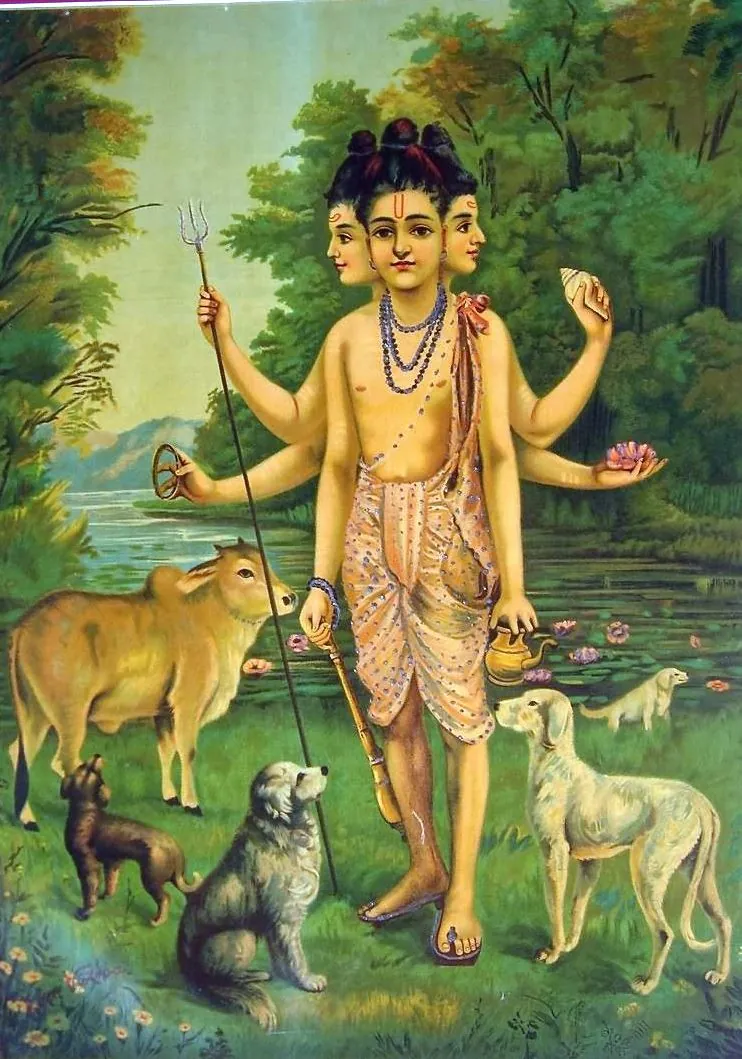
Dattātreya, the Wandering Lord of Yoga
Dattātreya · दत्तात्रेय
Purāṇic narrative set in cosmic time; not dated history.
In Purāṇic tradition Dattātreya is a wandering ascetic regarded as a combined form of Brahmā, Viṣṇu and Śiva. He is honoured as a teacher of yoga, and the Avadhūta Gītā is attributed to him. His cult has shaped monastic movements, especially in the Deccan and western India. This placement reflects sacred narrative, not dated history.
Dattātreya is venerated as a divine sage and a model renunciant. Puranic texts such as the Bhāgavata, Mārkaṇḍeya and Brahmāṇḍa Purāṇas describe him as a union of the three great deities, the Trimūrti, and as a manifestation of the supreme reality, though the stories of his birth differ from one text to another. Several Upaniṣads are devoted to him, and the Avadhūta Gītā, a celebrated Advaita-leaning song of the liberated soul, is attributed to him. Across later centuries his example of simple living, kindness and shared wisdom inspired monastic communities within Śaiva, Vaiṣṇava and Śākta currents, most visibly in Maharashtra, Gujarat, Madhya Pradesh, Rajasthan and the Himalayan belt. Saint-poets of the Bhakti movement, among them Tukārām, speak of him with reverence. Scholars note that the Nāth tradition's claim of him as an original teacher appears to be a relatively late development, perhaps around the eighteenth century. The date given here is the conventional placeholder for Purāṇic cosmic time; it belongs to sacred narrative and is not a historically established date.
Sources
- Dattatreya Wikipedia · CC-BY-SA-4.0
- Q850805 Wikidata · CC0-1.0