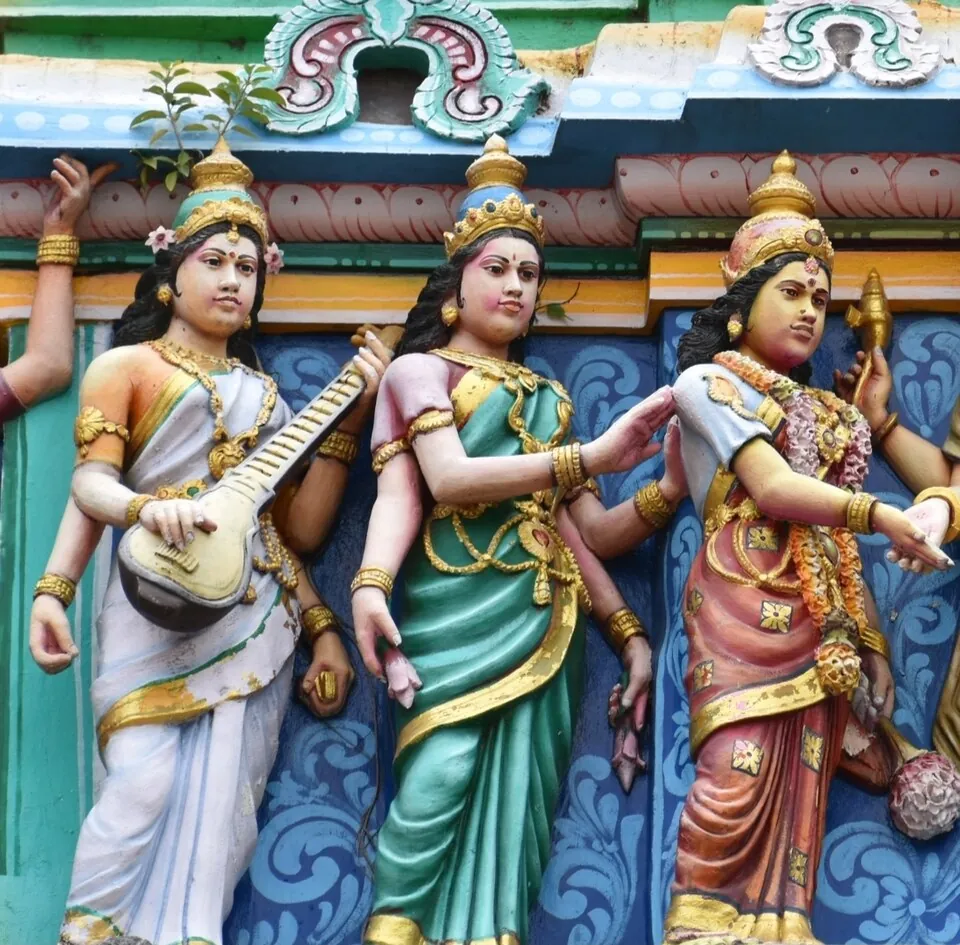
Tridevi: The Triad of Great Goddesses
Tridevī · त्रिदेवी
Theological concept of puranic tradition; no historical date applies.
The Tridevi is a divine triad of goddesses, usually Sarasvatī, Lakṣmī and Pārvatī, understood either as a feminine counterpart to the Trimūrti or as the consorts of its three gods. In Śaktism the three emerge from Mūlaprakṛti or Mahādevī and hold the supreme roles themselves. The concept belongs to theology, not dated history.
The Tridevi is a trinity of supreme goddesses in Hinduism, most often identified as Sarasvatī, Lakṣmī and Pārvatī. How the triad is understood depends on the denomination. In many traditions centred on male deities it is presented as the set of consorts of the Trimūrti, the three gods of creation, preservation and dissolution, with the goddesses serving in supporting roles. In Śaktism the relationship is reversed: the three goddesses are manifestations of Mūlaprakṛti, the primal nature, or Mahādevī, the Great Goddess. In that view they perform the cosmic functions themselves, with Mahāsarasvatī as creator, Mahālakṣmī as preserver and Mahākālī as destroyer, while the three male gods act as their agents. The idea therefore shows how Hindu theology can arrange the same divine figures in different orders of importance. It developed within devotional and Purāṇic literature rather than at a single moment, so the entry is placed within the cosmic framework instead of at a historical date.