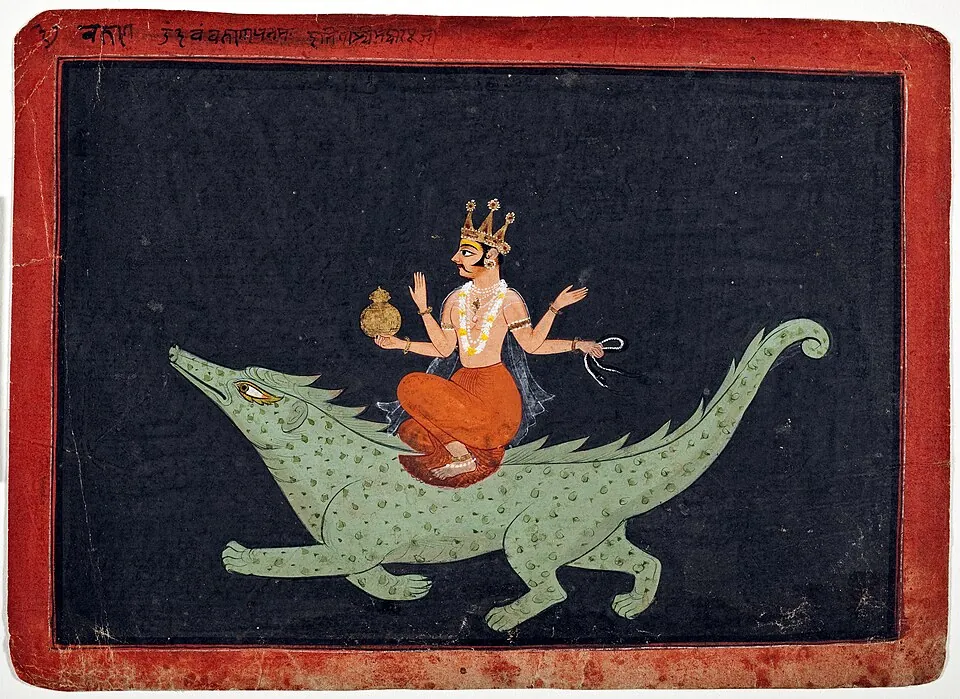
Varuṇa, Guardian of Ṛta and Lord of the Waters
Varuṇa · वरुण
Deity of Vedic and Purāṇic tradition; placed at the conventional cosmic marker, not dated history.
Varuṇa is among the oldest Hindu deities. In the Ṛgveda he is a sovereign god of the sky who upholds ṛta, the moral and cosmic order, and sees all human deeds. In epic and Purāṇic literature his role shifts, and he becomes the lord of oceans and rivers.
Varuṇa stands among the earliest figures of the Vedic pantheon. The Ṛgveda treats him as a sovereign of the heavens, chief of the Ādityas and a keeper of ṛta, the order that binds nature and human conduct together. Hymns imagine the stars as his watchful eyes, and he serves as an all-knowing judge who punishes falsehood. He is regularly paired with Mitra, the two together embodying the awesome and the contractual sides of kingship. Over the centuries his domain moved. First he became associated with the waters of the sky, and by the time of the epics and Purāṇas he was lord of every sea, river and lake, ruling from beneath the ocean and guarding the western quarter. Scholars see this movement as a clear example of how a god's character can change as religious ideas develop. Because the Vedic hymns are oral compositions of uncertain age, the entry carries a traditional placement in the cosmic era rather than a calendar date, and the figure is understood here as part of sacred narrative and devotion.