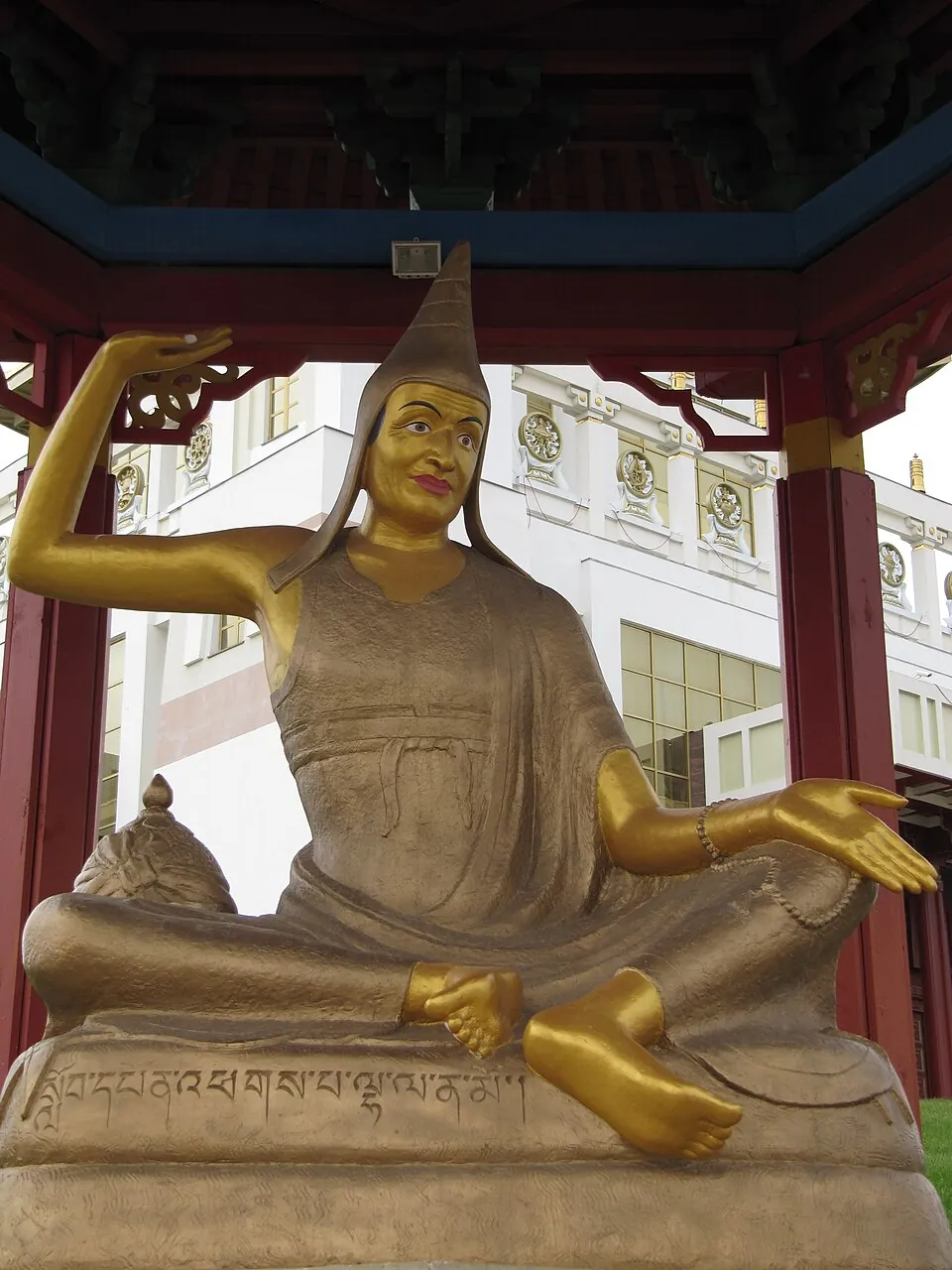
Āryadeva, Disciple of Nāgārjuna
Āryadeva · आर्यदेव
Āryadeva was a Buddhist philosopher of the Madhyamaka school, traditionally a pupil of Nāgārjuna and active around the third century CE. His Catuḥśataka, the 'Four Hundred', extends the doctrine of emptiness to ethics and practice, and it was widely studied in India and Tibet.
Āryadeva was a thinker of the Madhyamaka, or Middle Way, tradition of Buddhist philosophy. Later accounts describe him as the chief disciple of Nāgārjuna, and place his activity in roughly the third century CE; some sources say he was born in Sri Lanka and came to south India to study. His best-known work is the Catuḥśataka, or Four Hundred Verses, a text in sixteen chapters that applies the doctrine of emptiness to the Bodhisattva's path, to ideas of the self, and to the views of rival schools. The second half of the work is especially concerned with refuting non-Buddhist doctrines. Because Nāgārjuna's Mūlamadhyamakakārikā establishes the basic argument, Āryadeva's text is often read as a companion that carries it into ethical and practical territory. Later commentators, notably Candrakīrti, wrote on it at length, and its teachings were studied closely in the monastic universities of India and then in Tibet, where they became part of the standard curriculum. Many details of his life come from late biographies, so the dates given are approximate.