Madhyamaka, the Buddhist Philosophy of the Middle Way
Madhyamaka · माध्यमक
Nāgārjuna's dates, c. 150-250 CE, are a scholarly estimate.
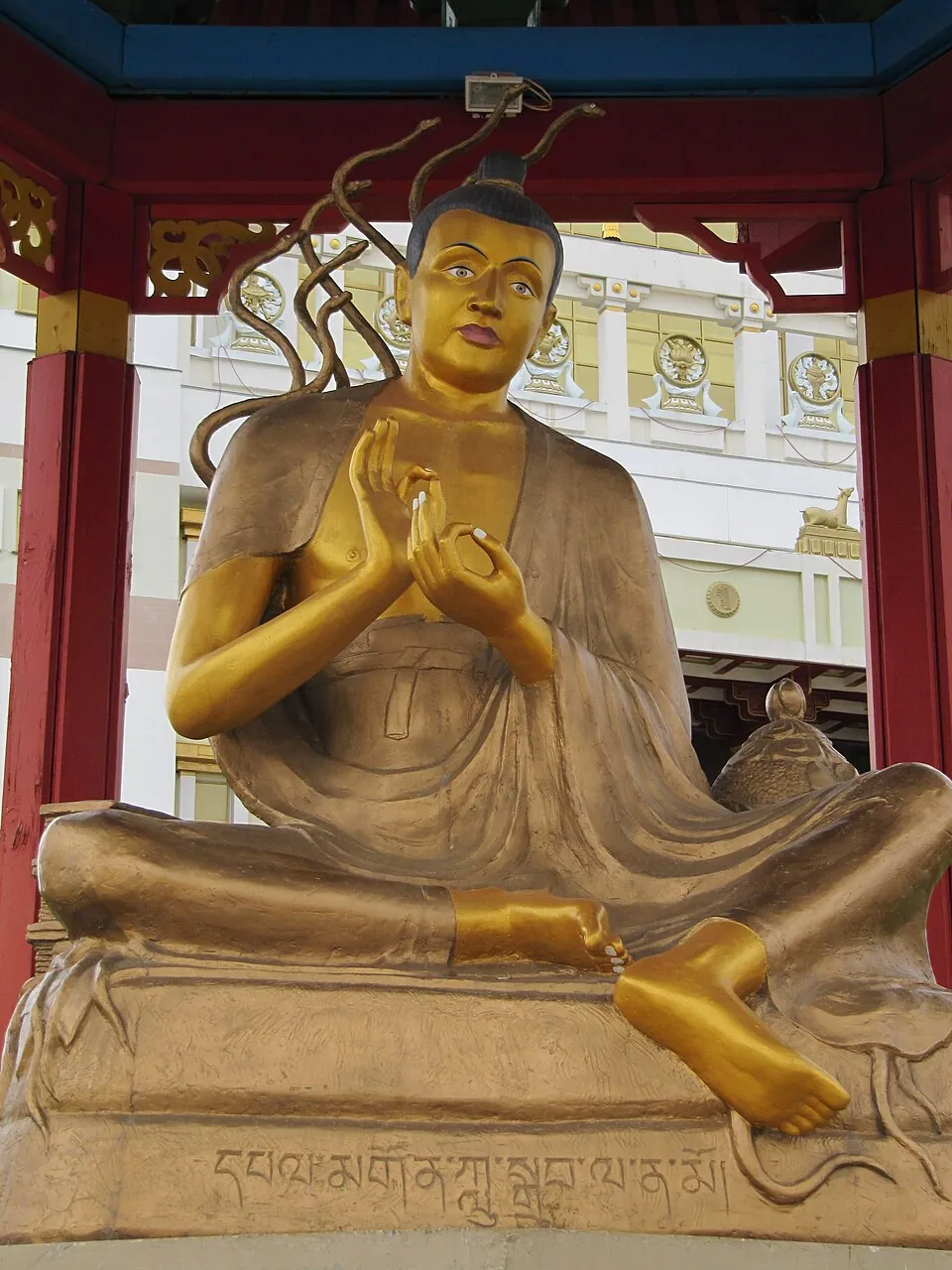
Madhyamaka, 'the middle way', is a Buddhist philosophical school traced to the monk Nāgārjuna, who lived about 150 to 250 CE, and his Mūlamadhyamakakārikā. It teaches that all phenomena are empty of intrinsic nature, and it became dominant in Tibetan Buddhism.
Madhyamaka, also called Mādhyamika, grew out of the work of the monk and thinker Nāgārjuna, usually placed between about 150 and 250 CE, as a school of both Buddhist philosophy and practice. Its foundational work is his Mūlamadhyamakakārikā, the Root Verses on the Middle Way. The classical Indian Mādhyamikas argued that all phenomena, or dharmas, are empty, śūnya, of any inherent nature or essence, svabhāva, that could make them solid and independent, because everything arises in dependence on other things. They also insisted that emptiness is itself empty: it is not a thing existing on its own, nor a higher reality standing apart from ordinary experience. The term can further refer to the ultimate nature of things and to the non-conceptual realisation of it in meditation. From about the fourth century CE its ideas increasingly shaped Mahāyāna thought, and as Buddhism travelled across Asia they became the leading reading of Buddhist philosophy in Tibet and left a deep mark on East Asian traditions. Its method of dismantling fixed views through careful argument has also drawn much interest from modern philosophers.
Sources
- Madhyamaka Wikipedia · CC-BY-SA-4.0
- Q844421 Wikidata · CC0-1.0