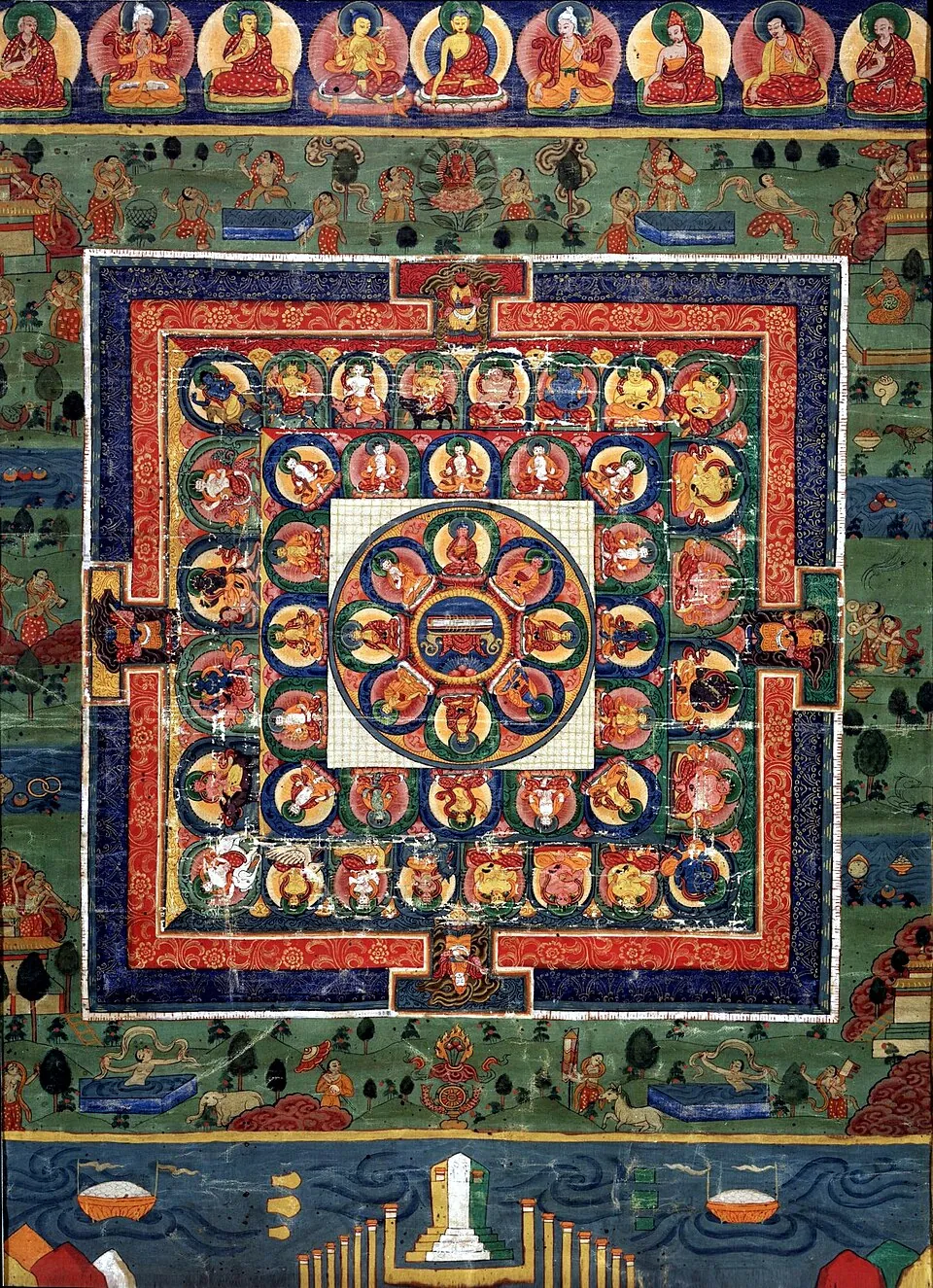
Prajñāpāramitā Sūtras and the Perfection of Wisdom
Prajñāpāramitā · प्रज्ञापारमिता
The Prajñāpāramitā, the 'Perfection of Wisdom', names both a central Mahāyāna ideal and a family of sūtras, including the Heart and Diamond Sūtras. They teach emptiness and the bodhisattva path and were composed in India over many centuries, beginning around the turn of the era.
Prajñāpāramitā, meaning 'the Perfection of Wisdom' or 'wisdom gone beyond', is both a Mahāyāna Buddhist ideal and the name of a group of scriptures that includes the Heart Sūtra and the Diamond Sūtra. It describes a perfected way of seeing reality, and it is tied to ideas such as emptiness, the lack of an intrinsic essence, the illusory nature of things, and the non-arising of all phenomena. These themes were later developed in Nāgārjuna's Madhyamaka philosophy. In Mahāyāna practice, wisdom of this kind is indispensable on the bodhisattva path. Edward Conze described the sūtras as about forty texts composed in India over several hundred years, and the earliest layer is usually placed around the first century BCE or the first century CE, with the tradition associating its growth with southern India. The circa 100 CE date used here is therefore only a rough marker for the beginning of a long, layered process, not a single act of composition. The texts later travelled to East and Central Asia.
Sources
- Prajnaparamita Wikipedia · CC-BY-SA-4.0
- Q751147 Wikidata · CC0-1.0