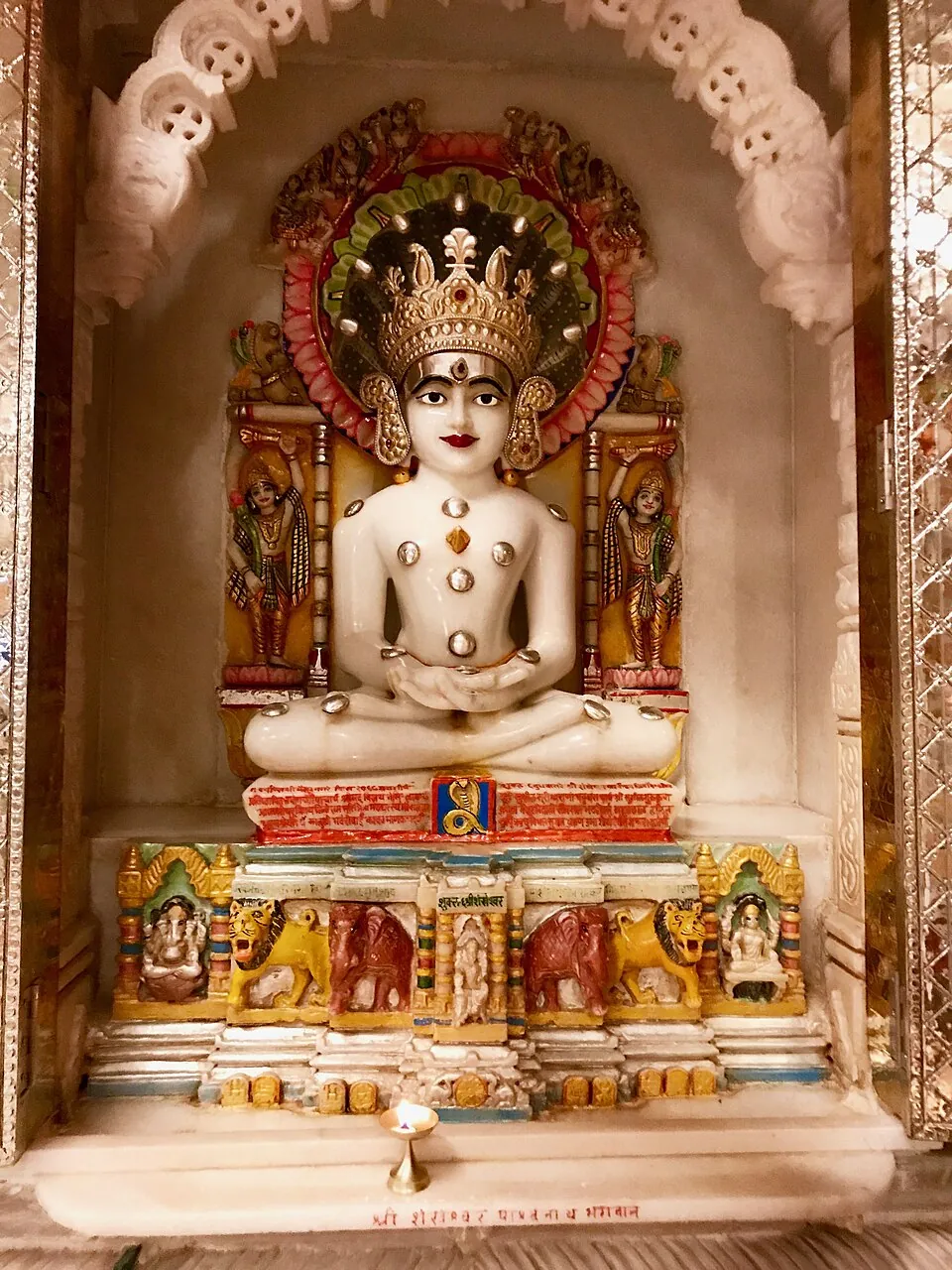
The Digambara and Śvetāmbara Branches of Jainism
Digambara–Śvetāmbara · दिगम्बर–श्वेताम्बर
Jainism came to be divided into two main branches, Śvetāmbara, whose ascetics wear white, and Digambara, whose ascetics go unclothed. They differ in temples, iconography, texts and views of nuns. The split is usually placed within the early centuries after the Mauryan age, and its dating is approximate.
The Jain community is divided into two principal branches. Śvetāmbara means white-clad and refers to monks and nuns who wear white garments; Digambara means sky-clad and describes ascetics who go without clothes. The Śvetāmbaras do not require monastic nudity. Over time the two traditions developed differences in more than dress: they diverge on temple practice and image conventions, on the status and prospects of nuns, on legends of the Tīrthaṅkaras and on which scriptures they hold authoritative. Śvetāmbara communities are today found chiefly in Gujarat, Rajasthan and the coastal parts of Maharashtra, and the scholar Jeffery D. Long estimates that about four in five Indian Jains belong to this branch. Jain tradition links the division with a period of famine and migration under the Mauryas, while historians see a gradual divergence whose stages are difficult to fix. The date shown is a scholarly approximation of the period in which the two lines took shape, not the record of a single event.
Sources
- Śvetāmbara Wikipedia · CC-BY-SA-4.0
- Q280522 Wikidata · CC0-1.0