Digambara, the Sky-Clad Tradition of Jainism
Digambara · दिगम्बर
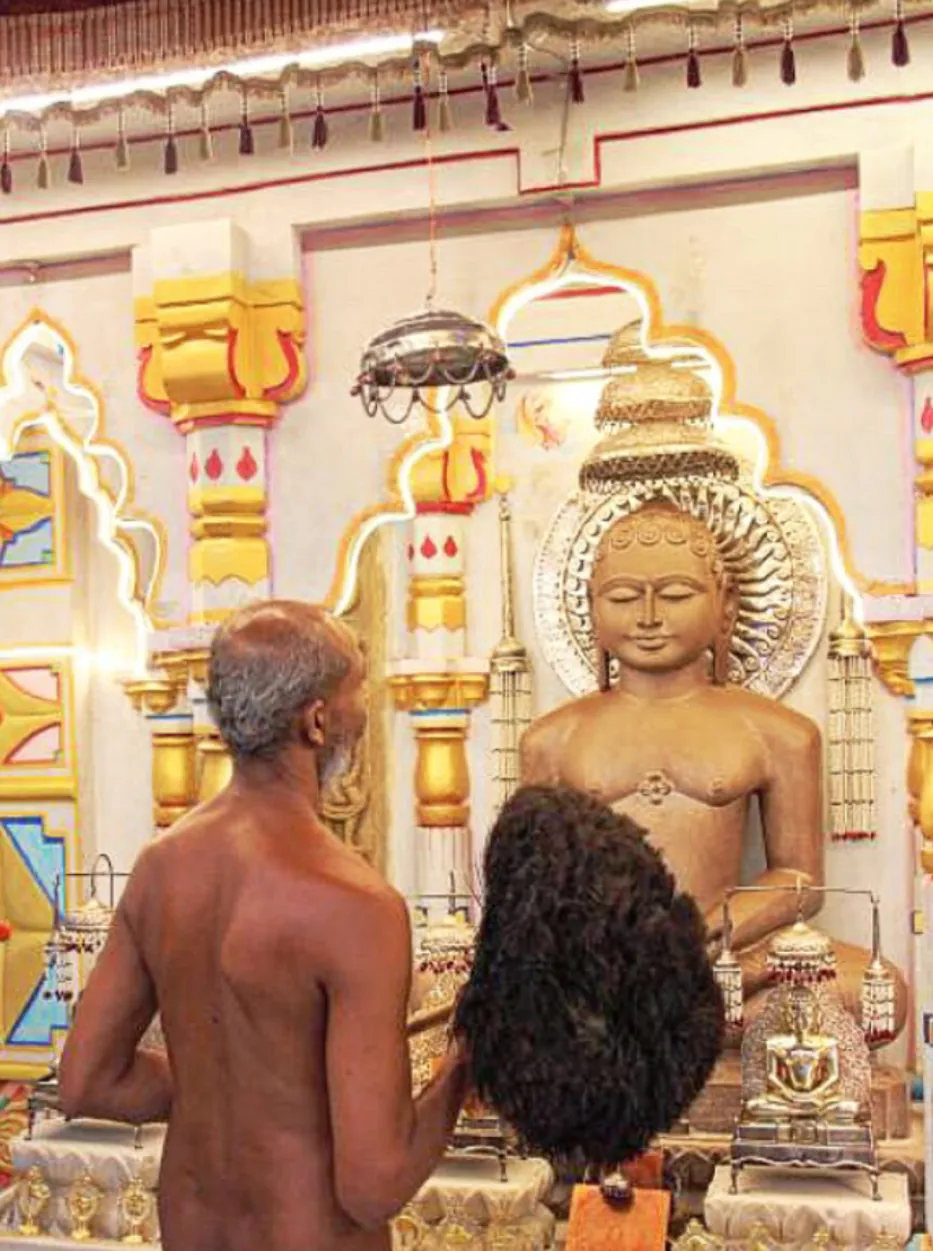
Digambara, meaning sky-clad, is a principal branch of Jainism, alongside Śvetāmbara. Its monks renounce clothing as a sign of complete detachment. The two schools differ on dress, temple images, the status of female monastics, legends and scriptures, and the division took shape in the early centuries CE.
Digambara, a Sanskrit word for sky-clad, names one of Jainism's two great branches, the other being Śvetāmbara, whose monastics wear white. Digambara monks keep no possessions and wear no clothing, a practice that the tradition traces to Mahāvīra, who taught that nakedness expresses complete detachment and frees a renunciant from the distractions of acquiring and washing garments. It also holds that being free from clothing gives resilience against heat and cold. The two branches differ in many matters, including dress, temples and iconography, their legends, which texts they treat as authoritative, and their attitude toward female monastics. Digambaras hold that women cannot attain liberation in that life, while Śvetāmbaras disagree. Each side has its own account of how the split happened, and historians see a gradual divergence in the early centuries CE, with evidence from inscriptions and sculpture at Mathura showing both streams already in existence. The date given is only an approximate marker for that period. Digambara communities today are found especially in the south and west of India, with Shravanabelagola among their famed centres.