Funan, Southeast Asia's Earliest Indianised Polity
Funan was a loose network of Indianised states in the Mekong Delta region, flourishing from about the first to the seventh century CE. Known mainly through Chinese records, it is usually called the first known kingdom of Southeast Asia, and its ties with India shaped its religion and writing.
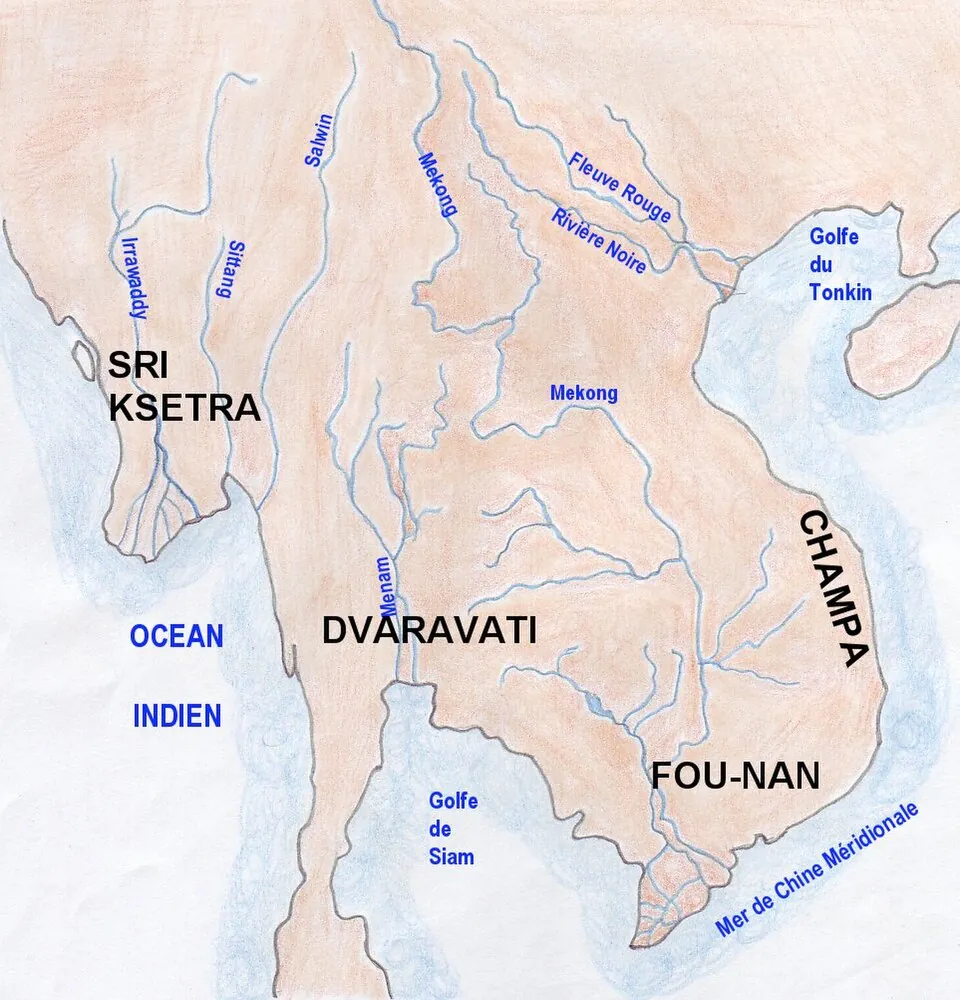
Funan was a cluster of early states, or maṇḍalas, spread across portions of what are now Cambodia, Thailand and Vietnam, lying southwest of Linyi, the Chinese name for early Champa. It is generally regarded as the first known kingdom in Southeast Asia. The name Funan comes from Chinese sources; no local text from the period uses it, so the people's own name for their realm is unknown. Sanskrit tradition associated the region with Suvarṇabhūmi, the 'land of gold'. The fullest descriptions derive from the reports of two envoys of the Eastern Wu, Kang Tai and Zhu Ying, who stayed in Funan in the middle of the third century. Chinese accounts and inscriptions credit the founding to the legendary rulers Soma and Kauṇḍinya, remembered as early Cambodian kings. Archaeology, however, suggests substantial settlement much earlier, perhaps from the fourth century BCE. Chinese writers presented Funan as one unified state, though some modern researchers question this picture. Indian trade, religion, script and statecraft reached the delta through maritime routes, laying foundations for later Khmer civilisation. The span shown runs from about the first century CE to its absorption by the Khmer state of Chenla in the seventh century.