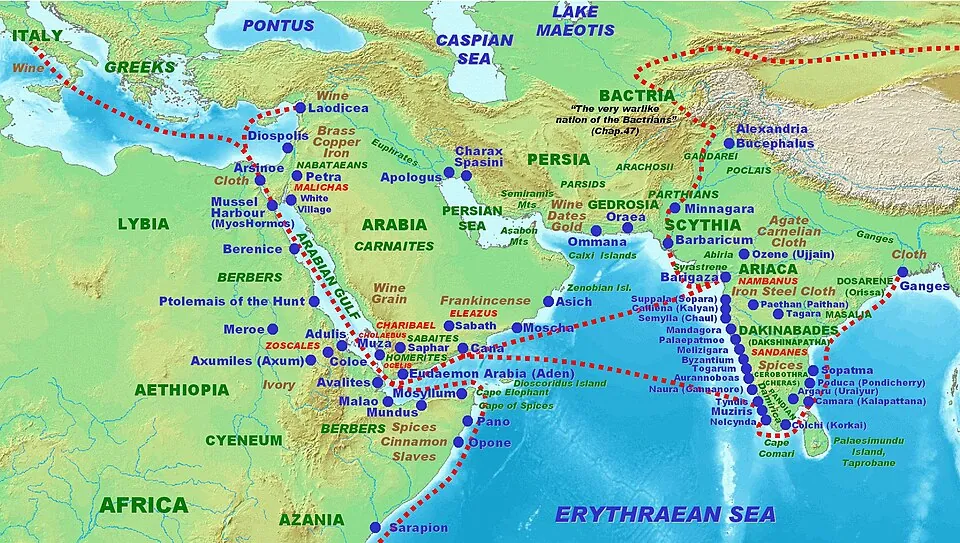
Indo-Roman Trade Opens the Red Sea Route
After Augustus conquered Egypt in 30 BCE, trade between India and the Roman world shifted from overland caravans to the Red Sea route. Roman and Greek merchants frequented the Tamil south, dealing with the Pāṇḍya, Chola and Chera kingdoms, and Roman writers lamented the gold and silver sent east.
Commerce between the Indian subcontinent and the Mediterranean world existed by land through Asia Minor and the Middle East, but it remained modest until a maritime route opened. Around the start of the first century CE, once Augustus had annexed Egypt in 30 BCE, ships began to sail between Red Sea harbours and Indian ports. This southern route grew so productive that it overtook the caravan roads entirely. Roman and Greek traders became regular visitors to the Tamil country and Sri Lanka, where they negotiated with the seafaring Pāṇḍya, Chola and Chera kingdoms and set up trading settlements, a pattern that began under the Ptolemies a few decades earlier and persisted long after the Western Roman Empire fell. Silk, spices and pearls were among the sought-after goods. Roman politicians and historians complained in print about the drain of gold and silver spent on luxuries from the east, particularly silk for Roman women. The year given marks the middle of this first-century expansion, while the exchange itself spanned several centuries.
Sources
- Indo-Roman trade relations Wikipedia · CC-BY-SA-4.0
- Q513839 Wikidata · CC0-1.0