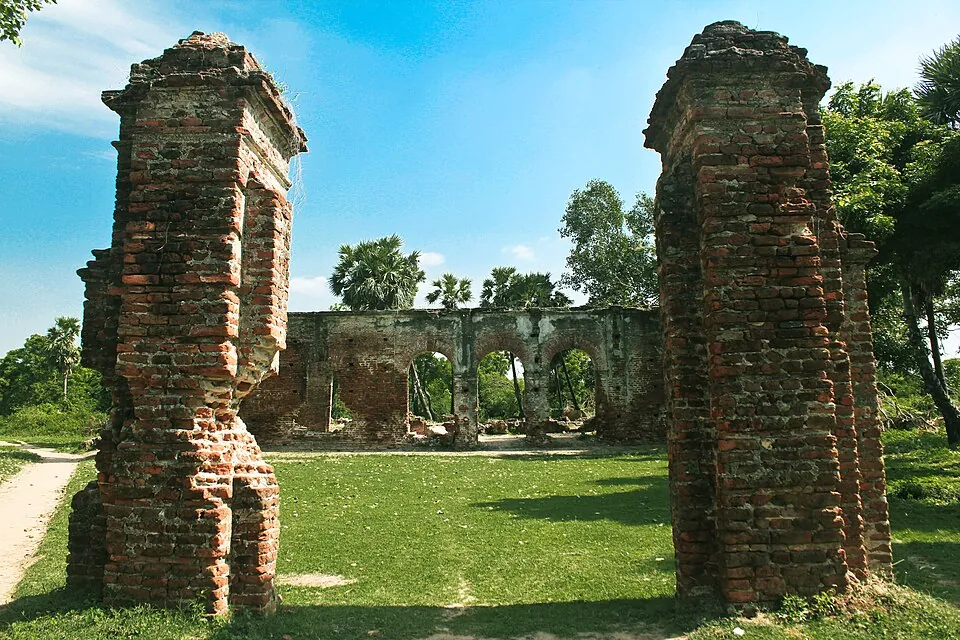
Arikamedu, a Coromandel Port Trading with Rome
Arikamēṭu · अरिकमेडु
Arikamedu, near Puducherry, was an ancient port identified with the Podouke of Greek and Roman sources. Excavations by Wheeler and later Casal and Begley found Roman amphorae, lamps and glass beads. Current dating places settlement between the second century BCE and the eighth century CE.
Arikamedu is an archaeological site at Kakkayanthope near Puducherry, around four kilometres from Pondicherry town. It has been identified with Podouke, the trading emporium named in the Greek merchants' guide known as the Periplus, and in Ptolemy. Excavations led by Mortimer Wheeler in 1945 and by Jean-Marie Casal between 1947 and 1950 uncovered Mediterranean wine jars, fine Arretine pottery, Roman lamps, glassware, gems and many beads of glass and stone. Wheeler concluded that it had been a Yavana trading post dealing with Rome from the time of Augustus, lasting some two centuries. Later fieldwork by Vimala Begley between 1989 and 1992 revised that picture and extended the settlement span from the second century BCE to the eighth century CE. Numerous Indo-Pacific beads helped to establish when occupation began. Red and black pottery connected with megalithic burials, known in Tamil as Pandukal, appears both before the trading post and in later phases. The site is a key piece of evidence for maritime exchange between southern India and the Mediterranean, and it shows that the Tamil coast was tied into a wide network of commerce well before the medieval period.