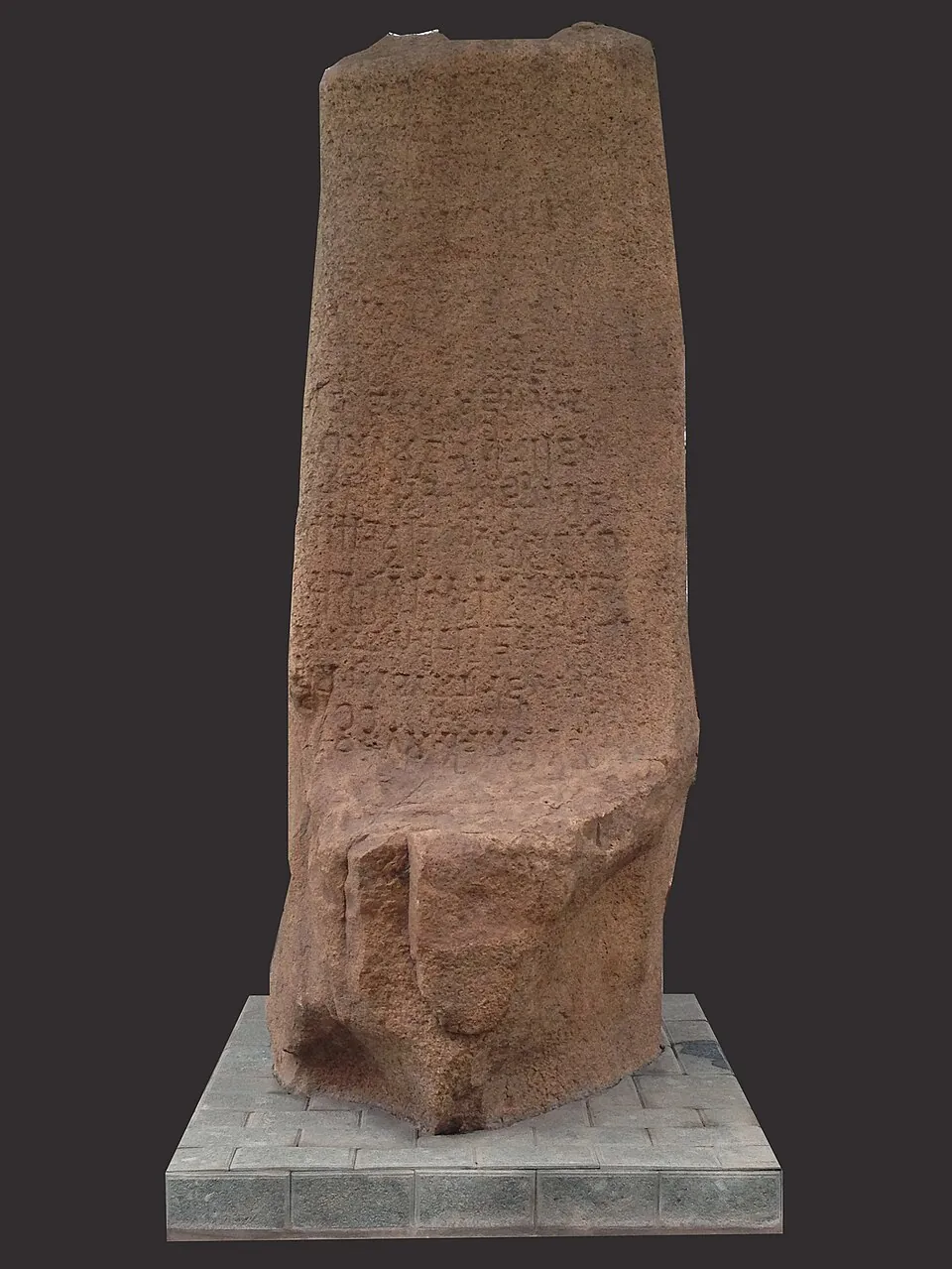
Võ Cạnh Inscription: Early Sanskrit Writing in Southeast Asia
Võ Cạnh · वो कान्ह
Traditionally 2nd-3rd century CE; recent work suggests the 4th century or later.
The Võ Cạnh inscription, a stone stele found in 1885 near Nha Trang, Vietnam, is the oldest Sanskrit inscription known from Southeast Asia. It names a King Śrī Māra and was once placed in the second or third century CE, though newer work suggests no earlier than the fourth.
The Võ Cạnh inscription, also called Inscription C. 40, was discovered in 1885 at the village of Võ Cạnh, some four kilometres from Nha Trang in Vietnam. It is a stone stele 2.5 metres high with three uneven sides, and it is the oldest Sanskrit inscription yet found in Southeast Asia. The text names a King Śrī Māra, in whose honour it was set up by his descendants. On palaeographic grounds it was long dated to the second or third century CE, and scholars debated whether it belonged to Lâm Ấp, Champa or Funan. George Coedès suggested that Śrī Māra might be Fan Shih-man, a Funan ruler around 230 CE according to the Chinese chronicles, and he treated the stele as evidence of the first wave of Indianisation in the region. More recent reassessments argue that the stele cannot be dated precisely and should not be placed earlier than the fourth century. Either way, it shows Sanskrit being used as a language of royal record far from India, and the stele also carries traces of Indian lexical influence. The date shown is the traditional estimate and carries real uncertainty.
Sources
- Võ Cạnh inscription Wikipedia · CC-BY-SA-4.0
- Q42548080 Wikidata · CC0-1.0