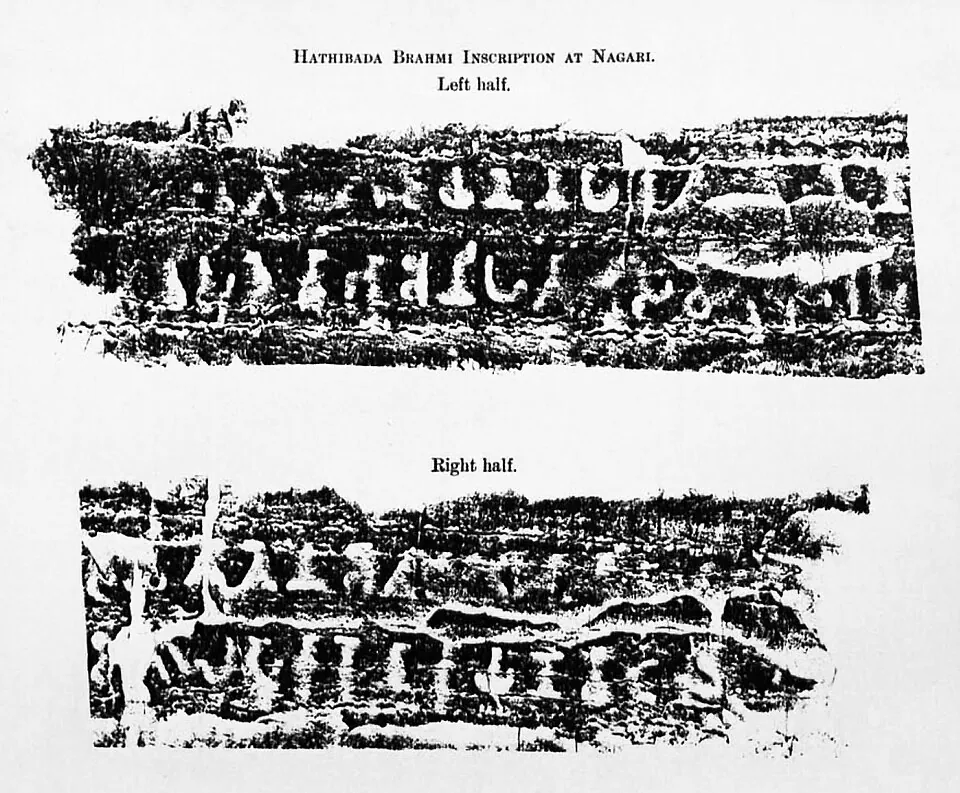
Hathibada Ghosundi: Oldest Sanskrit Inscriptions in Brāhmī
Haṭhībāḍā Ghosuṇḍī · हाथीबाड़ा घोसुण्डी
Estimated from palaeography, c. 2nd-1st century BCE.
The Hathibada Ghosundi inscriptions, found near Chittorgarh in Rajasthan, are the earliest known Sanskrit records in Brāhmī characters, dated to the second or first century BCE. They show Sanskrit emerging as an inscriptional language well before it became common on stone.
The Hathibada Ghosundi inscriptions, sometimes called the Ghosundi or Hathibada inscription, are regarded as the earliest known Sanskrit records cut in Brāhmī characters. They are dated to the second to first century BCE. The Hathibada inscription was found near the village of Nagari, about 13 kilometres north of Chittorgarh in Rajasthan, while the Ghosundi inscription came from the village of Ghosundi, about 5 kilometres south-west of the city. Their significance lies in the language. Earlier royal inscriptions in India, such as the edicts of Aśoka, were written in Prakrit, so these records mark an early use of Sanskrit in a public, written setting. The texts, which record the building of a stone enclosure for the worship of Saṃkarṣaṇa and Vāsudeva by a devotee called Gājāyana, also offer evidence for the Bhāgavata cult in this region. Together they help trace the shift from Prakrit to Sanskrit in inscriptions, a change that gathered pace under later dynasties such as the Kṣatrapas and Guptas. The date is an estimate for the second to first century BCE.
Sources
- Hathibada Ghosundi inscriptions Wikipedia · CC-BY-SA-4.0
- Q45629740 Wikidata · CC0-1.0