Nāṇeghāṭ Cave Inscriptions and the Early Sātavāhanas
Nāṇeghāṭ · नाणेघाट
Palaeographic estimate, c. 2nd-1st century BCE.
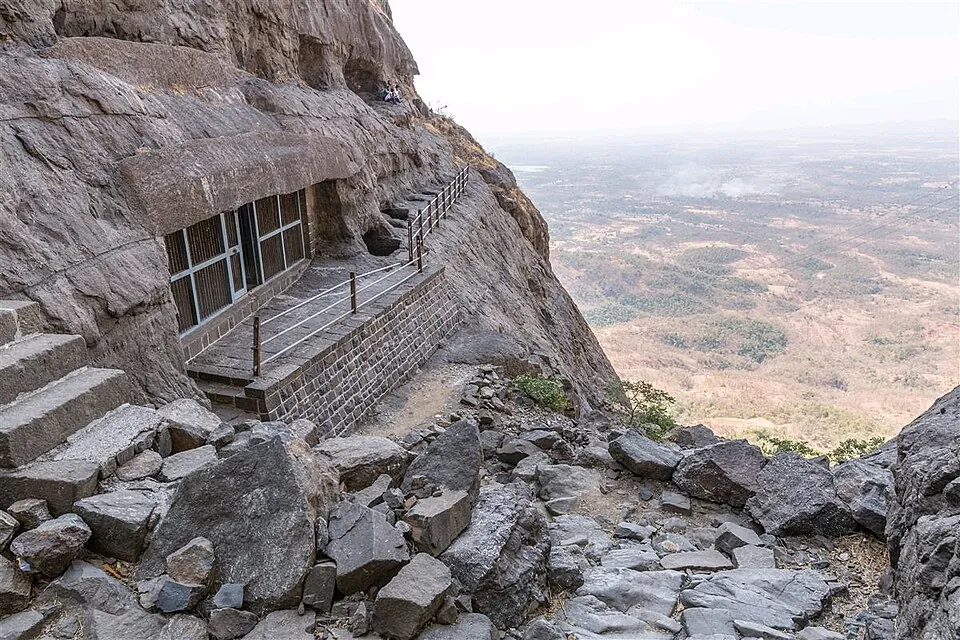
Nāṇeghāṭ is a Western Ghats pass on an ancient trade route above the Konkan coast, famous for a cave with Brāhmī inscriptions from the second or first century BCE, linked to the Sātavāhanas. They mention Vedic gods and rituals, and show some of the oldest numerals resembling modern digits.
Nāṇeghāṭ, also written Nanaghat, is a pass cutting through the Western Ghats, linking the Konkan shore with the old town of Junnar on the Deccan plateau, about 120 kilometres north of Pune. It formed part of an ancient trading route. A major cave there contains inscriptions in the Brāhmī script, in a Middle Indo-Aryan dialect, dated between the second and first centuries BCE and attributed to the age of the Sātavāhana dynasty. The texts are noteworthy for several reasons. They bring together Vedic and later Hindu deities, mention Vedic śrauta rituals performed by a ruling family and give the names of members of the early Sātavāhana house, so providing historical information about a dynasty that is otherwise known mostly from coins. They also carry the earliest known numeral signs that look like present-day numerals, namely those for 2, 4, 6, 7 and 9, especially those of later Nāgarī and the Hindu-Arabic system. The pass is thus an early record of royal piety, trade and mathematical notation in the Deccan. The date is approximate, since the inscriptions are placed within a century range on palaeographic grounds.