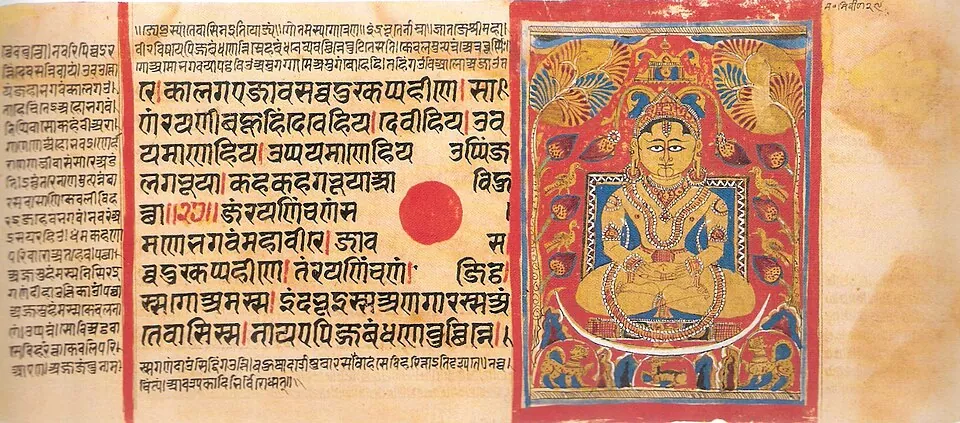
The Kalpa Sutra Preserves the Lives of the Tirthankaras
Kalpa Sūtra · कल्पसूत्र
The Kalpa Sutra is a major Jain scripture with biographies of the Tirthankaras, especially Parshvanatha and Mahavira. It is ascribed to Acharya Bhadrabahu, which would put it in the fourth century BCE, and it says it was written down some nine hundred years after Mahavira's nirvana.
The Kalpa Sutra is an important scripture of the Jain tradition. It contains the biographies of the Tirthankaras, the great teachers of Jainism, and in particular those of Parshvanatha and Mahavira. The text is ascribed to the monk Acharya Bhadrabahu, a placement that would date it to the fourth century BCE. Within the work itself there is a statement that it was committed to writing either 980 or 993 years after the nirvana of Mahavira, or 1,230 years after Parshvanatha's nirvana. The two sets of numbers come from different Jain reckonings and point to a later written form than the traditional attribution suggests, so historians distinguish the age of the oral tradition from the time when it was written down. The year given on this timeline follows the traditional ascription to Bhadrabahu and is therefore only approximate. The Kalpa Sutra is read aloud during the Paryushana festival, the most sacred annual observance of the Shvetambara community, and many illuminated manuscripts of it survive from medieval western India, making the text important both for religion and for the history of Indian painting. It offers a window onto how the Jain community remembered its founders.
Sources
- Kalpa Sūtra Wikipedia · CC-BY-SA-4.0
- Q422848 Wikidata · CC0-1.0