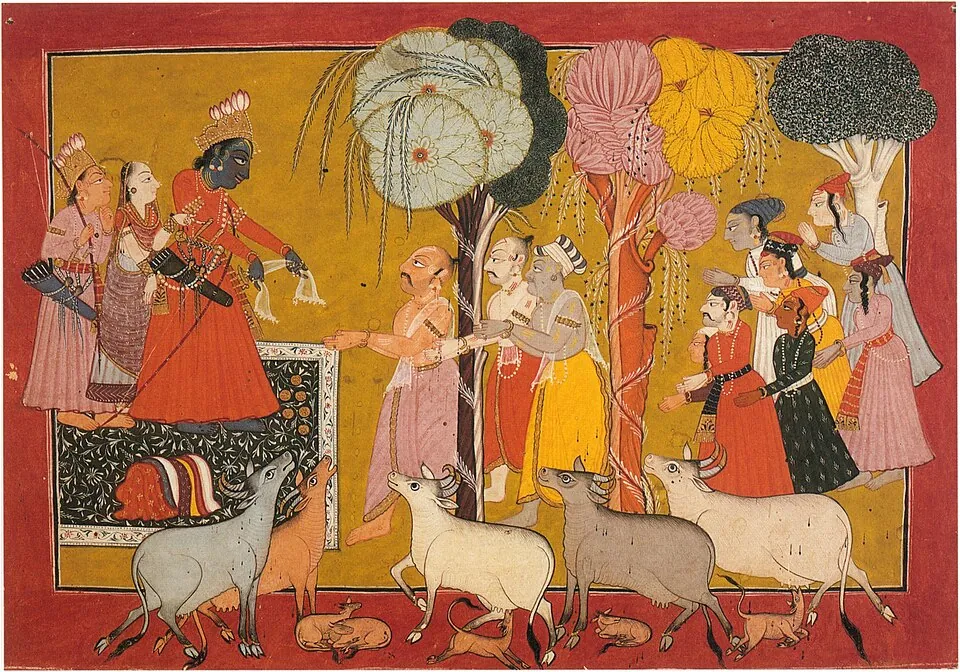
Rajput Painting in the Mughal Age
Rajput painting is the art of regional Hindu courts under the Mughals, from about the late sixteenth to the mid-nineteenth century. It divides into Rajasthani and Pahari schools. The name was coined by Ananda Coomaraswamy in his 1916 book. Styles range from bold and flat to refined and Mughal-influenced.
Rajput painting refers to the painting of regional Hindu courts during the Mughal period, roughly from the end of the sixteenth century to the middle of the nineteenth. It is usually divided into the Rajasthani and Pahari traditions, which developed in places far apart but shared a common culture under Rajput chiefs. The term itself was introduced by Ananda Coomaraswamy, whose 1916 book gave the first full study of Hindu painting of Rajasthan and the Punjab Himalayas. The tradition grew out of earlier sixteenth-century Hindu painting, sometimes called Early Rajput, and was changed by contact with Mughal painting. The resulting styles vary widely: Mewar and Basohli preserve conservative values of bright colour, flat treatment and abstract form, while Bikaner and Kangra show greater Mughal influence, with finer detail and cooler colour. Themes often include devotional and epic subjects, courtly life and music modes. The date here is the approximate start of the main phase of the tradition.
Sources
- Rajput painting Wikipedia · CC-BY-SA-4.0
- Q2988788 Wikidata · CC0-1.0