Sāṅkāśya, Where the Buddha Descended From Heaven
Sāṅkāśya · साङ्काश्य
Sāṅkāśya, now identified with Sankisa Basantapur in Uttar Pradesh, is revered in Buddhist tradition as the place where the Buddha came down from the Tuṣita heaven after teaching his mother. It is one of the eight great pilgrimage sites, and the Chinese monk Faxian described it around 400.
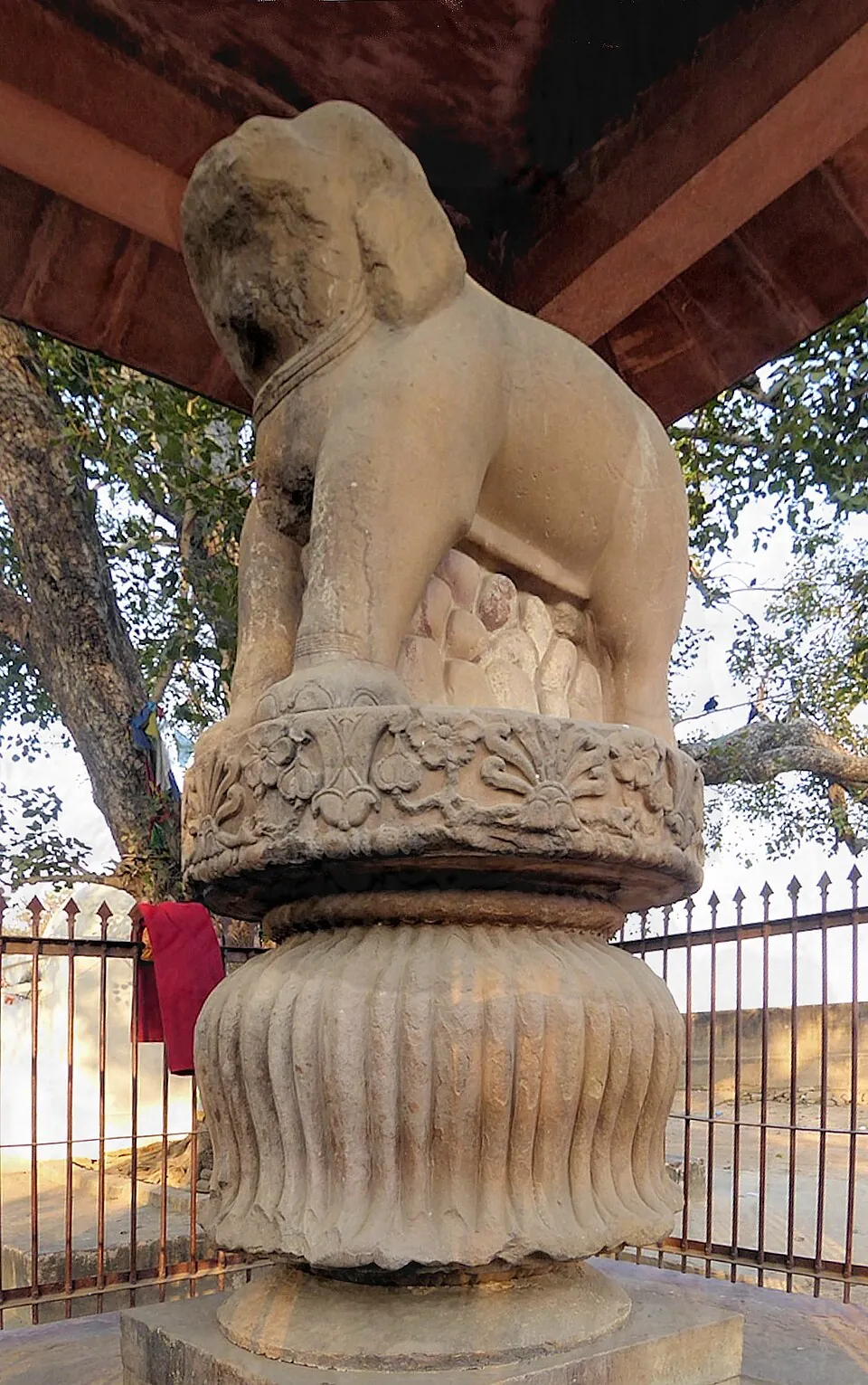
Sāṅkāśya, called Saṅkassa in Pāli, is an ancient city that Buddhists remember as the landing place of the Buddha after his descent from the Tuṣita heaven, where, in the tradition, he had gone to teach his mother. It counts among the eight great sites of Buddhist pilgrimage and was described as thirty leagues from Śrāvastī. Ashoka is said to have visited it some three centuries after the Buddha's death, and to have put up a pillar, of which the elephant capital survives, as well as a stupa and a shrine marking the descent. The Chinese pilgrim Faxian saw the monasteries and monuments of the place around the year 400, and Xuanzang came again in the seventh century. The site was explored in 1842 by the British archaeologist Alexander Cunningham, who identified it with the modern village of Sankisa Basantapur on the Kali Nadi, between Kampil and Kannauj, in the Farrukhabad district. Ruins of the stupa remain, along with a temple of Viśārī Devī and an old staircase. The date given is that of the early Chinese visit, which is firmly documented, unlike the earlier traditions.