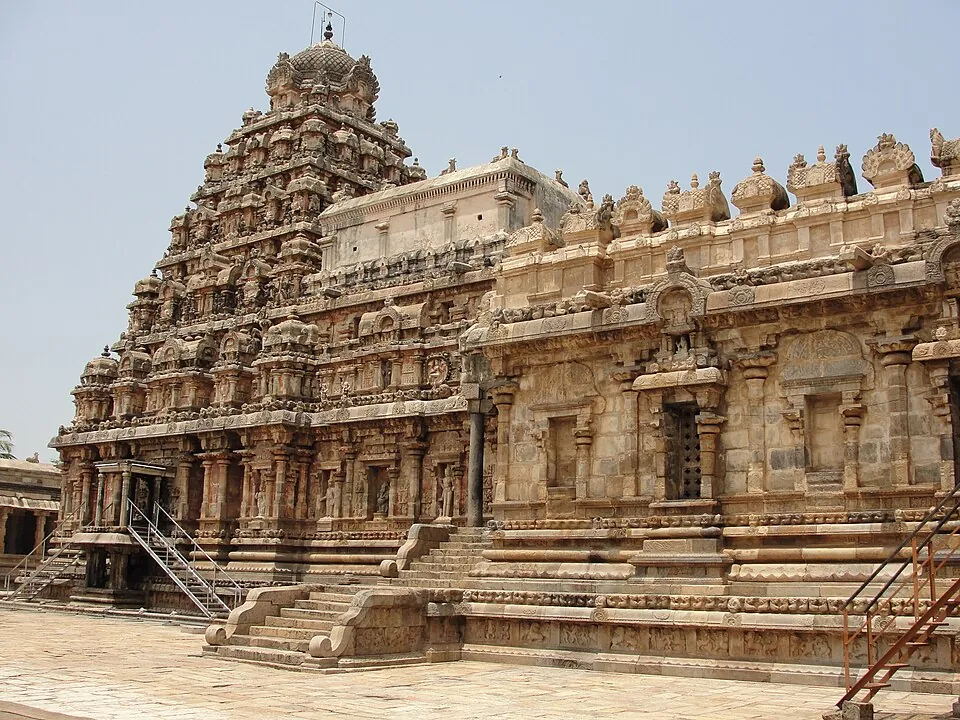
Airāvateśvara Temple Rises at Dārāsuram
Airāvateśvara Mandir · ऐरावतेश्वर मंदिर
The Airāvateśvara Temple at Dārāsuram near Kumbakonam in Tamil Nadu was built by the Chola emperor Rājarāja II in the twelfth century. Dedicated to Śiva and shaped like a chariot, it is a UNESCO site among the Great Living Chola Temples.
The Airāvateśvara Temple stands at Dārāsuram, a suburb of Kumbakonam in Thanjavur district, Tamil Nadu. It is a masterpiece of Chola architecture, built in the twelfth century CE by the emperor Rājarāja II. Together with the Bṛhadīśvara Temple at Thanjavur and the Gaṅgaikoṇḍacoḻapuram temple, it is inscribed by UNESCO as one of the Great Living Chola Temples. It belongs to a cluster of eighteen large medieval temples around Kumbakonam. The shrine is dedicated to Śiva, yet its sculpture also honours Vaiṣṇava and Śākta traditions and illustrates legends of the Nāyaṉmārs, the Śaiva bhakti saints. The stone structure takes the form of a chariot and carries images of major Vedic and Purāṇic deities, among them Indra, Agni, Varuṇa, Vāyu, Brahmā, Sūrya, Viṣṇu, the Saptamātṛkās, Durgā, Sarasvatī, Lakṣmī, Gaṅgā, Yamunā, Subrahmaṇya, Gaṇeśa, Kāma and Rati. The goddess has her own shrine, the Periya Nāyaki Amman temple, which stands detached to the north and may once have been part of the main temple when its outer courts were complete. The delicate carving and graceful proportions make it a key monument of late Chola art. The date given is a midpoint of Rājarāja II's period.
Sources
- Airavatesvara Temple Wikipedia · CC-BY-SA-4.0
- Q3437182 Wikidata · CC0-1.0