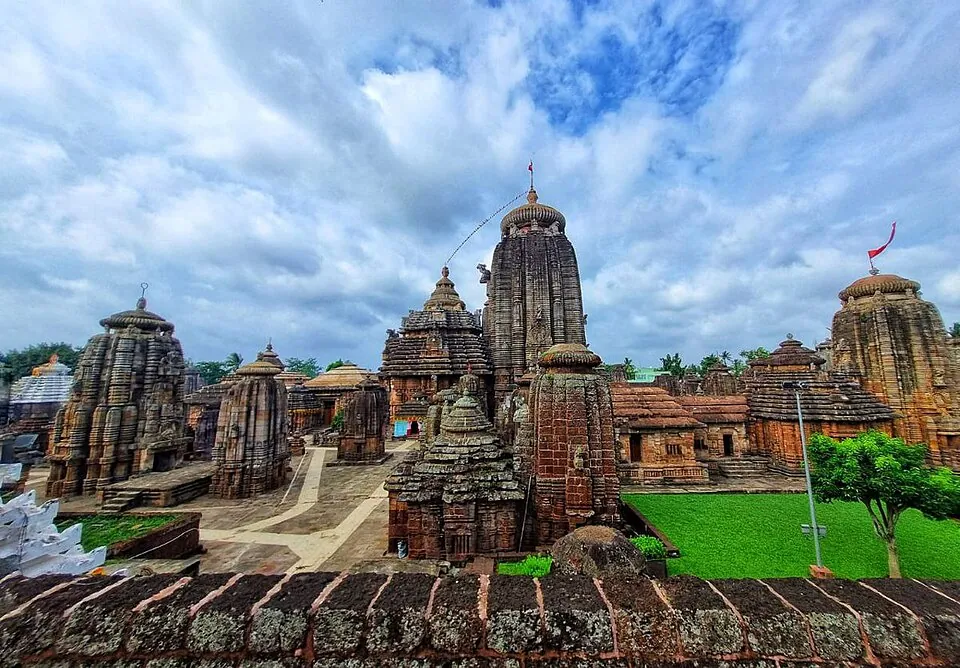
Bhubaneswar, the Temple City of Kalinga
Bhubaneswar in Odisha earned the name Temple City for its many Kaliṅga-style temples, a large share built between the sixth and thirteenth centuries CE. Its settled history reaches back to the first century BCE, and the area joins Hindu, Buddhist and Jain heritage; with Puri and Konark it forms the Golden Triangle.
Bhubaneswar, today the capital of Odisha, is nicknamed the Temple City because of the many temples still standing across its old town. The area was known in earlier writing as Chakra Khetra and Ekamra Khetra, the region adorned with a mango tree. Although the modern planned city was founded only in 1948, the history of the surrounding landscape can be traced to the first century BCE. It has long been a meeting point of Hindu, Buddhist and Jain traditions. Many of its Kaliṅga temples were built between the sixth and thirteenth centuries CE, and together they trace the development of regional temple architecture over several hundred years. Along with Puri and Konark, Bhubaneswar forms the Swarna Tribhuja, or Golden Triangle, a cluster of pilgrimage and heritage sites on the Odisha coast. This entry uses a central date within the main building period as a marker, because the temples were raised over many generations rather than in a single moment, and individual monuments carry their own dates.
Sources
- Bhubaneswar Wikipedia · CC-BY-SA-4.0
- Q171771 Wikidata · CC0-1.0