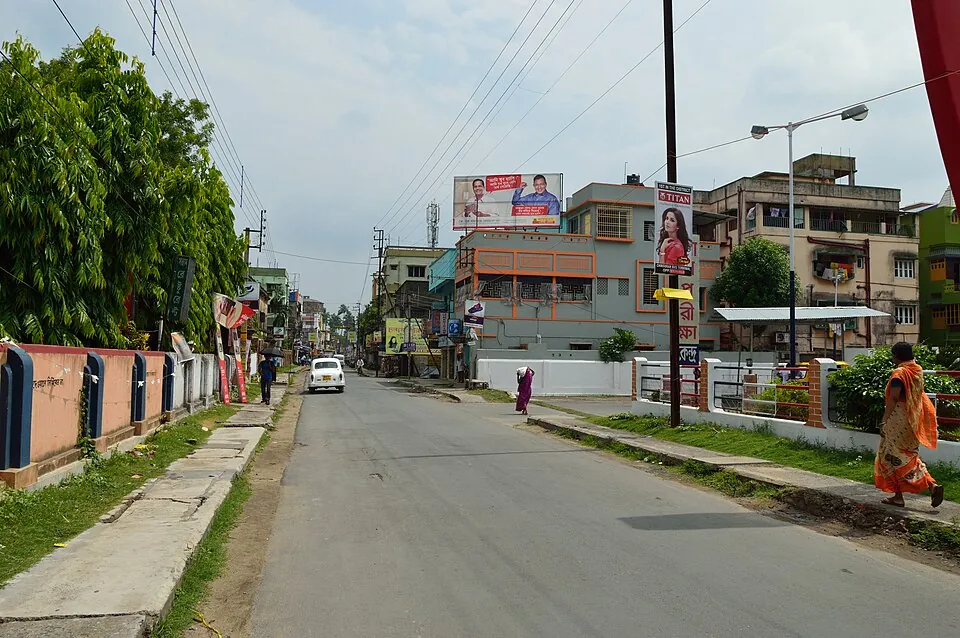
The Grand Trunk Road Is Rebuilt Under British Rule
The Grand Trunk Road, an ancient artery linking Central Asia and South Asia, was extensively reconstructed by the British between 1833 and 1860. Running some 3,655 kilometres from Teknaf to Kabul, it builds on the old Uttarapatha route improved by Aśoka and realigned by Sher Shah Suri.
The Grand Trunk Road is among the oldest and longest highways of Asia, linking Central Asia to South Asia for at least two and a half thousand years. It stretches about 3,655 kilometres from Teknaf in Bangladesh to Kabul in Afghanistan, passing through Dhaka, Kolkata, Kanpur, Prayagraj, Agra, Delhi, Amritsar, Lahore and Peshawar. Its core follows the ancient Uttarapatha, extended in the third century BCE from the Ganges delta up to the north-west frontier and improved under Aśoka. Sher Shah Suri later realigned the route to Sonargaon and Rohtas, and Mahmud Shah Durrani rebuilt the Afghan end. The British carried out the most thorough modern reconstruction between 1833 and 1860, giving it a metalled surface and the character it is known by. Over the centuries it carried merchants, armies, pilgrims and ideas. Because this entry depicts a long-running process, the date span marks the British rebuilding phase, an approximate and well documented chapter of a much longer story.
Sources
- Grand Trunk Road Wikipedia · CC-BY-SA-4.0
- Q300701 Wikidata · CC0-1.0