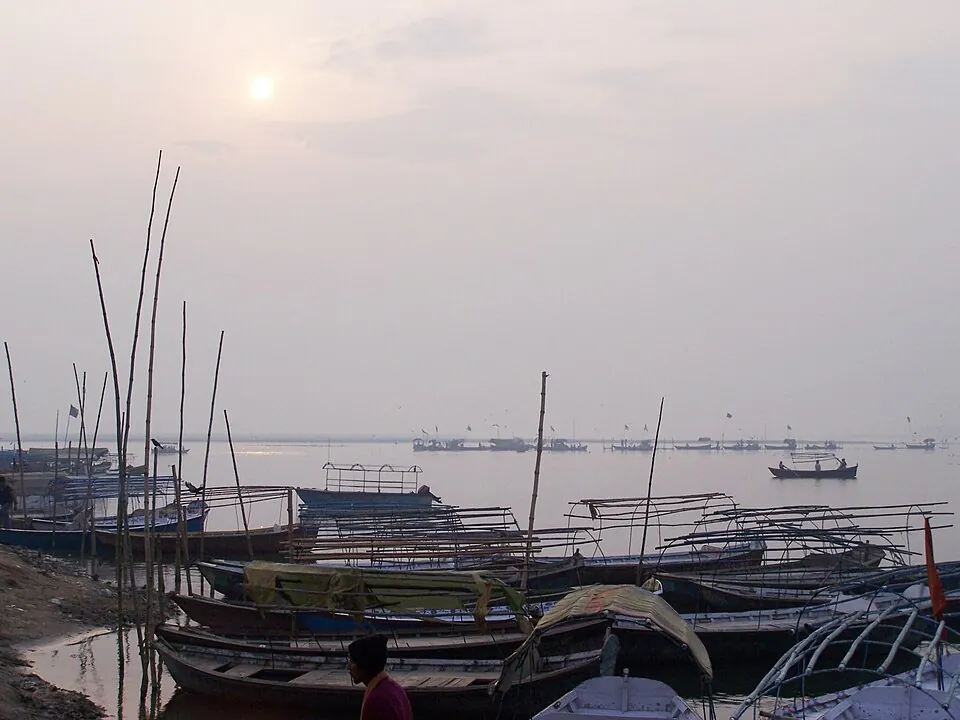
Triveṇī Saṅgama, the Sacred Meeting of Three Rivers
Triveṇī Saṅgama · त्रिवेणी संगम
Rough marker for the early literary attestation of pilgrimage traditions; the practice is older.
In Hindu tradition a triveṇī saṅgama is the confluence of three rivers, a holy site where bathing is said to wash away sin and release one from rebirth. The best known is at Prayāgrāj, where the Gaṅgā and Yamunā meet, with the Sarasvatī traditionally held to join unseen, and the Kumbh Mela is held.
A saṅgama is a confluence, and Hindu tradition holds that where three rivers meet, the place is especially sacred. A bath there is said to cleanse all of a person's sins and free them from rebirth. The most famous Triveṇī Saṅgama is at Prayāgrāj, formerly Allahabad, where the Gaṅgā and the Yamunā join and the Sarasvatī is believed to flow unseen beneath them. It is also the place where the Kumbh Mela is held on a twelve-year rotation, among the largest peaceful gatherings of people anywhere. Other triveṇī sites exist across the subcontinent, and river confluences in general figure widely in pilgrimage geography, ritual bathing and rites for the dead. Prayāga is praised in the epics and the Purāṇas as the king of tīrthas. Because the veneration of rivers and confluences grew gradually over centuries, there is no single founding date. The year shown is a rough marker for the period when such pilgrimage traditions are well attested in literature, and the confluence should be understood as a living practice that is much older than any one text.
Sources
- Triveni Sangam Wikipedia · CC-BY-SA-4.0
- Q2654257 Wikidata · CC0-1.0