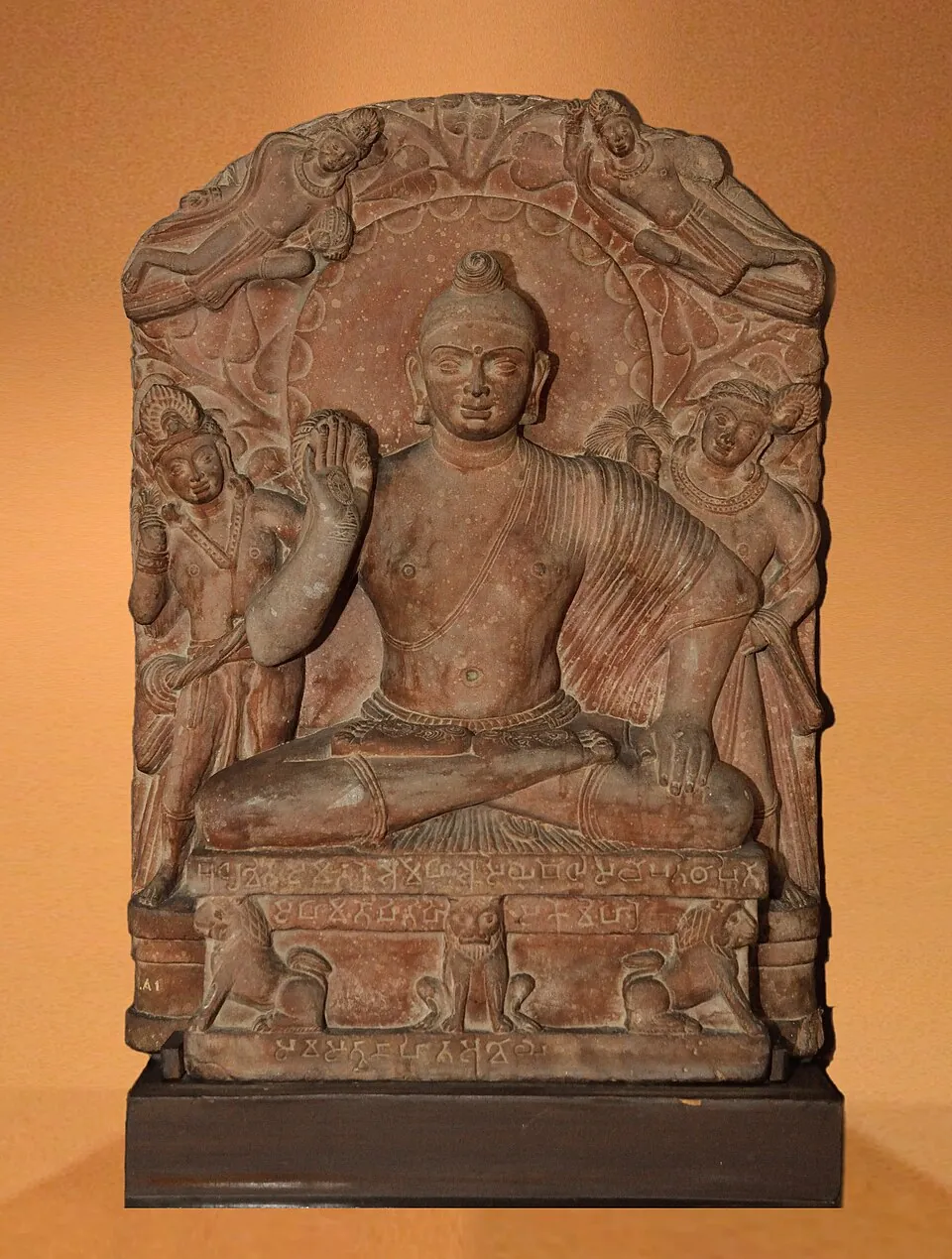
The Mathura School of Sculpture
Mathurā · मथुरा
The Mathura school was a major centre of Indian sculpture in the early centuries CE, working in local red sandstone under the Kushāṇas. Its workshops made some of the earliest Buddha images along with Jain and Hindu figures, and set an enduring Indian style of the body.
Mathurā, on the Yamunā, was one of the great sculptural centres of early India. Its workshops flourished especially under Kushāṇa patronage in the first to third centuries CE and worked mostly in the mottled red sandstone quarried nearby. The school is known for producing among the earliest images of the Buddha shown in human form, alongside Jain tīrthaṅkaras, yakṣas, Nāgas and early Hindu deities, so it served several religious communities at once. Its figures tend to be full-bodied and vigorous, with smiling faces and a sense of lively presence, and they are often seen as a more indigenous counterpart to the Greek-influenced style of Gandhāra in the north-west. Sculptors there also made portraits of kings, including statues of Kushāṇa rulers, and carved railing pillars with graceful female figures. The tradition continued through the Gupta age, when it produced refined, serene images that were exported to other sites. Its achievement is important for the history of Indian iconography, since many forms of divine figures were worked out in these studios and then spread widely across the subcontinent.
Sources
- Art of Mathura Wikipedia · CC-BY-SA-4.0
- Q28173968 Wikidata · CC0-1.0