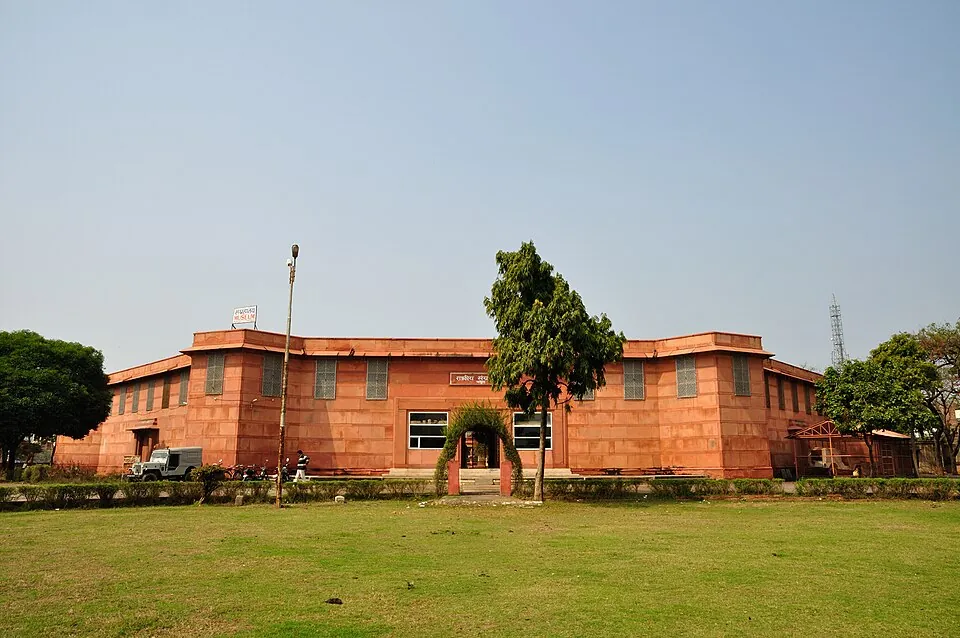
Growse Founds the Mathura Museum
The Government Museum at Mathura was founded in 1874 by the district collector F. S. Growse. It has carried several names over time, and it is known for archaeological holdings, especially sculpture, from the Mathura region of Uttar Pradesh, an important art centre in ancient times.
The Government Museum in Mathura, Uttar Pradesh, is an archaeological museum that was established in 1874 by Frederic Salmon Growse, who was then the collector of the Mathura district. Growse was a civil servant with a strong interest in the antiquities and architecture of the Braj region. At first the institution was known as the Curzon Museum of Archaeology, a name that recalled the viceroy who took an interest in the protection of monuments, then it was called the Archaeology Museum, Mathura, and finally the Government Museum, Mathura. Its collection reaches back to the early centuries CE, though the institution itself dates only from the nineteenth century. The collection is concerned with the rich sculptural tradition of Mathura, a major artistic centre in the Kushan and Gupta periods, and it holds Buddhist, Jain and Hindu images found in the city and its surroundings. Its holdings are important for the history of Indian art, and they include figures that show the early development of how the Buddha and deities were represented. The museum therefore stands as an example of how colonial-era collecting and local scholarship preserved material from ancient India.
Sources
- Government Museum, Mathura Wikipedia · CC-BY-SA-4.0
- Q6787359 Wikidata · CC0-1.0