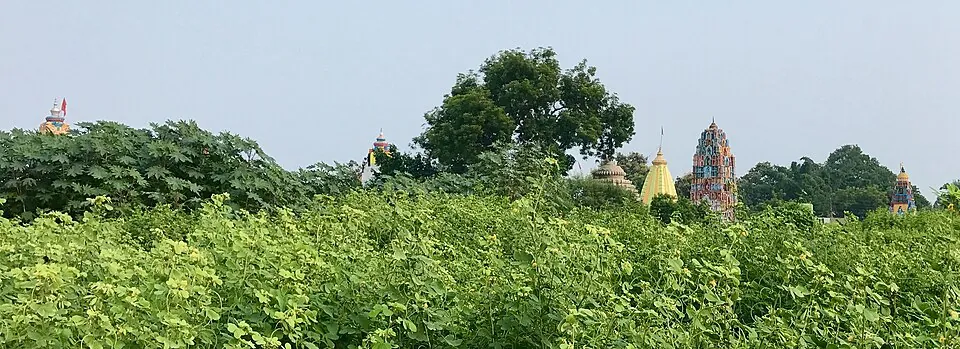
Sirpur, Mahanadi Capital of Dakshina Kosala
Sirpur, on the Mahanadi in Chhattisgarh, served as capital of the Pāṇḍuvaṃśī rulers and holds Buddhist, Hindu and Jain monuments from the fifth to twelfth centuries. Its brick Lakṣmaṇa temple and large monasteries show a cosmopolitan religious life in central India.
Sirpur, a village in Mahasamund district of Chhattisgarh, stands on the Mahanadi river and was the capital of the Pāṇḍuvaṃśī dynasty of ancient Dakshina Kosala. Excavations have revealed a group of monuments from roughly the fifth to the twelfth century, and they include Buddhist monasteries, Hindu temples and Jain remains in the same settlement. The Lakṣmaṇa temple, built of fired brick, is one of the finest early brick temples in India and is attributed to the seventh century. The big monastery known as Ānanda Prabhu Kuṭī Vihāra reflects the importance of Buddhism here, and visitors in this era came from across Asia. The mix of faiths at a single capital suggests that rulers patronised several traditions at once, a pattern seen in many early medieval kingdoms. Because the site's phases overlap, the date used here, around 650, is an approximation of the period when building was most active, not a single founding moment.
Sources
- Sirpur, Mahasamund Wikipedia · CC-BY-SA-4.0
- Q7530598 Wikidata · CC0-1.0