Era · Tradition and composition, c. 1000 BCE–400 CE
Epic & Itihāsa
107 moments in this era.
 5114 BCE
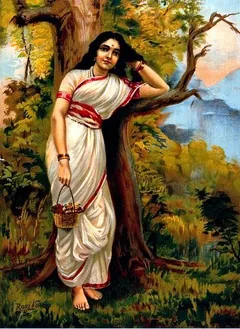
Ahalyā, Indra and the Curse of Gautama
Ahalyā, wife of the sage Gautama, is the subject of a legend of Indra's deception, her husband's curse and her release t…
 5114 BCE
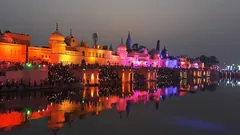
Ayodhyā, Capital of Kosala in Tradition and History
Ayodhyā on the Sarayū river is the city of the Rāmāyaṇa, birthplace of Rāma and capital of the Kosala kingdom in epic tr…
- 5114 BCE
Bharata Refuses the Throne of Ayodhyā
In the Rāmāyaṇa tradition, Bharata is Rāma's younger half-brother and regent of Ayodhyā during the exile. He rejects the…
 5114 BCE
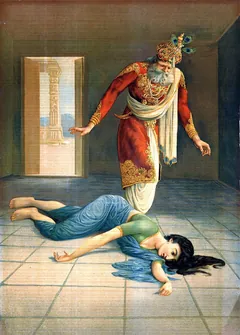
Daśaratha, King of Kosala
In the Rāmāyaṇa, Daśaratha is the king of Kosala ruling from Ayodhyā. With his queens Kausalyā, Sumitrā and Kaikeyī he b…
- 5114 BCE
The Janakas of Videha, Philosopher-Kings of Mithilā
Janaka was the title of the kings of Videha, who ruled from Mithilā and descended from Nimi and his son Mithi. In the Rā…
 5114 BCE
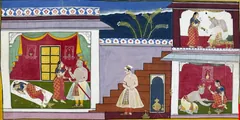
Kaikeyī and the Exile of Rāma
In the Rāmāyaṇa, Kaikeyī is the princess of Kekaya and third, favourite queen of Daśaratha of Kosala, and mother of Bhar…
- 5114 BCE
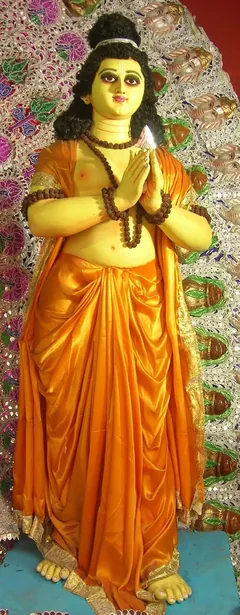
Kausalyā, Chief Queen of Ayodhyā and Mother of Rāma
In the Rāmāyaṇa, Kausalyā is the senior queen of King Daśaratha of Kosala and the mother of Rāma. Though a supporting fi…
 5114 BCE
Lakṣmaṇa, Devoted Brother of Rāma
In the Rāmāyaṇa, Lakṣmaṇa is the younger half-brother of Rāma, son of King Daśaratha and Queen Sumitrā, and twin of Śatr…
- 5114 BCE
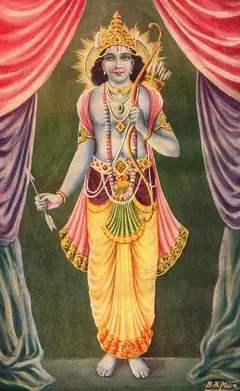
Mantharā Persuades Kaikeyī in the Rāmāyaṇa
In the Rāmāyaṇa tradition, Mantharā is the hunchbacked attendant of Queen Kaikeyī. She convinces her mistress that the t…
 5114 BCE
Birth of Rāma (Traditional Reckoning)
In the Rāmāyaṇa of Vālmīki, Rāma is born in Ayodhyā to King Daśaratha and Queen Kausalyā. Revered as the seventh avatar …
 5114 BCE
Rāmlīlā: The Folk Theatre of Rāma's Story
Rāmlīlā is the dramatic folk retelling of Rāma's life, staged across India during the autumn festival of Navarātri. Most…
 5114 BCE
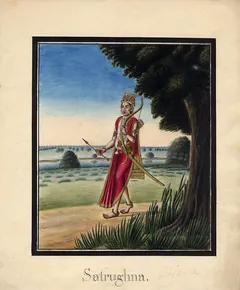
Śatrughna, Youngest Brother of Rāma
In the Rāmāyaṇa tradition, Śatrughna is the twin of Lakṣmaṇa and the youngest of Daśaratha's four sons, devoted to Bhara…
 5114 BCE
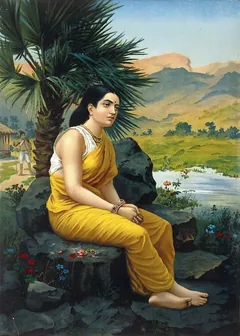
Sītā, heroine of the Rāmāyaṇa
Sītā, also called Jānakī and Maithilī, is the heroine of the Rāmāyaṇa and consort of Rāma. Revered as a form of the godd…
 5114 BCE
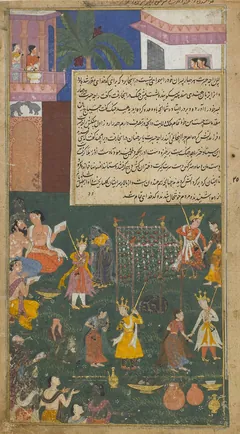
Ūrmilā, Princess of Videha and Her Long Sleep
In the Rāmāyaṇa tradition Ūrmilā is a princess of Videha, daughter of King Janaka and younger sister of Sītā, married to…
 5100 BCE
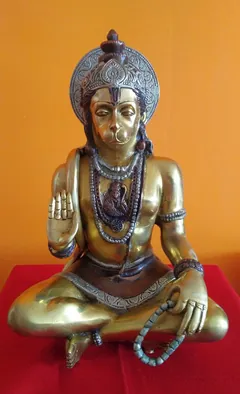
Hanumān, Devotee of Rāma
Hanumān is a revered deity in Hinduism, a divine vānara celebrated in the Rāmāyaṇa for his devotion to Rāma. Tradition r…
 5100 BCE
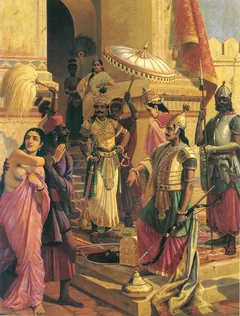
Indrajit, Conqueror of Indra, in the Rāmāyaṇa
Meghanāda, called Indrajit, is the eldest son of Rāvaṇa and crown prince of Laṅkā in the Rāmāyaṇa. Famed for defeating t…
- 5100 BCE
Jāmbavān, Bear Warrior of the Rāmāyaṇa
In the Rāmāyaṇa tradition Jāmbavān is a bear warrior who joins Rāma's campaign against Rāvaṇa and reminds Hanumān of his…
 5100 BCE
Jaṭāyu, the Vulture Who Defends Sītā
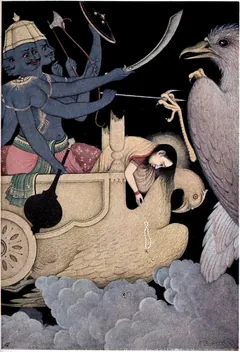
In the Rāmāyaṇa, Jaṭāyu is a vulture-formed demigod, son of Aruṇa and Śyenī, brother of Sampāti and nephew of Garuḍa. As…
- 5100 BCE
Kumbhakarṇa, the Sleeping Giant of Laṅkā
In the Rāmāyaṇa tradition, Kumbhakarṇa is Rāvaṇa's giant younger brother, famed for strength, appetite and long sleep br…
 5100 BCE
Rāvaṇa and the war in Laṅkā
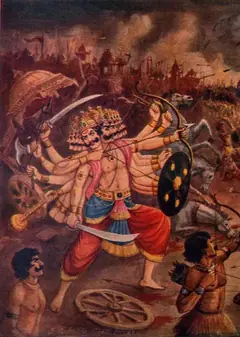
In the Rāmāyaṇa, Rāvaṇa, the ten-headed rākṣasa king of Laṅkā, carries off Sītā, prompting Rāma, aided by Sugrīva and th…
 5100 BCE
Mandodarī, Queen of Laṅkā and Counsellor of Rāvaṇa
In the Rāmāyaṇa, Mandodarī is the pious queen of Rāvaṇa of Laṅkā, daughter of the asura-architect Maya. She repeatedly u…
 5100 BCE
Rām Setu, the Shoals Between India and Laṅkā
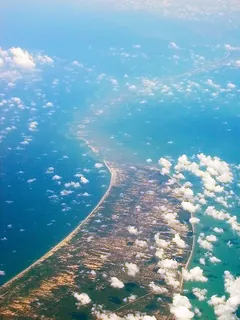
Rām Setu, or Adam's Bridge, is a forty-eight kilometre chain of limestone shoals between Rameswaram island in Tamil Nadu…
 5100 BCE
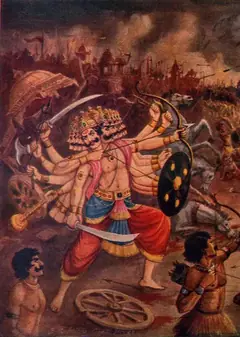
Rāvaṇa, King of Laṅkā in the Rāmāyaṇa
In the Rāmāyaṇa, Rāvaṇa is the ten-headed rākṣasa king of Laṅkā and the chief adversary of Rāma. He carries Sītā away to…
 5100 BCE
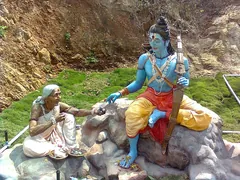
Śabarī, the Devoted Ascetic Who Honoured Rāma
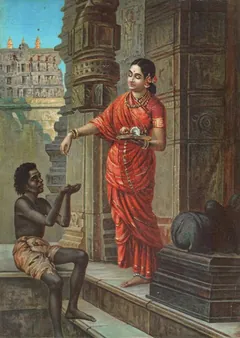
In later versions of the Rāmāyaṇa, Śabarī is an elderly woman ascetic whose ardent bhakti earns Rāma's blessing. Known a…
- 5100 BCE
Sugrīva, Vānara King of Kiṣkindhā
In the Rāmāyaṇa tradition Sugrīva is the vānara king of Kiṣkindhā, younger brother of Vālī and a son of the Sun god Sūry…
- 5100 BCE
Sundara Kāṇḍa, Hanumān's Journey to Laṅkā
The Sundara Kāṇḍa is the fifth book of the Rāmāyaṇa and the only one centred on Hanumān rather than Rāma. It narrates hi…
- 5100 BCE
Śūrpaṇakhā Meets Rāma in the Rāmāyaṇa
Śūrpaṇakhā is a rākṣasī of the Rāmāyaṇa tradition and the sister of Rāvaṇa, king of Laṅkā. Her encounter with Rāma and L…
 5100 BCE
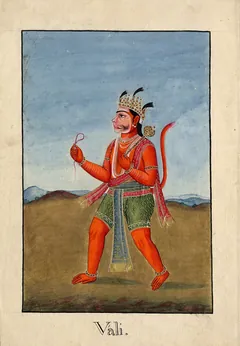
Vālī, King of Kiṣkindhā, Falls to Rāma's Arrow
In the Rāmāyaṇa, Vālī is the vānara king of Kiṣkindhā, son of Indra and brother of Sugrīva. After a quarrel drove Sugrīv…
 5100 BCE
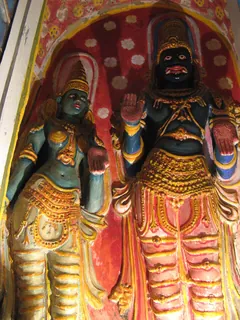
Vibhīṣaṇa Leaves Laṅkā for Rāma
In the Rāmāyaṇa tradition, Vibhīṣaṇa is the younger brother of the rākṣasa king Rāvaṇa. Guided by dharma, he abandons La…
- 5000 BCE
Vālmīki, the Ādikavi
Vālmīki is the legendary sage whom tradition, following the poem's own attribution, honours as composer of the Rāmāyaṇa.…
 3228 BCE
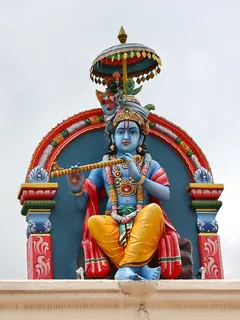
Birth of Kṛṣṇa (traditional)
Hindu tradition celebrates the birth of Kṛṣṇa, revered as the eighth avatāra of Viṣṇu and by many as the Supreme God. Th…
- 3200 BCE
Ambā, the Kāśī Princess Who Vowed Vengeance on Bhīṣma
In the Mahābhārata, Ambā, eldest daughter of the king of Kāśī, is carried off by Bhīṣma at her svayaṃvara. Rejected by b…
 3200 BCE
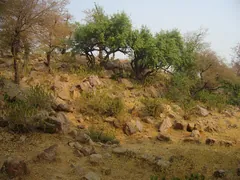
Govardhana Hill, Sacred Centre of Braj
Govardhana is an eight-kilometre hill in the Mathura district of Uttar Pradesh, about twenty-one kilometres from Vṛndāva…
 3200 BCE
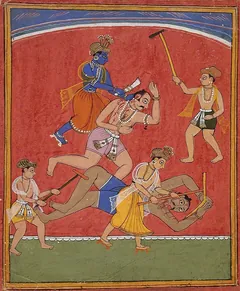
Kaṃsa, Tyrant King of Mathurā
In the Purāṇas and the Harivaṃśa, Kaṃsa is the harsh king of the Vṛṣṇi realm at Mathurā and brother of Devakī. After a h…
- 3200 BCE
Rādhā and Kṛṣṇa in Vaiṣṇava Devotion
Rādhā, also called Rādhikā, is the goddess of love and devotion and Kṛṣṇa's chief consort in Vaiṣṇava tradition. Differe…
- 3200 BCE
Satyavatī, Queen of the Kurus and Mother of Vyāsa
Satyavatī is a figure of the Mahābhārata, raised by a fisher chieftain on the Yamunā, who became queen of Śantanu of Has…
 3170 BCE
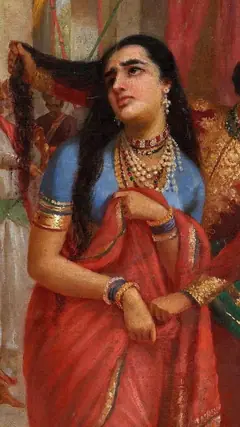
Draupadī and Her Svayaṃvara
In the Mahābhārata, Draupadī is the princess of Pañcāla, said to have arisen fully grown from a fire sacrifice of King D…
- 3170 BCE
Drupada, King of Pāñcāla and Father of Draupadī
In the Mahābhārata, Drupada, also called Yajñasena, is the king of Pāñcāla and the father of Draupadī, who is the poem's…
 3170 BCE
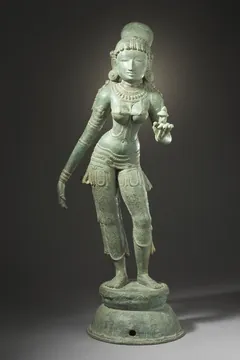
Rukmiṇī, First Queen of Kṛṣṇa at Dvārakā
Rukmiṇī, whose name means radiant, is revered as an avatar of Lakṣmī and the first and chief queen of Kṛṣṇa at Dvārakā. …
- 3160 BCE
Ekalavya and the Price of a Teacher's Fame
In the Mahābhārata, Ekalavya is a Niṣāda prince who teaches himself archery before an image of the teacher Droṇa, who ha…
 3150 BCE
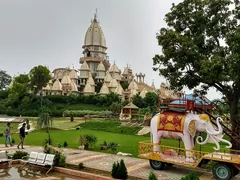
Hastināpura, Capital of the Kurus
Hastināpura, on the Ganga in today's Meerut district of Uttar Pradesh, is named in the Mahābhārata and the Purāṇas as th…
 3150 BCE
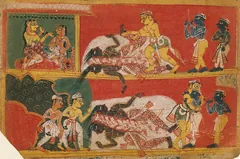
Jarāsandha, Mighty King of Magadha
In epic and Purāṇic tradition Jarāsandha is a powerful king of Magadha and a leading enemy of Kṛṣṇa. Jain texts such as …
- 3150 BCE
Kuntī, Mother of the Pāṇḍavas
In the Mahābhārata, Kuntī (also Pṛthā) is a Vṛṣṇi princess, wife of King Pāṇḍu and mother of Yudhiṣṭhira, Bhīma and Arju…
 3150 BCE
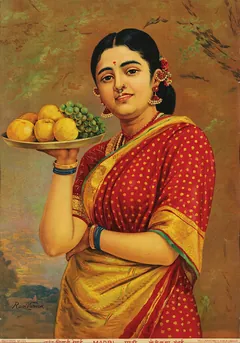
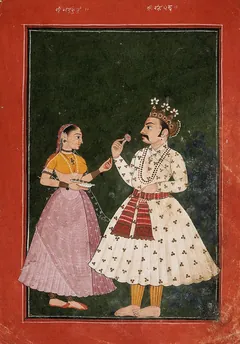
Mādrī, Second Queen of Pāṇḍu
In the Mahābhārata, Mādrī is the princess of Madra who becomes Pāṇḍu's second wife and mother of the twins Nakula and Sa…
 3150 BCE
Pāṇḍu, Kuru King and Father of the Pāṇḍavas
In the Mahābhārata, Pāṇḍu, born pale to Ambālikā, rules the Kuru kingdom from Hastināpura and is the legal father of the…
- 3150 BCE
Subhadrā, Sister of Kṛṣṇa and Wife of Arjuna
Subhadrā, whose name means auspicious, is a Vṛṣṇi princess and daughter of Vasudeva, revered as the half-sister of Kṛṣṇa…
 3140 BCE
Indraprastha, Capital of the Pāṇḍavas
Indraprastha, the Pāṇḍavas' capital in the Mahābhārata, was said to have been raised by Kṛṣṇa and Arjuna from the cleare…
- 3140 BCE
Śiśupāla of Cedi Falls at the Rājasūya
Śiśupāla, king of Cedi and cousin of Kṛṣṇa, is a rival of the Pāṇḍavas in the Mahābhārata. At Yudhiṣṭhira's rājasūya cor…
- 3140 BCE
Virāṭa and the Matsya Kingdom in the Epic
Matsya, 'the fish', was a Vedic-period kingdom named in the epic literature, with its capital at Virāṭanagara, identifie…
- 3140 BCE
Yudhiṣṭhira Answers the Yakṣa's Questions
In the Mahābhārata's Vana Parva, Yudhiṣṭhira answers a series of riddles posed by a yakṣa guarding a pool near the end o…
 3138 BCE
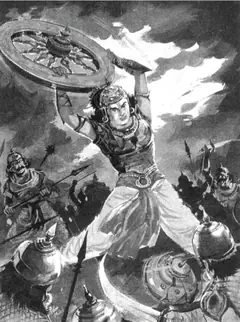
Abhimanyu and the Cakravyūha
In the Mahābhārata, Abhimanyu is the young son of Arjuna and Subhadrā. On the thirteenth day of the Kurukṣetra war he al…
 3138 BCE
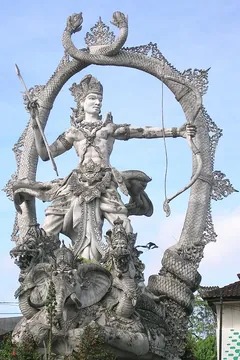
Arjuna, hero of the Mahābhārata
In the Mahābhārata, Arjuna is the third of the five Pāṇḍava brothers, a peerless archer born to Kuntī through the god In…
- 3138 BCE
Aśvatthāmā's Night Raid After the War
In the Mahābhārata, Aśvatthāmā, son of Droṇa, fights for the Kauravas and survives the war. After its formal end he raid…
 3138 BCE
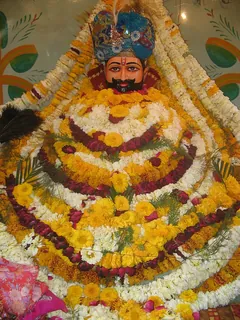
Barbarīka, the Folk Hero Revered as Khātū Śyām
Barbarīka is a folk hero of Hindu tradition, remembered as the son of Ghaṭotkaca and Maurvī and a grandson of Bhīma, tho…
- 3138 BCE
Bhīma, the Mighty Second Pāṇḍava
Bhīma is the second of the five Pāṇḍava brothers in the Mahābhārata, born to Kuntī through the wind god Vāyu and famed f…
 3138 BCE
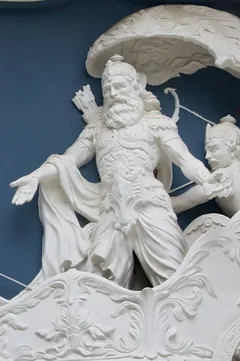
Bhīṣma, the grandsire of the Kurus
In the Mahābhārata, Bhīṣma is the son of King Śantanu and the river goddess Gaṅgā. He renounces the throne and vows life…
 3138 BCE
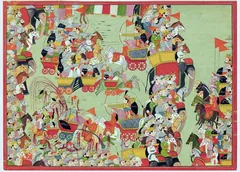
The Cakravyūha, the Wheel Formation
The Cakravyūha, also called the Padmavyūha, is a labyrinthine military formation in the Mahābhārata, built from several …
- 3138 BCE
Dhṛṣṭadyumna, Commander of the Pāṇḍava Army
In the Mahābhārata, Dhṛṣṭadyumna is born from a sacrificial fire as son of King Drupada and brother of Draupadī. He beco…
 3138 BCE
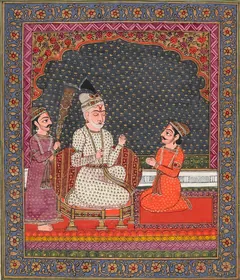
Dhṛtarāṣṭra, the Blind King of the Kurus
In the Mahābhārata Dhṛtarāṣṭra is the blind king of the Kuru realm at Hastināpura, born through niyoga to Ambikā and Vyā…
- 3138 BCE
Droṇa, Preceptor of the Kurus, Falls on the Fifteenth Day
In the Mahābhārata, Droṇācārya is the royal teacher of the Kuru princes and later a leading Kaurava commander. He lays d…
- 3138 BCE
Duryodhana, Eldest Kaurava and Rival of the Pāṇḍavas
In the Mahābhārata, Duryodhana is the eldest of the hundred Kaurava sons of Dhṛtarāṣṭra and Gāndhārī and the epic's chie…
- 3138 BCE
Duḥśāsana and the Disrobing of Draupadī
In the Mahābhārata, Duḥśāsana is next in age after Duryodhana among the hundred Kaurava brothers and a close confidant o…
- 3138 BCE
Gāndhārī, Queen of the Kurus
In the Mahābhārata, Gāndhārī is a princess of Gandhāra, daughter of King Subala, who marries the blind Kuru prince Dhṛta…
- 3138 BCE
Gāṇḍīva, the Celestial Bow of Arjuna
In the Mahābhārata, Gāṇḍīva is the divine bow of Arjuna, said to have been fashioned by Brahmā. Given to the hero for th…
 3138 BCE
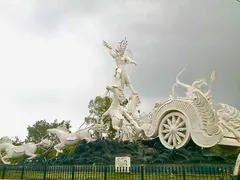
Ghaṭotkaca Draws Karṇa's Divine Weapon
Ghaṭotkaca is the son of Bhīma and the rākṣasī Hiḍimbā in the Mahābhārata. Leading an akṣauhiṇī for the Pāṇḍavas at Kuru…
- 3138 BCE
Jayadratha, King of Sindhu
Jayadratha is the king of Sindhu in the Mahābhārata, son of Vṛddhakṣatra and husband of Duḥśalā, the sister of the Kaura…
- 3138 BCE
Karṇa, Tragic Warrior of the Mahābhārata
In the Mahābhārata, Karṇa is the son of the sun god Sūrya and the princess Kuntī, raised by a charioteer's family. A gif…
- 3138 BCE
The Kauravas, Hundred Sons of Dhṛtarāṣṭra
Kaurava, a patronymic from the legendary king Kuru, usually names the hundred sons of Dhṛtarāṣṭra and Gāndhārī in the Ma…
- 3138 BCE
Kṛpa, Teacher of the Kuru Princes
In the Mahābhārata, Kṛpa is the Kuru court's martial teacher of Pāṇḍava and Kaurava princes, adopted by King Śantanu tog…
 3138 BCE
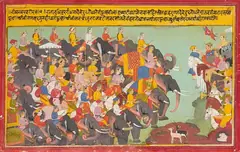
The Kurukṣetra War (traditional narrative)
In the Mahābhārata, the rival Kaurava and Pāṇḍava branches of the Kuru house meet in an eighteen-day war on the plain of…
- 3138 BCE
Nakula, Horse-Master and Fourth of the Pāṇḍavas
In the Mahābhārata, Nakula is the fourth of the Pāṇḍavas, twin of Sahadeva and son of the Aśvins and Mādrī. Known for hi…
 3138 BCE
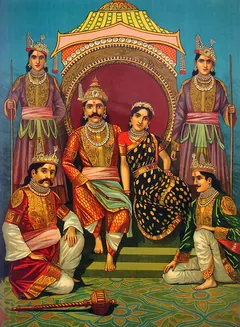
The Pāṇḍavas, Five Brothers of the Mahābhārata
In the Mahābhārata, the Pāṇḍavas are five brothers, Yudhiṣṭhira, Bhīma, Arjuna, Nakula and Sahadeva, sons of Pāṇḍu by di…
 3138 BCE
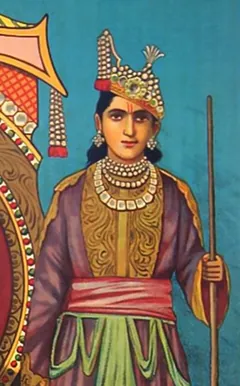
Sahadeva, Youngest of the Pāṇḍava Brothers
In the Mahābhārata, Sahadeva is the youngest Pāṇḍava, twin of Nakula and a son of Mādrī by the Aśvins. Known for wisdom …
 3138 BCE
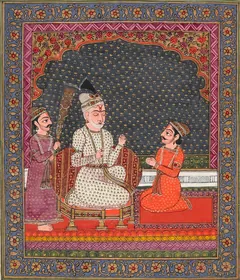
Sañjaya Narrates the Kurukṣetra War to Dhṛtarāṣṭra
In the Mahābhārata, Sañjaya is the counsellor and charioteer of the blind king Dhṛtarāṣṭra. A disciple of Vyāsa, he is g…
- 3138 BCE
Sātyaki, Vṛṣṇi Warrior and Companion of Kṛṣṇa
Sātyaki, also called Yuyudhāna, is a Yādava chieftain of the Vṛṣṇi clan, devoted to Kṛṣṇa and trained by Arjuna. In the …
- 3138 BCE
Śakuni and the Fateful Dice Game
In the Mahābhārata, Śakuni is the Gāndhāra prince, brother of Gāndhārī and uncle of the Kauravas, who backs Duryodhana a…
- 3138 BCE
Śalya of Madra, Uncle of the Pāṇḍavas Who Fought for the Kauravas
In the Mahābhārata, Śalya is a powerful king of the Madra country and brother of Mādrī. Tricked into the Kaurava cause, …
 3138 BCE
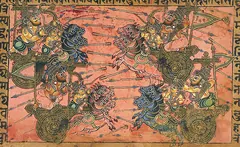
Śikhaṇḍī and the Fall of Bhīṣma
Śikhaṇḍī is a Mahābhārata warrior born as Drupada's daughter, Śikhaṇḍinī, who becomes male through an exchange with a ya…
- 3138 BCE
Prince Uttara of Matsya and the Year in Disguise
In the Mahābhārata, Uttara is the eldest son of King Virāṭa of Matsya and Queen Sudeṣṇā. At their court the Pāṇḍavas spe…
- 3138 BCE
Vidura, Counsellor of the Kuru Court
Vidura is the wise chief minister of the Kurus in the Mahābhārata, uncle to Pāṇḍavas and Kauravas alike. Known for uprig…
- 3138 BCE
The Viṣṇu Sahasranāma, a Thousand Names of Viṣṇu
The Viṣṇu Sahasranāma is a hymn listing a thousand names of Viṣṇu, among the most sacred and widely recited stotras. Its…
 3138 BCE
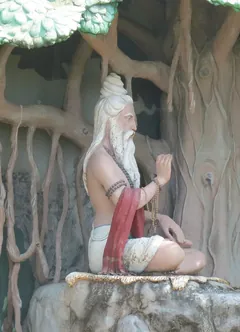
Vyāsa, Compiler of the Vedas
Vyāsa, also called Veda Vyāsa and Kṛṣṇa Dvaipāyana, is the sage whom tradition credits with arranging the Vedic mantras …
 3138 BCE
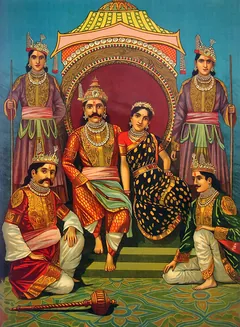
Yudhiṣṭhira, the Dharma King
In the Mahābhārata, Yudhiṣṭhira is the eldest Pāṇḍava, son of Kuntī and the god Dharma, celebrated for unwavering righte…
- 3100 BCE
Dvārakā, the Coastal City of Kṛṣṇa
Dvārakā in Gujarat, on the Okhamandal peninsula where the Gomatī meets the Gulf of Kutch, is a Kṛṣṇa pilgrimage city and…
 3100 BCE
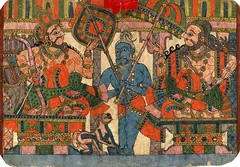
Janamejaya and the Serpent Sacrifice
Janamejaya was a Kuru king of the middle Vedic period who, with his father Parīkṣit, helped consolidate the Kuru state a…
- 3100 BCE
Parīkṣit, Kuru King Between Legend and History
Parīkṣit is a Kuru king who appears in two guises. Legend in the Mahābhārata and Purāṇas calls him Yudhiṣṭhira's success…
- 3080 BCE
Śuka, Narrator of the Bhāgavata Purāṇa to Parīkṣit
In tradition Śuka, son of Vyāsa, is the sage who recites the Bhāgavata Purāṇa to King Parīkṣit in his last days. Portray…
- 3060 BCE
Naimiṣāraṇya, the Forest Where the Purāṇas Were First Told
Naimiṣāraṇya is a sacred forest named in the Purāṇas, the Rāmāyaṇa and the Mahābhārata. Tradition holds that the Purāṇas…
- 3000 BCE
Nala and Damayantī
The Nalopākhyāna, or 'Episode of Nala', is a love story told within the Mahābhārata. King Nala gambles away his realm at…
 3000 BCE
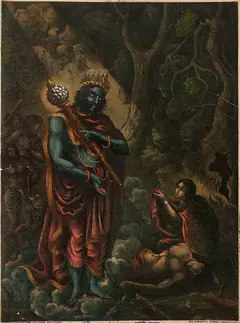
Sāvitrī and Satyavān
In the Vana Parva of the Mahābhārata, Princess Sāvitrī chooses Satyavān as her husband despite a prophecy that he will d…
 2000 BCE
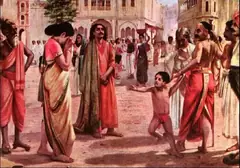
Hariścandra, the truthful king
A legendary ruler of the solar line, Hariścandra has a story that appears in the Aitareya Brāhmaṇa, the Mahābhārata and …
 500 BCE
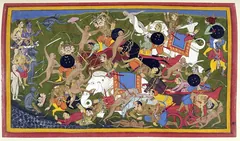
Composition of Vālmīki's Rāmāyaṇa
The Rāmāyaṇa, ascribed by tradition to the sage Vālmīki, is one of the two great Sanskrit epics, or itihāsas, alongside …
- 400 BCE
Composition of the Mahābhārata
The Mahābhārata, attributed by tradition to Vyāsa, is one of India's two great Sanskrit epics. Centred on the dynastic c…
- 400 BCE
Sabhā Parva: The Hall at Indraprastha and the Dice Game
The Sabhā Parva, the epic's second book, tells of Maya's assembly hall at Indraprastha, Yudhiṣṭhira's Rājasūya sacrifice…
- 400 BCE
Udyoga Parva, the Mahabharata's Book of Effort
The Udyoga Parva, or Book of Effort, is the fifth book of the Mahabharata. It tells of the failed peace mission and the …
- 300 BCE
The Anugītā in the Aśvamedhika Parva
The Anugītā is a Sanskrit text within Book 14 of the Mahābhārata, regarded as a sequel to the Bhagavad Gītā. It retells …
- 300 BCE
The Anuśāsana Parva, the Mahābhārata's Book of Instructions
The Anuśāsana Parva, the thirteenth book of the Mahābhārata, is its Book of Instructions, in which Bhīṣma teaches Yudhiṣ…
- 300 BCE
The Mausala Parva Tells of the Fall of the Yadavas
The Mausala Parva, the sixteenth book of the Mahabharata, is one of its shortest. In the epic's telling it recounts the …
- 300 BCE
Śānti Parva, the Mahābhārata's Book of Peace
The Śānti Parva, or Book of Peace, is the twelfth and longest book of the Mahābhārata. Set after the war, it shows Yudhi…
 200 BCE
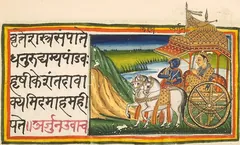
The Bhagavad Gītā
The Bhagavad Gītā, the 'Song of the Lord', is a Hindu scripture embedded in the Mahābhārata and most likely written duri…
- 200 BCE
Manusmṛti, the Laws of Manu
The Manusmṛti, or Mānava-Dharmaśāstra, is a leading Sanskrit legal treatise among the Dharmaśāstras. Scholars date the v…
- 200 CE
The Harivaṃśa Extends the Mahābhārata
The Harivaṃśa, 'Genealogy of Hari', is a Sanskrit work of about sixteen thousand verses, mostly in anuṣṭubh metre, treat…
 200 CE
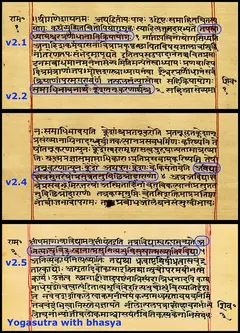
Yoga Sūtras of Patañjali
The Yoga Sūtras, compiled by Patañjali in the early centuries CE, gather about 195 aphorisms on the discipline of yoga. …
 300 CE
Pañcatantra: The Five Treatises of Fables
The Pañcatantra is an ancient Sanskrit collection of linked animal fables in prose and verse, set within a frame story a…
 300 CE
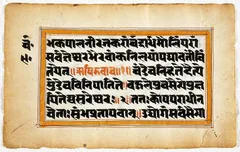
Compilation of the Purāṇas
The Purāṇas, literally 'ancient lore', are a vast body of Hindu texts covering cosmology, genealogies of gods and kings,…
 300 CE
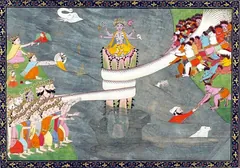
Viṣṇu Purāṇa
The Viṣṇu Purāṇa is one of the eighteen Mahāpurāṇas and a foundational text for Vaiṣṇava theology, including Viśiṣṭādvai…
- 400 CE
The Adbhuta Rāmāyaṇa, a Śākta Retelling
The Adbhuta Rāmāyaṇa is a Sanskrit work in twenty-seven sargas that retells the Rāma story from a Śākta viewpoint. Much …