Era · 1200–1526 CE
Sultanate & Vijayanagara
252 moments in this era.
- 1191 CE
Prithvirāj Chauhan Defeats Muhammad of Ghor at Tarain
In early 1191 Rajput forces led by Prithvirāj Chauhan defeated the Ghurid army of Muhammad of Ghor near Tarain in Haryan…
 1192 CE
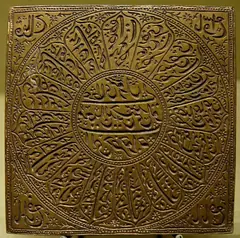
Chishtī Sufi order in South Asia
The Chishtiyya is a Sunni Sufi order named after the town of Chisht in Afghanistan, where Abū Isḥāq Shāmī founded it. Mu…
- 1194 CE
Muhammad of Ghor Defeats Jayachandra at Chandawar
In 1194 the Ghurid ruler Muhammad of Ghor fought Jayachandra of the Gahaḍavāla dynasty at Chandawar on the Yamuna near A…
 1199 CE
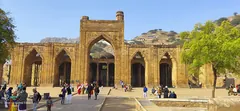
Aḍhāī Din kā Jhoṃprā at Ajmer
Commissioned by Qutb al-Dīn Aibak around 1192 and completed in 1199, this mosque in Ajmer is one of India's oldest. Buil…
 1199 CE
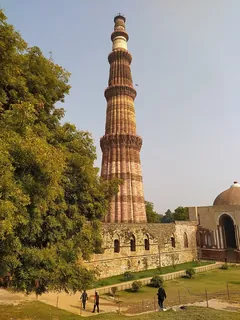
Construction of the Qutb Minar
The Qutb Minar in Mehrauli, Delhi, is a fluted stone victory tower and minaret raised in the early Delhi Sultanate. Quṭb…
- 1200 CE
Bilvamaṅgala Līlāśuka and the Kṛṣṇakarṇāmṛta
Līlāśuka, originally named Bilvamaṅgala, wrote the Kṛṣṇakarṇāmṛta, a lyric poem on Kṛṣṇa's childhood among the cowherds.…
- 1200 CE
Sufism Takes Root in the Delhi Sultanate
Sufism has been present in India for over a thousand years. Following the arrival of Islam in the eighth century, Sufi o…
- 1200 CE
Warangal Fort and the Kākatīya Gateways
Warangal Fort in Telangana was the capital of the Kākatīya dynasty from at least the twelfth century and later of the Mu…
- 1203 CE
Bakhtiyar Khalji Opens Muslim Rule in Bengal
Bakhtiyar Khalji, a Turko-Afghan soldier serving Muhammad of Ghor, led conquests in Bihar and Bengal and governed them a…
- 1204 CE
Merchants Raise the Baijnath Temple in Kangra
The Baijnath Temple in Kangra district, Himachal Pradesh, is a Nagara-style shrine to Śiva as Vaidyanath, lord of physic…
 1206 CE
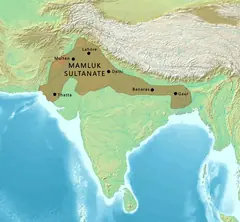
Founding of the Delhi Sultanate
In 1206 the Delhi Sultanate emerged from former Ghurid territories in northern India, beginning more than three centurie…
- 1206 CE
The Mamluk Dynasty Founds the Delhi Sultanate
From 1206 to 1290, three dynasties of Turkic slave-soldier origin governed the Ghurid lands in India and then the Delhi …
 1206 CE
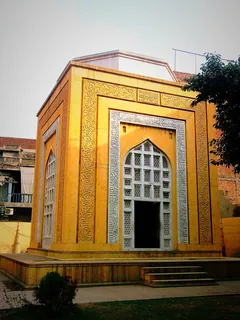
Qutb ud-Dīn Aibak Founds Independent Rule at Delhi
After the assassination of the Ghurid ruler Muḥammad of Ghor in 1206, his Turkic general Qutb ud-Dīn Aibak took charge i…
 1211 CE
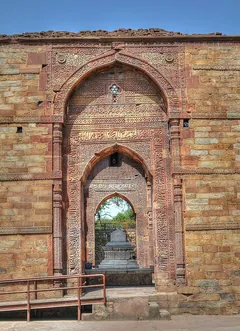
Iltutmish Consolidates the Delhi Sultanate
Shams ud-Dīn Iltutmish, a former slave, became the third Sultan of Delhi in 1211 and ruled until 1236. He is regarded as…
 1213 CE
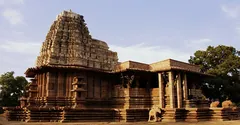
Ramappa Temple Rises at Pālampet
The Ramappa, or Rudreśvara, Temple at Pālampet in Telangana was commissioned in 1213 by the Kākatīya general Recherla Ru…
- 1220 CE
Fakhr-i Mudabbir Writes on Genealogy and the Art of War
Fakhr-i Mudabbir, who lived from 1157 to 1236, was a Turkic author serving Ghaznavid, Ghurid and Delhi Sultanate courts.…
- 1220 CE
The Suhrawardī Sufi Order Takes Root in India
The Suhrawardī order, a Sufi brotherhood founded by Abū'l-Najīb Suhrawardī (d. 1168), became especially prominent in Ind…
- 1221 CE
Mongol Raids Reach the Indian Subcontinent
Between 1221 and 1327 the Mongols launched repeated incursions into the Indian subcontinent, with later raids carried ou…
- 1225 CE
Śārṅgadeva Composes the Saṅgītaratnākara
Śārṅgadeva wrote the Saṅgītaratnākara, the Ocean of Music, in the thirteenth century at the court of the Yādava king Siṃ…
- 1228 CE
Founding of the Ahom Kingdom
In 1228 the Tai prince Sukaphaa established a small wet-rice state in the upper Brahmaputra valley that grew into the Ah…
- 1231 CE
Sultan Ghari, Delhi's Earliest Islamic Tomb
Sultan Ghari is a mausoleum in Delhi's Vasant Kunj area, built around 1231 for Prince Nāṣiruddīn Maḥmūd, eldest son of I…
- 1235 CE
Qutbuddīn Bakhtiyār Kākī Dies at Delhi
Qutbuddīn Bakhtiyār Kākī, a Chishtī Sufi saint born in 1173, died in 1235. Successor to Muʿīnuddīn Chishtī, he establish…
- 1236 CE
The Chishti Shrine at Ajmer
The Ajmer Dargah, shrine of the Sufi saint Muʿīn al-Dīn Chishtī, is dated to 1236. The complex has tombs and a mosque an…
- 1236 CE
Moinuddin Chishti Dies at Ajmer
Muʿīn al-Dīn Chishtī, born in Sistan in 1143, brought the Chishtiyya Sufi order to India and settled in Ajmer, where he …
 1236 CE
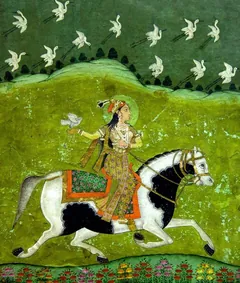
Raziyya Becomes Sultan of Delhi
Raziyya, daughter of Iltutmish, took the Delhi throne in 1236 and was deposed in 1240. She was the first Muslim woman to…
 1238 CE
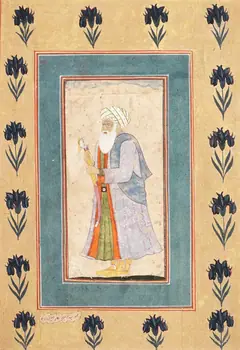
Nizāmuddīn Auliyā, Chishtī Sufi of Delhi
Nizāmuddīn Auliyā (1238–1325) was a Sunni scholar and celebrated Sufi master of the Chishtī order, active in Delhi. Heir…
- 1250 CE
The Eight Mathas of Udupi
The Ashta Mathas of Udupi are eight monasteries traditionally founded by Madhvācārya, preceptor of Dvaita Vedānta, and l…
- 1250 CE
Madhva Founds the Tattvavāda of Dvaita Vedānta
Dvaita Vedānta, or Tattvavāda, was founded in the thirteenth century by the philosopher-saint Madhvācārya. It teaches th…
- 1250 CE
Jaṭāvarman Sundara Pāṇḍya I Expands the Pāṇḍya Realm
Jaṭāvarman Sundara Pāṇḍya I ruled from 1250 to 1268 and took the Pāṇḍya kingdom to its greatest extent, defeating Telugu…
- 1250 CE
Meykaṇḍār and the Śivajñāna Bodham
Meykaṇḍār, a thirteenth-century Tamil philosopher and theologian, wrote the Śivajñāna Bodham, the foundational treatise …
- 1253 CE
Amīr Khusrau, Poet of the Delhi Sultanate
Amīr Khusrau (1253–1325) was an Indo-Persian poet, musician and scholar at the courts of the Delhi Sultanate and a disci…
- 1260 CE
The Kamata Kingdom Emerges in Western Kāmarūpa
The Kamata kingdom arose in the western part of old Kāmarūpa, probably when the ruler Sandhya moved his court westward t…
 1262 CE
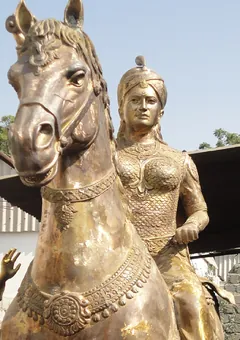
Rudramā Devī, Kākatīya Queen Who Ruled in Her Own Right
Rudramā Devī governed the Kākatīya kingdom in present-day Telangana and Andhra Pradesh from 1262 to 1289. Appointed co-r…
 1266 CE
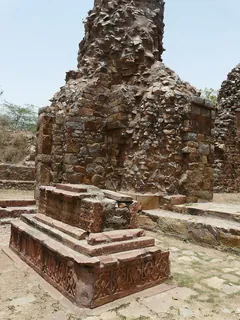
Balban Becomes Sultan of Delhi
Ghiyāth al-Dīn Balban, a former slave of Iltutmish who rose to be regent, became ninth Mamluk sultan of Delhi in 1266 an…
- 1267 CE
Mahānubhāva Sampradāya Takes Shape in Vidarbha
The Mahānubhāva tradition, a Kṛṣṇa-centred sect generally traced to Cakradhara Svāmī, was formally constituted in the Va…
- 1270 CE
Nāmdev, Varkarī Poet-Saint of Maharashtra
Nāmdev, traditionally dated 1270 to 1350, was a Marathi Vaiṣṇava saint from Maharashtra and a devotee of Viṭṭhala at Pan…
 1275 CE
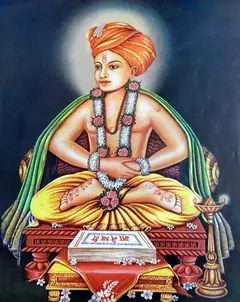
Sant Jñāneśvar of Maharashtra
Sant Jñāneśvar (Dnyaneshwar, 1275–1296) was a Marathi saint, poet and philosopher of the Nāth and Vārkarī traditions. In…
- 1279 CE
Rāmkhamhaeng of Sukhothai and the Thai Script
Rāmkhamhaeng, third king of the Phra Ruang dynasty, ruled the Sukhothai kingdom from 1279 to 1298 in its most prosperous…
- 1280 CE
Bu Ali Shah Qalandar of Panipat
Bu Ali Shah Qalandar (1209 to 1324) was a Sufi saint of the Owaisī order, born in Panipat in present-day Haryana. Once h…
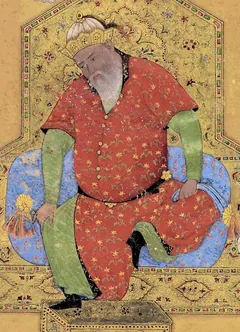 1290 CE
Jalāl-ud-Dīn Khaljī Founds the Khaljī Dynasty
Jalāl-ud-Dīn Khaljī, an officer of the Mamluk sultans, took power in Delhi in 1290 after serving as regent for a child s…
- 1292 CE
Marco Polo Visits the Southern Indian Coast
Marco Polo, the Venetian merchant, travelled across Asia between 1271 and 1295 and described India's coasts in his Trave…
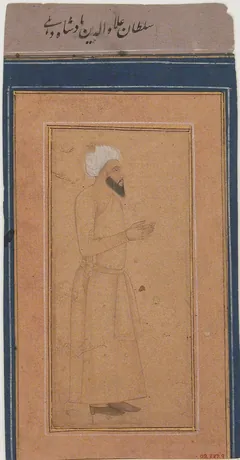 1296 CE
Reign of Alauddin Khalji
Alauddin Khalji ruled the Delhi Sultanate from 1296 to 1316 after seizing the throne from his uncle Jalaluddin. He repel…
- 1299 CE
Alauddin Khalji Conquers Gujarat
In 1299 the Delhi sultan Alauddin Khalji sent an army that plundered Gujarat's great cities, including Anahilavada, Kham…
- 1300 CE
The Bhakti Movement Spreads Devotion Across India
The bhakti movement was a medieval devotional tradition that offered salvation through loving devotion open to all. Begi…
- 1300 CE
Cokhāmeḷā, Mahar Saint of the Varkari Tradition
Cokhāmeḷā, a Mahar saint-poet of Maharashtra in the thirteenth and fourteenth centuries, ranks among India's earliest po…
- 1300 CE
Gooty Fort, a Ruined Hill Stronghold in Andhra Pradesh
Gooty Fort, also called Ravadurg and Gutti Kota, is a ruin on a hill in the town of Gooty in the Anantapur district of A…
- 1300 CE
Hema Saraswati Writes the Prahlāda Caritra
Hema Saraswati was one of the earliest known Assamese writers. As court poet to King Durlabhnarayan of Kamata, he compos…
- 1300 CE
Sant Janābāī, Servant-Poet of Pandharpur
Janābāī was a Marathi Varkari saint and poet, believed born in the 1260s or 1270s at Gangākhed and died in 1350. A maids…
- 1300 CE
The Yoga Upaniṣads, a Group of Texts on Practice
The Yoga Upaniṣads are twenty minor Upaniṣads on yogic theory and practice, found in the 108-text Muktikā canon. Distinc…
- 1301 CE
The Fall of Ranthambore to Alā-ud-Dīn Khaljī, 1301
In 1301 Alā-ud-Dīn Khaljī of Delhi conquered Raṇastambhapura, now Ranthambore, ruled by the Chahamāna king Hammīra. Hamm…
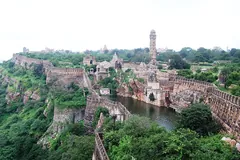 1303 CE
Chittorgarh Fort Falls to Alauddin Khalji
Chittorgarh, the capital of Mewar and one of India's largest forts, covers a 180-metre hill with palaces, temples and wa…
- 1303 CE
Jauhar at Chittorgarh, 1303
Jauhar was a practice in which Rajput women, facing certain defeat in war, died by fire to avoid capture, while the men …
- 1303 CE
Shah Jalal and the Tradition of Sylhet's Conquest
Shah Jalal, a Sufi saint and commander who lived from 1271 to 1346, is traditionally linked to the conquest of Sylhet ar…
- 1303 CE
Alauddin Khalji Builds Siri, Second City of Delhi
Around 1303 Alauddin Khalji built Siri, the second of Delhi's seven historic cities, to guard against Mongol attacks. We…
- 1308 CE
Malik Kafur Takes Devagiri for Alauddin Khalji
Around 1308 an army of the Delhi sultan Alauddin Khalji under Malik Kafur captured Devagiri, capital of the Yadava king …
- 1310 CE
Malik Kāfūr Leads the Delhi Armies South
Malik Kāfūr, a slave-general of Alauddin Khalji, defeated Mongol invaders in 1306 and led campaigns against the Yādavas,…
- 1310 CE
Malik Kafur Besieges Warangal and Extracts a Tribute
In January 1310 the Delhi Sultanate general Malik Kafur, sent by Alauddin Khalji, laid siege to the Kakatiya capital War…
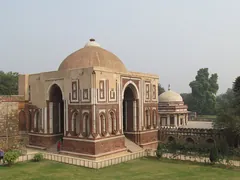 1311 CE
Alai Darwaza, Gateway of Alauddin Khalji
The Alai Darwaza, built by Sultan Alā-ud-Dīn Khaljī in 1311, is a red sandstone gateway on the south side of the Quwwat-…
- 1317 CE
Padmanabha Tirtha Succeeds Madhva as Commentator
Padmanabha Tirtha, a direct disciple of Madhvācārya, took the pontifical seat after him and became the chief interpreter…
 1320 CE
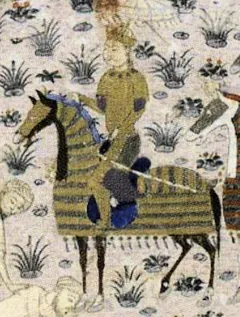
Ghiyāth al-Dīn Tughluq Founds the Tughluq Dynasty
Ghiyāth al-Dīn Tughluq took the throne of Delhi in 1320 after the fall of Khusraw Khān, starting the Tughluq dynasty. He…
- 1320 CE
Lal Ded, Mystic Poet of Kashmir
Lalleśvarī, widely called Lal Ded (c. 1320–1392), was a Kashmiri mystic associated with the Kashmir Śaiva school. She cr…
- 1320 CE
The Tughlaq Dynasty of Delhi
The Tughlaq dynasty, third to rule the Delhi Sultanate, began in 1320 when Ghāzī Malik became sultan as Ghiyāth al-Dīn T…
 1321 CE
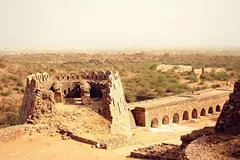
Tughlaqabad Fort Built in Delhi
In 1321 Ghiyāth al-Dīn Tughluq, founder of the Tughluq dynasty of the Delhi Sultanate, built Tughlaqabad Fort as the cor…
- 1325 CE
Gaṅgeśa's Tattvacintāmaṇi Founds Navya-Nyāya
Gaṅgeśa, a philosopher, logician and mathematician of Mithilā in the first half of the fourteenth century, founded the N…
- 1325 CE
Muḥammad bin Tughluq becomes Sultan of Delhi
In 1325 Muḥammad bin Tughluq succeeded his father Ghiyāth al-Dīn Tughluq on the throne of Delhi and ruled until his deat…
- 1325 CE
Musunuri Nayaks Expel the Sultanate from Warangal
The Musunuri Nayaks were Telugu warrior chiefs who rose in the fourteenth century. Under Kapaya Nayaka they are said to …
- 1325 CE
The Reddy Kingdom of Kondavidu
The Reddy kingdom, centred on the hill fortress of Kondavīḍu, lasted from 1325 to 1448 CE in what is now central Andhra …
- 1326 CE
Hammir Singh Restores Mewar and Founds the Sisodia Line
Hammir Singh, a Guhila prince of a junior branch, took charge of Mewar in 1326 and rebuilt its fortunes after Tughlaq pr…
- 1326 CE
Jahanpanah, Delhi's Fourth City
Jahanpanah, meaning Refuge of the World, was Delhi's fourth medieval city, founded in 1326 to 1327 by Sultan Muhammad bi…
- 1327 CE
Kampili Falls and Vijayanagara Looms
Kampili was a short-lived Hindu kingdom near Ballari on the Tungabhadra, in present-day Karnataka. It fell to Tughlaq ar…
- 1328 CE
Kondaveedu Fort Becomes a Reddy Capital
Kondaveedu Fort, a hill fortress near Guntur in Andhra Pradesh, was built by Prolaya Vema Reddy and served as the Reddy …
 1334 CE
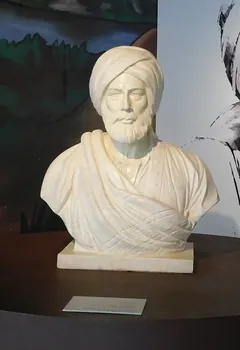
Ibn Baṭṭūṭa in the Delhi Sultanate
The Moroccan traveller and jurist Ibn Baṭṭūṭa reached India in the 1330s and spent several years at the court of Sultan …
- 1335 CE
Madurai Sultanate Declares Independence from Delhi
In 1335 Jalaluddin Ahsan Khan proclaimed an independent sultanate at Madurai, breaking from Delhi. The Ma'bar Sultanate …
 1336 CE
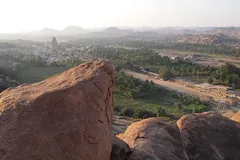
Hampi, Capital of Vijayanagara
Hampi, in present-day Karnataka, served as the fortified capital of the Vijayanagara Empire from 1336 until its sack in …
- 1336 CE
Founding of the Vijayanagara Empire
The Vijayanagara Empire was founded in 1336 by Harihara I together with his brother Bukka Rāya I, first kings of the Saṅ…
- 1337 CE
Muhammad bin Tughluq Takes Nagarkot Fort
In 1337 the Delhi sultan Muḥammad bin Tughluq led a campaign against Nagarkot, the Kangra Fort in the Himalayan foothill…
- 1338 CE
Sonārgāoṅ Rises as Capital of an Independent Bengal Sultanate
Sonārgāoṅ, the Golden Hamlet, near present Dhaka, was a river port and centre of the Bengal muslin trade. Under the Delh…
- 1339 CE
The Kashmir Sultanate Under the Shah Mīrs
The Kashmir Sultanate was a medieval kingdom centred on the Kashmir Valley between the early fourteenth and late sixteen…
- 1342 CE
Veera Ballala III, Last Great Hoysala King, Dies
Veera Ballala III, the last great ruler of the Hoysala kingdom, died around 1342–1343 after years of campaigning against…
- 1344 CE
Ibn Baṭṭūṭa Visits the Sultanate of Madurai
The Moroccan traveller Ibn Baṭṭūṭa reached southern India in the 1340s and visited Madurai, then the seat of a short-liv…
- 1347 CE
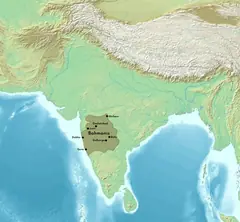
Bahmani Sultanate Takes Root at Gulbarga
In 1347 Ala-ud-Din Bahman Shah broke from the Delhi Sultanate and made Gulbarga fort the centre of the Bahmani kingdom. …
 1347 CE
Founding of the Bahmani Sultanate
The Bahmani Sultanate, a Persianate kingdom of the Deccan, arose in 1347 from a revolt against Muhammad bin Tughluq of D…
- 1350 CE
Akshobhya Tirtha Leads the Madhva Seat
Akshobhya Tirtha, born Govinda Bhatta and living from about 1282 to 1365, was a Dvaita philosopher who headed the Madhva…
- 1350 CE
Pandua Serves as Capital of Bengal
Pandua, also known as Hazrat Pandua and later Firuzabad, in Malda district of West Bengal, was capital of the free Benga…
- 1350 CE
Brahma Temple at Pushkar Lake
At Pushkar in Rajasthan, beside the sacred lake, stands one of the very few temples in India devoted to the creator-god …
- 1350 CE
Mādhava of Saṅgamagrāma and the Kerala School
Mādhava of Saṅgamagrāma, who lived from about 1340 to 1425, established the Kerala school of mathematics and astronomy. …
- 1350 CE
Sharfuddin Yahya Maneri, Sufi Saint of Bihar
Sharfuddin Ahmed Yahya Maneri, honoured as Makhdoom-ul-Mulk Bihari, was a Sufi mystic of medieval Bihar who lived from 1…
- 1351 CE
Ayutthaya Kingdom Emerges in the Chao Phraya Valley
The Ayutthaya Kingdom, founded in 1351 in what is now Thailand, grew from a cluster of river-valley city-states into one…
 1351 CE
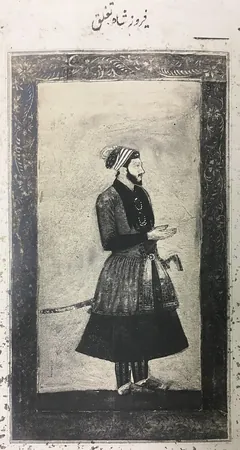
Reign of Firuz Shah Tughlaq
Firuz Shah Tughlaq ruled the Delhi Sultanate from 1351 until his death in 1388, succeeding his cousin Muhammad bin Tughl…
- 1352 CE
The Bengal Sultanate Unites the Delta
The Bengal Sultanate was the principal power of the Bengal delta from the fourteenth to sixteenth centuries. Unified und…
 1352 CE
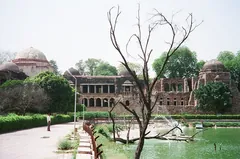
Hauz Khas: Reservoir, Madrasa and Tomb in Delhi
Hauz Khas in South Delhi grew around a large reservoir first built by Alāʾ al-Dīn Khaljī for the city of Sīrī and restor…
- 1352 CE
Vidyāpati, poet of Mithila
Vidyāpati (c. 1352–1448) was a poet, playwright and scholar of Mithila, celebrated as Maithil Kavi Kokil, the cuckoo-poe…
- 1354 CE
Firoz Shah Kotla Built at Firozabad
Around 1354 the Tughlaq sultan Firoz Shah built the Kotla fortress to anchor his new city of Firozabad in Delhi. In 1356…
- 1356 CE
Bukka Rāya I, Second Emperor of Vijayanagara
Bukka Rāya I, a son of Bhavana Saṅgama, ruled the Vijayanagara Empire from 1356 until 24 February 1377 as a king of the …
- 1356 CE
Nasiruddin Chiragh-e-Dehli Dies, Last Great Chishti of Delhi
Nasīr-ud-Dīn Maḥmūd, called Chirāgh-i Dihlī, the lamp of Delhi, was the chief successor of Nizāmuddīn Auliyā and the las…
- 1360 CE
Jayatīrtha, Commentator of the Dvaita School
Jayatīrtha, sixth pontiff of the Madhva seat from 1365 to 1388, systematised Dvaita Vedānta through commentaries on Madh…
- 1360 CE
Rachakonda Becomes the Recherla Nayaka Capital
Around 1360 the Recherla Nāyaka ruler Anapotanāyaka moved his capital from Anumagallu to a new fort at Rachakonda in Tel…
- 1362 CE
Lake Pichola Created at Udaipur
Udaipur's Lake Pichola, in Rajasthan, is a man-made freshwater lake dating to 1362 and named after the nearby village of…
- 1365 CE
Prapañca Writes the Nagarakṛtāgama for Hayam Wuruk
In 1365 a Buddhist cleric using the pen-name Prapañca completed the Nagarakṛtāgama, an Old Javanese poem praising King H…
- 1370 CE
Kumara Kampana Campaigns Against the Madurai Sultanate
Kumara Kampana, a son of Bukka I, commanded Vijayanagara's army in its conquest of the Madurai Sultanate before his deat…
- 1370 CE
Maṇavāḷa Māmuṇi Revives Śrīvaiṣṇava Learning
Maṇavāḷa Māmuṇi (1370–1450) was a Tamil theologian who strengthened the Śrīvaiṣṇava tradition in the fifteenth century. …
- 1370 CE
Sāyaṇa Writes the Great Vedic Commentaries
Sāyaṇa, a Mīmāṃsā scholar of the Vijayanagara court who died in 1387, served under Bukka Rāya I and Harihara II. Over on…
- 1373 CE
Sikandar Shah Builds the Adina Mosque at Pandua
The Adina Mosque at Pandua in Malda, West Bengal, was commissioned in 1373 and finished in 1375 under the Bengal sultan …
- 1374 CE
Vidyāraṇya and the Legend of Vijayanagara's Founding
Vidyāraṇya, a jagadguru of the Śṛṅgeri Śāradā Pīṭham in the late fourteenth century, is usually identified with Mādhavāc…
- 1375 CE
The Recherla Nayakas Rule Telangana
The Recherla Nayakas, also called Padmanāyaka Velamas, formed a dynasty of Telangana and Andhra that took power from the…
- 1380 CE
Chandidas Sings of Radha and Krishna
Chandidas, a medieval Bengali poet who lived from about 1339 to 1399, wrote over 1250 poems on the love of Radha and Kri…
- 1380 CE
Mir Sayyid Ali Hamadani Reaches Kashmir
Mir Sayyid Ali Hamadani, a Persian Sufi of the Kubrawiya order who lived about 1314 to 1384, travelled to Kashmir and be…
- 1389 CE
Sikandar Shah Miri Rules Kashmir
Sikandar Shah Miri, the seventh sultan of Kashmir of the Shah Mir dynasty, reigned for twenty-four years, 1389 to 1413. …
- 1394 CE
The Gujarat Sultanate Declares Independence from Delhi
The Gujarat Sultanate was a late medieval state in western India founded in 1394 when the governor Muẓaffar Shāh I broke…
- 1394 CE
The Jaunpur Sultanate Rules the Middle Gangetic Plain
The Jaunpur Sultanate was a late medieval Muslim state in what is now Uttar Pradesh, Bihar and southern Nepal. Founded i…
- 1397 CE
Firuz Shah Bahmani Rules the Deccan
Firuz Shah, ruler of the Bahmani Sultanate from 1397 until his death in 1422, expanded the kingdom across the Deccan and…
 1398 CE
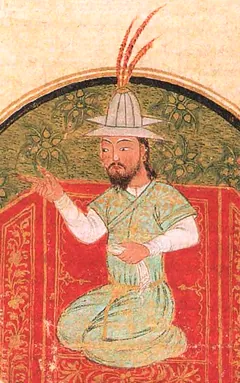
Timur's invasion and sack of Delhi
In 1398 the Central Asian conqueror Timur (Tamerlane), founder of the Timurid Empire, invaded northern India, defeated t…
- 1399 CE
The Kingdom of Mysore Is Founded
The Kingdom of Mysore began around 1399 near modern Mysuru as a vassal of Vijayanagara and lasted until 1950. Mostly rul…
- 1400 CE
Adhyātma Rāmāyaṇa: The Spiritual Ramayana
The Adhyātma Rāmāyaṇa is a Sanskrit text of roughly the thirteenth to fifteenth century that retells the Rāma story thro…
- 1400 CE
Kallalagar Temple at Alagar Koil
The Kallalagar temple at Alagar Koil near Madurai is a Viṣṇu shrine in Tamil temple style, praised by the Āḻvārs in the …
- 1400 CE
Aruṇagirinātar Composes the Tiruppugaḻ
Aruṇagirinātar was a Tamil Śaiva saint-poet of the fourteenth and fifteenth centuries who created the Tiruppugaḻ, a coll…
- 1400 CE
Makhdūm Ashraf Jahāngīr Semnānī and the Ashrafī Order
Makhdūm Ashraf Jahāngīr Semnānī, a Sufi saint born in Semnan in Iran, founded the Ashrafī order and settled in northern …
- 1400 CE
Ayyappan Worship Grows from Kerala Tradition
Ayyappan, also called Dharmasastha and Manikandan, is a deity of truth and righteousness, described as the son of Śiva a…
- 1400 CE
Dwarkadhish Temple Rebuilt at Dwarka
The Dwarkadhish or Jagat Mandir at Dwarka in Gujarat honours Krishna as lord of Dvaraka and belongs to the Char Dham cir…
- 1400 CE
Gulbarga as a Bahmani Capital and Sufi Centre
Gulbarga, today Kalaburagi, was an early Bahmani capital in Karnataka. Its monuments include the fort with its Jama Masj…
- 1400 CE
Hatha Yoga Takes Shape in Nath and Tantric Milieus
Hatha yoga, a branch of yoga using physical techniques to conserve and direct vital energy, developed in texts from the …
- 1400 CE
Karni Mata, Warrior-Sage Goddess of Rajasthan
Karni Mata is revered as a goddess of strength and triumph, remembered in tradition as a warrior-like sage of western Ra…
- 1400 CE
Kerala School of Astronomy and Mathematics
The Kerala school, founded by Mādhava of Saṅgamagrāma, flourished from the fourteenth to the sixteenth century. Working …
- 1400 CE
Kūṭiyāṭṭam, Kerala's Sanskrit Theatre Tradition
Kūṭiyāṭṭam, 'combined acting', is a traditional performing art of Kerala that joins ancient Sanskrit theatre with elemen…
- 1400 CE
Mudgala Purāṇa, a Text of the Gāṇapatya Tradition
The Mudgala Purāṇa is an upapurāṇa devoted to Gaṇeśa, full of stories and ritual material. Together with the Gaṇeśa Purā…
- 1400 CE
Nund Rishi, Sheikh al-Ālam of Kashmir
Nund Rishi, born Nūr ud-Dīn around 1377, was a Kashmiri Sufi saint and poet and a founder of the Rishi order, a home-gro…
- 1400 CE
Nur Qutb Alam, Scholar of Pandua
Nur Qutb Alam, a fifteenth-century Bengal scholar, writer and poet working from Hazrat Pandua, followed his father Alaul…
- 1400 CE
Rāmānanda and the Rāmānandī Order
Rāmānanda was a Vaiṣṇava saint-poet of the Gangetic plain, active by scholarly estimates between the fourteenth and mid-…
- 1400 CE
Ramdev Pir, Folk Saint of Rajasthan
Rāmdev Pīr, a Rajput chieftain of Pokaran remembered as a protector of the poor, is venerated as a folk deity across Raj…
- 1400 CE
Śrīvilliputtūr, Birthplace of Āṇḍāḷ
The Āṇḍāḷ Temple at Śrīvilliputtūr in Tamil Nadu is a Divya Deśam of Viṣṇu, honoured as the home of Periyāḻvār and his f…
 1400 CE
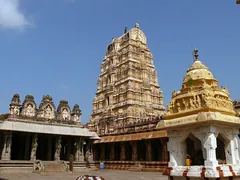
Virūpākṣa Temple, the Sacred Heart of Hampi
The Virūpākṣa Temple at Hampi, on the Tungabhadrā river, is dedicated to Virūpākṣa, a form of Śiva, and is the main pilg…
- 1401 CE
The Malwa Sultanate Rises from Delhi's Decline
Malwa was a late medieval sultanate over today's Madhya Pradesh and southeastern Rajasthan between 1401 and 1562. Dilāwa…
- 1406 CE
Deva Raya I Secures the Vijayanagara Throne
Deva Raya I, a Sangama-dynasty emperor of Vijayanagara, won a succession dispute after the death of Harihara II and rule…
- 1406 CE
Hoshang Shah Rules the Malwa Sultanate
Hoshang Shah, who lived from about 1375 to 1435, was the earliest sultan of Malwa to be formally installed. His father D…
 1408 CE
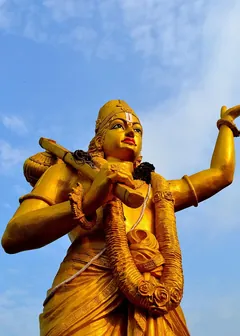
Annamācārya, composer of Tirupati
Tāḷḷapāka Annamācārya, also called Annamayya (1408–1503), was a Telugu saint and composer devoted to Veṅkaṭeśvara, a for…
- 1408 CE
Atala Masjid Built at Jaunpur
The Atala Masjid in Jaunpur, Uttar Pradesh, was raised in the early fifteenth century under the Sharqi sultans. The mosq…
- 1411 CE
Ahmedabad Founded on the Sabarmati
Ahmedabad, historically Karnavati, was established in 1411 by Sultan Ahmad Shah I of Gujarat on the Sabarmati's bank. To…
- 1411 CE
Ahmad Shah I Founds Ahmedabad
Ahmad Shah I of the Muzaffarid dynasty ruled the Gujarat Sultanate between 1411 and his death in 1442. A grandson of the…
 1414 CE
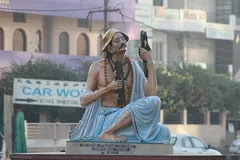
Narsinh Mehta, the First Poet of Gujarati
Narsinh Mehta, who lived from 1414 to 1488, was a Gujarati poet-saint honoured as the Ādi Kavi, or first poet, of the la…
 1414 CE
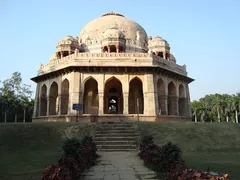
The Sayyid Dynasty Takes Delhi
This fourth house of the Delhi Sultanate ruled through four rulers from 1414 to 1451, in a period of reduced power after…
- 1415 CE
Bhagat Dhanna, Peasant Poet and Devotee
Bhagat Dhanna, born in 1415, was a mystic poet and Vaishnava devotee from a farming community. His followers became know…
- 1415 CE
Jalaluddin Muhammad Shah, Sultan of Bengal
Born Jadu, the Hindu son of Raja Ganesha, he took the Bengal throne in a coup against the Ilyas Shahi house, converted t…
- 1415 CE
Raja Ganesha Seizes the Bengal Sultanate
Raja Ganesha, a Hindu landlord of medieval Bengal, took advantage of the Ilyas Shahi dynasty's weakness and seized power…
- 1419 CE
Niccolò de' Conti Travels to India
Niccolò de' Conti, a Venetian merchant born in Chioggia, left Venice about 1419 and spent some twenty-five years in the …
 1420 CE
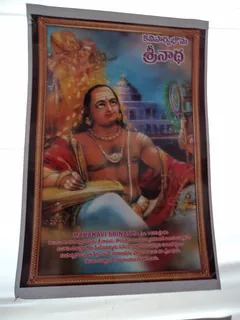
Śrīnātha, Telugu Poet of the Prabandha Style
Śrīnātha, who lived from about 1355 to 1441, was a leading Telugu poet of the fifteenth century who popularised the prab…
- 1423 CE
Deva Rāya II, Greatest Ruler of the Saṅgama Line
Deva Rāya II reigned over the Vijayanagara Empire from 1423 to 1446. Often ranked first among the Saṅgama kings, he was …
- 1425 CE
Chamarasa and the Prabhulingalīle
Chamarasa was a fifteenth-century Vīraśaiva poet who wrote in Kannada under the Vijayanagara empire, patronised by Deva …
- 1425 CE
Gawilgarh, Mountain Fortress of the Satpura Hills
Gawilgarh, a hill fortress in the Satpura foothills of Amravati district, Maharashtra, is conventionally dated to about …
 1428 CE
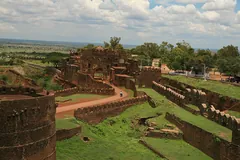
Bidar Fort and the Bahmanī Capital
In 1427 Sultan Aḥmad Shāh I of the Bahmanī dynasty moved his capital from Gulbarga to Bidar and built a fort with more t…
- 1430 CE
Kumāra Vyāsa Retells the Mahābhārata in Kannada
Kumāra Vyāsa, pen name of Nārāyaṇappa, was a leading Kannada poet of the early fifteenth century. His name, meaning Juni…
- 1431 CE
Parameśvara Introduces the Dṛggaṇita System
Parameśvara of the Kerala school, working from about 1380 to 1460, checked the older astronomical parameters against dec…
- 1433 CE
Mahārāṇā Kumbha of Mewar
Kumbhakarṇa Siṃha, known as Mahārāṇā Kumbha (1417–1468), ruled the kingdom of Mewar in Rajasthan from 1433. A member of …
- 1434 CE
Kapilendra Deva Founds the Gajapati Empire
The Gajapati Empire, a Hindu monarchy rooted in Odisha, ruled from about 1434 to 1541 after the Eastern Ganga line ended…
 1437 CE
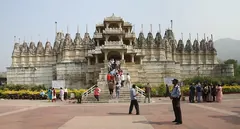
Ranakpur Jain Temple
The Ranakpur temple, also called the Caturmukha Dharaṇa Vihāra, is a Śvetāmbara Jain shrine near Sadri in Rajasthan's Pa…
- 1440 CE
Kabīr, Mystic Poet-Saint of Varanasi
Kabīr was a 15th-century poet and mystic from Varanasi whose vernacular verses challenged ritualism and sectarian divisi…
- 1443 CE
ʿAbd al-Razzāq Visits Calicut
In the early 1440s the Timurid ambassador ʿAbd al-Razzāq Samarqandī, sent by Shāh Rukh, travelled to Kozhikode, called C…
- 1446 CE
Sarkhej Roza Rises Near Ahmedabad
The Sarkhej Roza, a Sufi tomb and mosque complex near Ahmedabad, grew up beside the grave of Shaikh Ahmad Khattu Ganj Ba…
 1448 CE
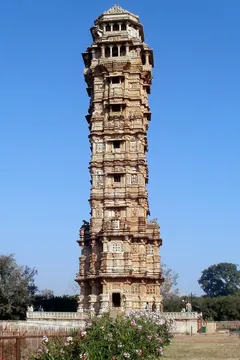
Vijaya Stambha, Rana Kumbha's Tower at Chittor
Rana Kumbha of Mewar raised the Vijaya Stambha, or tower of victory, inside Chittor Fort in 1448 CE. It marks his triump…
- 1450 CE
Khan Jahan Builds the Mosque City of Bagerhat
In the fifteenth century Ulugh Khan Jahan, a governor under the Bengal Sultanate, built the mosque city of Bagerhat, the…
- 1450 CE
Cherusseri Writes the Kṛṣṇagāthā in Malayalam
Cherusseri Namboothiri, a fifteenth-century court poet of Kolathunadu in North Malabar, wrote the Kṛṣṇagāthā, a poem reg…
- 1450 CE
Haridāsa Ṭhākura, Teacher of the Holy Name
Haridāsa Ṭhākura, born about 1450, was a Vaiṣṇava saint who helped spread Gauḍīya Vaiṣṇavism. A convert to Caitanya's de…
- 1450 CE
Svātmārāma Composes the Haṭhayogapradīpikā
The Haṭha Yoga Pradīpikā, or Light on Hatha Yoga, is a fifteenth-century Sanskrit manual by Svātmārāma. It places its te…
- 1450 CE
Kṛttivāsī Rāmāyaṇ Brings the Epic to Bengali Readers
The Kṛttivāsī Rāmāyaṇ, attributed to the poet Kṛttibās Ojhā, is a Bengali retelling of the Rāmāyaṇa in the Pāñcālī tradi…
- 1450 CE
The Kumari Tradition of the Kathmandu Valley
The Kumari tradition of Nepal venerates a young Newar girl as a living embodiment of Taleju Bhawani, a form of Durga. Dr…
- 1450 CE
Nijaguna Shivayogi Reconciles Veerashaivism and Advaita
Nijaguna Shivayogi was a Kannada poet and prolific author of the fifteenth century, a follower of Veerashaivism who trie…
 1450 CE
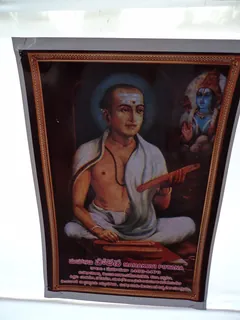
Pothana Renders the Bhāgavata into Telugu
Bammera Pothana, a fifteenth-century Telugu poet and Sanskrit scholar, translated the Bhāgavata Purāṇa into Telugu as th…
- 1450 CE
Ravidās, Bhakti Poet-Saint of Varanasi
Ravidās, or Raidās, was a mystic poet-saint of the Bhakti movement in the 15th to 16th century, venerated as a guru acro…
- 1450 CE
Sarala Dasa, Adi Kabi of Odia Literature
Sarala Dasa, born Siddheswara Parida, was a fifteenth-century poet honoured as the Adi Kabi, or first poet, of Odia lite…
- 1451 CE
Kankaria Lake, Ahmedabad's Great Reservoir
Kankaria Lake in Maninagar is the largest lake in Ahmedabad, Gujarat. It is traditionally dated to 1451 under the Sultan…
 1451 CE
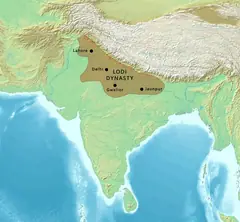
Lodi Dynasty of the Delhi Sultanate
The Lodi dynasty ruled the Delhi Sultanate from 1451 to 1526. Founded by Bahlul Lodi, who displaced the Sayyid rulers, i…
- 1453 CE
Gauḍa, Capital of the Bengal Sultanate
Gauḍa, also called Gaur or Lakhnautī, was one of the great capitals of medieval India. It was the seat of the Bengal Sul…
 1458 CE
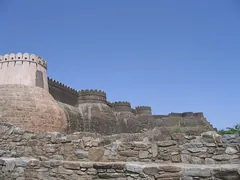
Kumbhalgarh Fort of Mewar
Kumbhalgarh, a hill fortress on the western Aravalli range in Rajasthan's Rajsamand district, was raised in the fifteent…
- 1459 CE
Jonaraja Continues Kashmir's Chronicle of Kings
Jonaraja, a Kashmiri historian and Sanskrit poet who died in 1459, wrote the Dvitiya Rajatarangini, a sequel to Kalhana'…
- 1459 CE
Mahmud Begada Becomes Sultan of Gujarat
Mahmud Begada, born in 1445, became Sultan of Gujarat in 1459 while a boy of thirteen and ruled until 1511. Later writer…
- 1459 CE
Rao Jodha Founds Jodhpur
Rao Jodha, a chief of the Rathore clan, founded the city of Jodhpur in 1459 and made it the new capital of Marwar in pla…
- 1459 CE
Śrīvara Chronicles Kashmir in the Jaina Rājataraṅgiṇī
Śrīvara, a courtier of the Shahmiri sultans of Kashmir, continued the Rājataraṅgiṇī tradition of Kalhaṇa and Jonarāja. W…
- 1460 CE
Jahaz Mahal, the Ship Palace of Mehrauli
Jahaz Mahal stands beside Hauz-i-Shamsi in Mehrauli, Delhi. Its name, Ship Palace, comes from its reflection in the rese…
 1466 CE
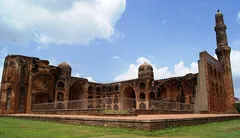
Maḥmūd Gāwān, Statesman of the Bahmani Sultanate
Maḥmūd Gāwān, a Persian scholar who migrated to the Deccan in 1453, served as chief minister of the Bahmani Sultanate fr…
- 1466 CE
Purushottama Deva Becomes Gajapati of Odisha
Vīra Pratāpa Purushottama Deva, second ruler of the Sūryavaṃśa Gajapati dynasty, was chosen heir by his father Kapilendr…
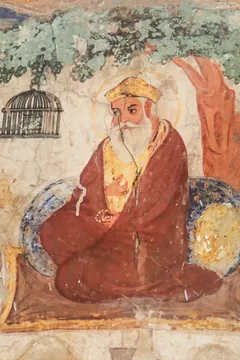 1469 CE
Birth of Guru Nānak, Founder of Sikhism
Guru Nānak (1469–1539), also called Bābā Nānak, was a spiritual teacher, mystic and poet regarded as the founder of Sikh…
- 1472 CE
Mahmud Gawan Completes His Madrasa at Bidar
The Mahmud Gawan Madrasa in Bidar, Karnataka, was completed in 1471–72 (876 AH) by the prime minister of the Bahmani Sul…
- 1473 CE
Maladhar Basu Writes the Śrīkṛṣṇavijaya
Between 1473 and 1480 the Bengali poet Māladhara Basu composed the Śrīkṛṣṇavijaya, a retelling of the tenth and eleventh…
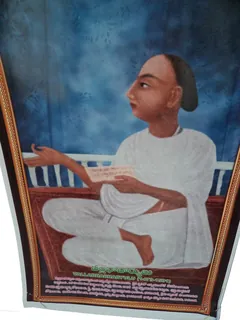 1479 CE
Vallabhācārya and the Puṣṭimārga
Vallabhācārya (1478 to 1530) founded the Puṣṭimārga, a Kṛṣṇa-centred devotional path in Vaiṣṇavism, and taught the philo…
- 1480 CE
Śrīpādarāja and the Haridasa Songs of Ranga Vitthala
Śrīpādarāja (1422 to 1480), pontiff of the Madhva mutt at Mulbagal, is widely seen as a founder of the Haridasa movement…
- 1484 CE
Champaner Becomes Mahmud Begada's Capital
After conquering Pavagadh in 1484, Sultan Mahmud Begada of Gujarat developed Champaner, a city older than his rule, into…
- 1485 CE
Guru Jambheshwar Founds the Bishnoi Panth
Guru Jambheshwar, also called Jambhoji, founded the Bishnoi sect at Samrathal Dhora in 1485 and preached for the next fi…
- 1485 CE
The Sāḷuva Dynasty Rules Vijayanagara
The Sāḷuva dynasty was the second ruling house of the Vijayanagara Empire, holding the throne from 1485 to 1505 through …
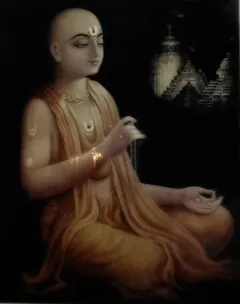 1486 CE
Caitanya Mahāprabhu and Gauḍīya Vaiṣṇavism
Caitanya Mahāprabhu (1486–1534), born Viśvambhara Miśra in Bengal, was a Hindu saint and the founder of Gauḍīya Vaiṣṇavi…
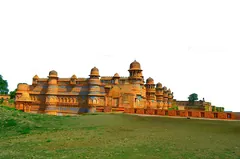 1486 CE
Gwalior Fort and the Tomar Palaces
Gwalior Fort, a hill fort of at least the sixth-century origins, was greatly enlarged by the Tomar ruler Man Singh in th…
 1486 CE
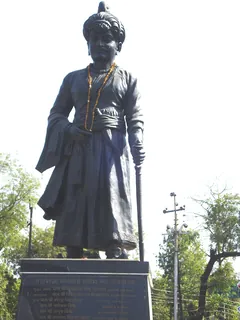
Man Singh Tomar Rules Gwalior
Man Singh Tomar held Gwalior between 1486 and 1516. A ruler of the Tomara clan, he is remembered for raising the colourf…
- 1488 CE
Rao Bika Founds Bikaner in the Thar
Rao Bika, born in 1438, was a Rathore Rajput prince and a son of Rao Jodha, the founder of Jodhpur. In the late fifteent…
 1489 CE
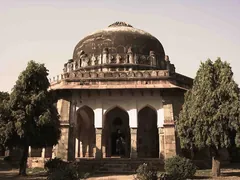
Sikandar Lodī Succeeds Bahlūl and Expands the Sultanate
Sikandar Lodī, second ruler of the Lodī dynasty, held the Delhi throne from 1489 to 1517. He recovered lost territory, e…
- 1489 CE
Rupa Goswami, Theologian of Vrindavan
Rupa Goswami, who lived from 1489 to 1564, was a poet, teacher and thinker of the Gaudiya Vaishnava line. Alongside his …
- 1490 CE
Ahmadnagar Fort, Seat of the Nizam Shahi Sultanate
Ahmadnagar Fort, near the Bhingar Nala in Maharashtra, served as the headquarters of the Ahmadnagar Sultanate. British t…
- 1490 CE
The Ahmadnagar Sultanate Founded
In 1490 Malik Aḥmad Baḥrī declared independence from the Bahmani Sultanate and founded the Nizām Shāhī dynasty of Ahmadn…
- 1490 CE
Bijapur Becomes an Independent Sultanate
The Bijapur Sultanate, ruled by the Ādil Shāhī dynasty, emerged in 1490 when Yūsuf Ādil Shāh made the Bahmanī province o…
- 1490 CE
Imad Shāhī Sultanate of Berar Founded
In 1490 Fathullāh Imād-ul-Mulk declared the independence of Berar after the Bahmani Sultanate began to break apart. The …
- 1490 CE
Bara Gumbad Rises in Delhi's Lodi Gardens
The Bara Gumbad, meaning big dome, was built in 1490 in what is now Lodi Gardens, Delhi, in the time of the Lodi dynasty…
- 1492 CE
The Barid Shahi Sultanate of Bidar
The Bidar Sultanate, ruled by the Barid Shahi dynasty, was one of the five Deccan sultanates. Qasim Barid I took de fact…
- 1494 CE
Alauddin Husain Shah Seizes Bengal
Alauddin Husain Shah took the throne of the Bengal Sultanate in 1494 after murdering Shams-ud-Din Muzaffar Shah, the Aby…
- 1497 CE
Prataparudra Deva Takes the Gajapati Throne of Odisha
Prataparudra Deva became the third Gajapati emperor of Odisha in 1497 and reigned until 1538. A devout Vaishnava who wel…
- 1498 CE
Vasco da Gama Lands at Kozhikode
In 1498 the Portuguese navigator Vasco da Gama reached Kozhikode on the Malabar Coast, ruled by the Zamorins. The port h…
 1498 CE
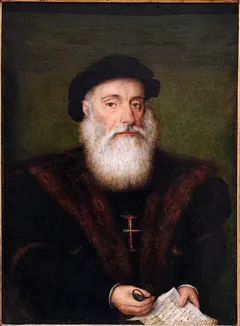
Vasco da Gama reaches Calicut
On 20 May 1498 the Portuguese navigator Vasco da Gama landed at Kozhikode (Calicut) on the Malabar coast, completing the…
- 1499 CE
Keladi Nāyakas Rule the Malnad and Coast
The Keladi Nāyakas, also called the Nayakas of Bednore or Ikkeri, ruled parts of Karnataka from 1499 to 1763. They began…
- 1500 CE
Advaita Acharya, Elder Companion of Chaitanya in Shantipur
Advaita Acharya, born Kamalaksha Mishra in 1434 and living until 1559, was a senior companion of Chaitanya and a guru of…
- 1500 CE
Amarnath Cave Shrine in the Kashmir Himalaya
The Amarnath cave, at about 3,888 metres in the Kashmir Himalaya, is a Hindu shrine counted among the Shakti Pīṭhas and …
- 1500 CE
Kabir Panth Gathers Around the Poet's Teachings
Kabir Panth is a Sant tradition built on the teachings of the fifteenth-century poet Kabir. It teaches loving devotion t…
- 1500 CE
Cabral Reaches Calicut After Finding Brazil
In 1500 Pedro Álvares Cabral led a Portuguese fleet to India, following Vasco da Gama's route. On the way he reached the…
- 1500 CE
Sephardic Families Settle Among the Cochin Jews
The Cochin Jews, one of India's oldest Jewish communities, settled in the Kingdom of Cochin in Kerala; Benjamin of Tudel…
- 1500 CE
Ganapati Atharvaśīrṣa, an Upaniṣad to Gaṇeśa
The Ganapati Atharvaśīrṣa is a Sanskrit minor Upaniṣad attached to the Atharvaveda and devoted to Gaṇeśa. It identifies …
- 1500 CE
Kerala Temple and Palace Mural Painting Tradition
Kerala's mural paintings are frescoes depicting Hindu myth in temples and palaces, with early works from about the ninth…
- 1500 CE
Lakṣmīśa Composes the Kannada Jaimini Bhārata
Lakṣmīśa was a Kannada poet whose Jaimini Bhārata retells the aftermath of the Mahābhārata war through Yudhiṣṭhira's hor…
 1500 CE
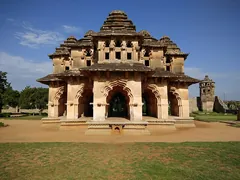
Lotus Mahal, Vijayanagara's Royal Pavilion at Hampi
The Lotus Mahal, also called Chitrāṅgiṇī Mahal, is a two-storeyed secular pavilion in the royal enclosure at Hampi. Buil…
- 1500 CE
Māmāṅkam Festival at Tirunavaya
Māmāṅkam was a twelve-yearly medieval fair held on the banks and dry bed of the Bharathappuzha at Tirunāvāya in Kerala, …
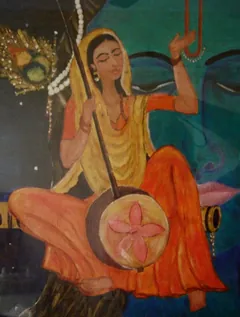 1500 CE
Mīrābāī, poet-saint of Kṛṣṇa bhakti
Mīrābāī was a sixteenth-century Hindu mystic poet devoted to Kṛṣṇa and one of the most beloved figures of the bhakti mov…
- 1500 CE
Nīlakaṇṭha Somayājī Completes the Tantrasaṅgraha
Nīlakaṇṭha Somayājī, a leading figure in Kerala's school of astronomy and mathematics, completed the Tantrasaṅgraha in 1…
- 1500 CE
Purandara Dāsa, Father of Carnatic Music
Purandara Dāsa, a Haridāsa composer from Karnataka who lived from about 1470 to 1564, gave up a merchant's wealth to sin…
- 1500 CE
Raghunātha Śiromaṇi Carries Navya Nyāya to Its Peak
Raghunātha Śiromaṇi (c. 1477–1547), a philosopher and logician from Nabadwip in Bengal, brought the Navya Nyāya school o…
- 1500 CE
Rudra Sampradāya and the Path to Pushtimarg
The Rudra Sampradāya is one of the four Vaiṣṇava sampradāyas. Traditionally traced to Śiva and the teacher Viṣṇusvāmī, i…
- 1500 CE
Siddha Medicine of the Tamil South
Siddha medicine is a traditional system from southern India, counted among the country's oldest. Learned through master-…
- 1500 CE
Śrīmanta Śaṅkaradeva and the Neo-Vaiṣṇava Movement of Assam
Śrīmanta Śaṅkaradeva (1449 to 1568) was an Assamese saint, poet, dramatist and reformer who founded the Ekaśaraṇa Dharma…
- 1500 CE
Sūrdās, the Blind Singer of Kṛṣṇa's Braj
Sūrdās was a sixteenth-century blind devotional poet who sang of Kṛṣṇa, mostly in Braj Bhāṣā with some verses in other m…
- 1500 CE
Tadipatri's Vijayanagara Temples
Tadipatri, on the Penna river in Andhra Pradesh, is known for two sixteenth-century Vijayanagara-era temples, the Chinta…
- 1500 CE
Ekasaraṇa Dharma Spreads Devotion across Assam
Ekasaraṇa Dharma, a Vaiṣṇava devotional movement taught in Assam by Śrīmanta Śaṅkaradeva in the fifteenth and sixteenth …
- 1500 CE
Vyāsatīrtha, Dvaita Philosopher of Vijayanagara
Vyāsatīrtha (1447-1539), also called Vyāsarāja, was a Dvaita Vedānta philosopher and the rājaguru of Vijayanagara. His p…
- 1501 CE
Dhanya Manikya Builds the Tripura Sundari Temple
In 1501 the Tripura ruler Dhanya Manikya raised the main shrine of the Tripura Sundari Temple at Udaipur, Tripura. Set o…
- 1504 CE
Duarte Pacheco Pereira Holds Cochin Against the Zamorin
Between March and July 1504 a tiny Portuguese garrison at Cochin, led by Duarte Pacheco Pereira and allied with the Coch…
- 1505 CE
The Tuluva Dynasty Takes the Vijayanagara Throne
The Tuluva dynasty was the third ruling house of Vijayanagara, rising around 1505 when Narasiṃha Nāyaka took the throne …
- 1509 CE
Kanaka Dāsa, Haridāsa Poet of Karnataka
Kanaka Dāsa, who lived from 1509 to about 1606, was a Haridāsa saint, poet and composer from present-day Karnataka. A fo…
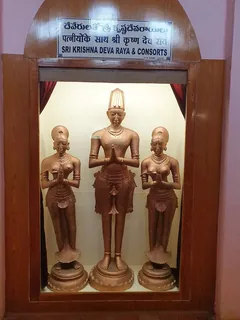 1509 CE
Reign of Kṛṣṇadevarāya
Kṛṣṇadevarāya ruled the Vijayanagara Empire from 1509 to 1529 as the third Tuḷuva king, leading it to its political and …
- 1509 CE
Rāṇā Sāṅgā Takes the Throne of Mewar
Sangrām Siṁha I, known as Rāṇā Sāṅgā, became Mahārāṇā of Mewar on 24 May 1509. Ruling from Chittorgarh until 1528, he de…
- 1509 CE
The Battle of Diu Gives Portugal Control of the Indian Ocean
On 3 February 1509 a Portuguese fleet beat an allied force from Gujarat, Mamluk Egypt and Calicut off Diu. The victory l…
- 1510 CE
Nityānanda and Chaitanya in the Gauḍīya Movement
Nityānanda, called Nitai, was a central figure of Gauḍīya Vaiṣṇavism in Bengal and the friend and disciple of Caitanya M…
- 1510 CE
Albuquerque Captures Goa from Bijapur
In 1510 the Portuguese governor Afonso de Albuquerque seized the city of Goa from the Sultanate of Bijapur, helped by Ti…
- 1511 CE
Ramananda Raya, Governor and Companion of Chaitanya
Rāmānanda Rāya was a fifteenth- and sixteenth-century commander and viceroy of Rajahmundry under Prataparudra Deva of th…
- 1515 CE
Krishnadevaraya Composes the Āmuktamālyada
The Āmuktamālyada is a Telugu epic poem written in the early sixteenth century by Krishnadevaraya, ruler of Vijayanagara…
- 1515 CE
Biswa Singha Founds the Koch Dynasty
The Koch dynasty, dated from 1515, was established by Biswa Singha in the former Kamata Kingdom, itself an offshoot of K…
- 1517 CE
Ibrāhīm Lodī, Last Sultan of Delhi
Ibrāhīm Khān Lodī became Sultan of Delhi in 1517 after his father Sikandar's death and was the final Lodī sultan. He rei…
- 1517 CE
Sikandar Lodi's Tomb in Delhi
The tomb of Sikandar Lodi, built in 1517 to 1518 after his death, stands in what is now Lodi Gardens in New Delhi. As on…
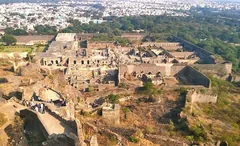 1518 CE
Golconda Becomes a Qutb Shāhī Citadel
Golconda, west of modern Hyderabad, began as an earthen fort and became a great stone citadel under the Qutb Shāhī dynas…
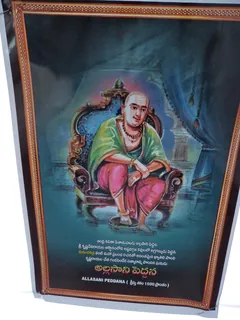 1520 CE
Allasani Peddana, Chief of the Aṣṭadiggajas
Allasani Peddana, a Telugu poet active in the late fifteenth and early sixteenth centuries, was the foremost of the Aṣṭa…
- 1520 CE
Aṣṭadiggajas at Kṛṣṇadevarāya's Court
The Aṣṭadiggajas were eight celebrated Telugu poets in the court of Kṛṣṇadevarāya of Vijayanagara, who reigned from 1509…
- 1520 CE
Krishnadevaraya Wins at Raichur
At Raichur in 1520, the Vijayanagara army under Krishnadevaraya defeated the Bijapur sultan Ismāʿīl ʿĀdil Shāh and drove…
- 1520 CE
Domingo Paes Describes Vijayanagara
The Portuguese traveller Domingo Paes visited the Vijayanagara capital around 1520, during Kṛṣṇadevarāya's reign, and wr…
- 1520 CE
The Six Goswamis Settle Vrindavan
The Six Goswamis were devotional teachers of the Gaudiya Vaishnava tradition who lived in the fifteenth and sixteenth ce…
- 1520 CE
Tenali Ramakrishna, Poet and Wit of Vijayanagara
Tenali Ramakrishna was a Telugu poet who served at the Vijayanagara court in the sixteenth century. He is traditionally …
- 1526 CE
Bahadur Shah, Last Great Sultan of Gujarat
Bahadur Shah of the Muzaffarid dynasty held the Gujarat Sultanate in 1526 to 1535 and once more in 1536 to 1537. He conq…
- 1530 CE
Achyuta Deva Raya Succeeds Krishnadevaraya
Achyuta Deva Raya took the Vijayanagara throne after his brother Krishnadevaraya died in 1529 and ruled until June 1542.…
- 1530 CE
Eknāth, Warkarī Saint of Paiṭhaṇ
Eknāth, who lived about 1533 to 1599, was a Marathi Vaiṣṇava saint, philosopher and poet devoted to Viṭṭhala. A major fi…
- 1530 CE
Tuñcatt Eḻuttacchan, Father of Modern Malayalam
Tuñcattŭ Rāmānujan Eḻuttacchan, a sixteenth-century devotional poet, is often called the father of modern Malayalam writ…
- 1530 CE
Bābur's Memoirs, the Bāburnāma
The Bāburnāma, also called Tuzuk-i-Bāburī, is the memoir of Bābur, founder of the Mughal Empire, written in Chagatai Tur…
- 1530 CE
Veerabhadra Temple at Lepakshi
The Veerabhadra temple at Lepakshi in Andhra Pradesh, built in the sixteenth century in the Vijayanagara style, honours …