Era · Traditional cosmic reckoning
Cosmic Time & the Yugas
81 moments in this era.
 1.97 billion years ago
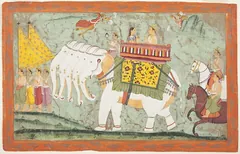
Airāvata, the White Elephant of Indra
In Hindu sacred texts Airāvata is a divine white elephant, sovereign of elephants, and the chief mount of Indra. Texts p…
- 1.97 billion years ago
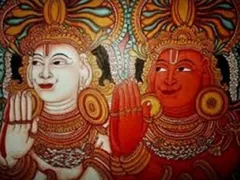
Ardhanārīśvara: Śiva and Pārvatī in One Form
Ardhanārīśvara, the half-female Lord, is the form of Śiva joined with his consort Pārvatī, split down the middle into ma…
 1.97 billion years ago
The Aśvins, Divine Twin Healers of the Ṛgveda
The Aśvins, Nāsatya and Dasra, are twin horsemen of the Ṛgveda associated with dawn and twilight, medicine and rescue. H…
- 1.97 billion years ago
Daśāvatāra: The Ten Avatars of Viṣṇu
The Daśāvatāra are ten principal descents of Viṣṇu, who in Hindu belief takes form to re-establish cosmic order. A commo…
 1.97 billion years ago
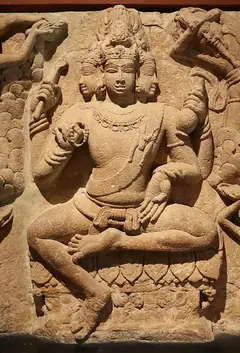
Brahmā, the Creator
Brahmā is the deity who, in Purāṇic tradition, brings the universe into being and forms one member of the Trimūrti along…
- 1.97 billion years ago
Brahmaloka, the Realm of Brahmā
In Purāṇic cosmology Brahmaloka, also called Satyaloka or Brahmapura, is the realm of Brahmā, the creator god. It is des…
 1.97 billion years ago
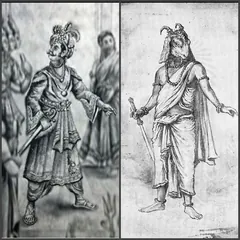
Dakṣa, Prajāpati and the Fateful Sacrifice
Dakṣa is a Vedic Āditya who becomes, in epic and Purāṇic tradition, a son of Brahmā and one of the prajāpatis who popula…
 1.97 billion years ago
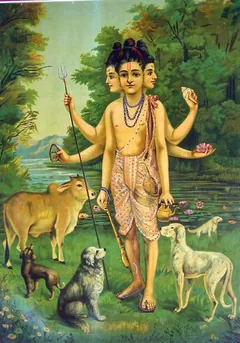
Dattātreya, the Wandering Lord of Yoga
In Purāṇic tradition Dattātreya is a wandering ascetic regarded as a combined form of Brahmā, Viṣṇu and Śiva. He is hono…
 1.97 billion years ago
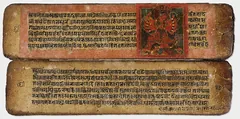
Devī Māhātmya Praises the Goddess as Supreme Reality
The Devī Māhātmya, a 700-verse text forming part of the Mārkaṇḍeya Purāṇa, presents the Goddess as ultimate reality and …
 1.97 billion years ago
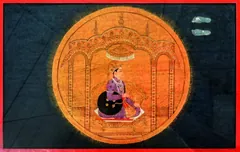
Dhruva and the Pole Star
Dhruva, whose name means fixed or unmoving, appears in the Viṣṇu Purāṇa and the Bhāgavata Purāṇa as a young ascetic devo…
 1.97 billion years ago
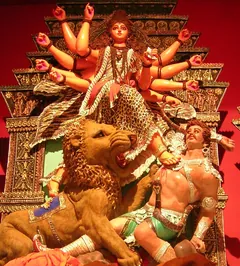
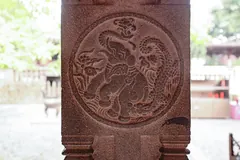
Durgā, the Warrior Goddess
Durgā, whose name suggests one who cannot be approached or overcome, ranks among the foremost deities of Hinduism. In Śā…
 1.97 billion years ago
Gajendra Mokṣa: Viṣṇu Frees the Elephant
In the eighth book of the Bhāgavata Purāṇa, the elephant Gajendra is seized by a crocodile, calls on Viṣṇu and is rescue…
 1.97 billion years ago
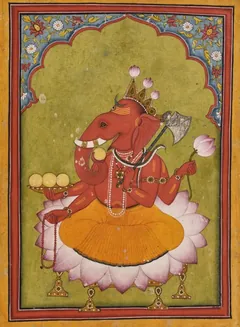
Gaṇeśa, Lord of Beginnings
Gaṇeśa, also called Gaṇapati and Vināyaka, is among the most widely honoured Hindu deities. Recognised by his elephant h…
 1.97 billion years ago
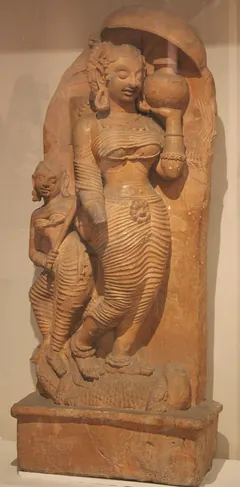
Gaṅgā, the River Personified as Goddess
Gaṅgā is the river Ganges honoured as a goddess of purification and forgiveness, usually shown riding a makara. Epic and…
 1.97 billion years ago
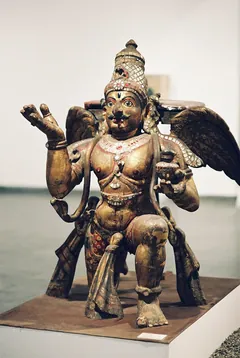
Garuḍa, Vāhana of Viṣṇu
In Hindu tradition Garuḍa is the great bird-king who serves as Viṣṇu's mount, a protector figure also known in Buddhist …
- 1.97 billion years ago
Hayagrīva, the Horse-Headed Form of Viṣṇu
In Vaiṣṇava tradition Hayagrīva is a horse-headed incarnation of Viṣṇu, taken to overcome a demon of the same name who h…
 1.97 billion years ago
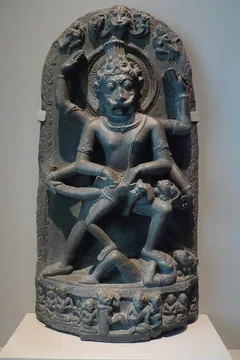
Hiraṇyakaśipu, the Asura King Slain by Narasiṃha
In the Purāṇas Hiraṇyakaśipu is a daitya king of the asuras whose brother Hiraṇyākṣa was killed by Viṣṇu's boar form. He…
 1.97 billion years ago
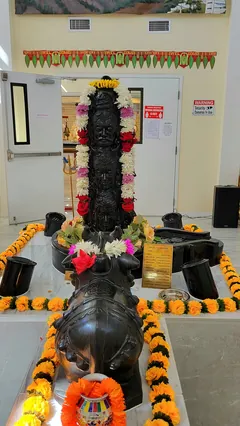
The Jyotirlinga Shrines of Śiva
The jyotirlingas are devotional forms of Śiva worshipped as a lingam of light, a name joining the Sanskrit words for rad…
 1.97 billion years ago
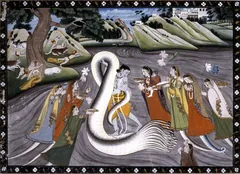
Kṛṣṇa Subdues the Serpent Kāliya
In Purāṇic and related tradition, the venomous nāga Kāliya poisoned a stretch of the Yamunā at Vṛndāvana until the young…
- 1.97 billion years ago
Kalki, the Prophesied Tenth Avatāra of Viṣṇu
In Vaiṣṇava tradition, Kalki is the final avatāra of Viṣṇu, foretold to appear when the Kali Yuga reaches its end. Purāṇ…
- 1.97 billion years ago
Kalpa: the Day of Brahmā
In Hindu cosmology a kalpa is a vast aeon, reckoned as a single day in the life of the creator Brahmā. Purāṇic tradition…
 1.97 billion years ago
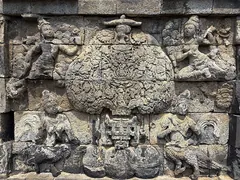
Kalpavṛkṣa, the Wish-Fulfilling Tree of the Samudra Manthana
In the Purāṇic account of the churning of the ocean, the wish-granting Kalpavṛkṣa arises with Kāmadhenu and is carried t…
- 1.97 billion years ago
Kāmadeva, God of Love and His Flower Arrows
Kāmadeva, also called Madana or Manmatha, is the Hindu deity of love and desire, shown as a handsome youth with a sugarc…
 1.97 billion years ago
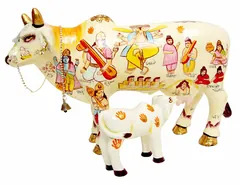
Kāmadhenu, the Cow of Plenty
In Hindu tradition Kāmadhenu, also called Surabhi, is a divine cow, the dam of all cattle, who grants her owner every wi…
 1.97 billion years ago
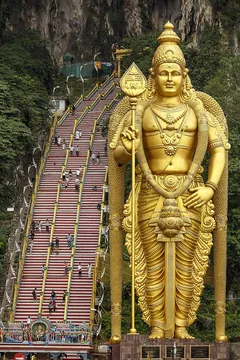
Kārttikeya, the Youthful God of War
In Hindu tradition Kārttikeya, also called Skanda, Murugan and Subrahmaṇya, is the ever-youthful god of war and a son of…
 1.97 billion years ago
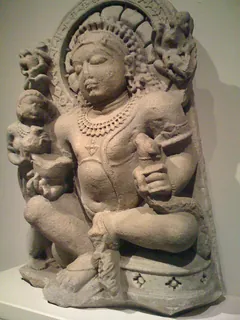
Kubera, Lord of Wealth and King of the Yakṣas
Kubera is the Hindu god of wealth and king of the yakṣas, guardian of the northern direction. Once seen in early Vedic t…
 1.97 billion years ago
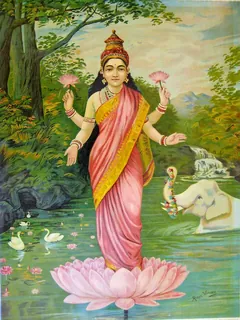
Lakṣmī, Goddess of Fortune and Prosperity
Lakṣmī, also called Śrī, is revered in Hindu tradition as the goddess of wealth, good fortune, beauty and abundance. Tog…
- 1.97 billion years ago
Mahābali, the Just Asura King
In Hindu tradition Mahābali, also called Bali or Māveli, is a daitya king and grandson of Prahlāda who was humbled by Vā…
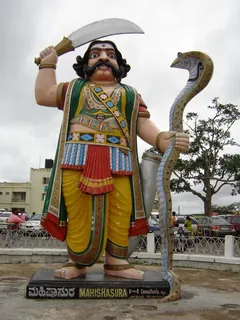 1.97 billion years ago
Durgā Slays the Buffalo Demon Mahiṣāsura
In the Devī Māhātmya tradition, the goddess Durgā defeats Mahiṣāsura, a shape-shifting buffalo demon, and is hailed as M…
- 1.97 billion years ago
Manu and the Great Flood
In Hindu tradition Manu is the first ancestor of humankind; the very words mānava and manuṣya, meaning human, derive fro…
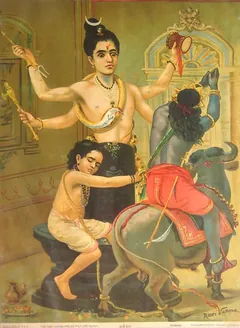 1.97 billion years ago
Mārkaṇḍeya, the Long-Lived Sage
Mārkaṇḍeya is a revered ṛṣi of Hindu literature, son of the sage Mṛkaṇḍu and Manasvinī. The Mārkaṇḍeya Purāṇa, a dialogu…
- 1.97 billion years ago
Mohinī, the Enchantress Form of Viṣṇu
In the Mahābhārata tradition, Mohinī is the only female form taken by Viṣṇu. After the churning of the cosmic ocean she …
 1.97 billion years ago
Mount Kailash, Sacred Peak of Four Faiths
Mount Kailash, rising to about 6,638 metres in western Tibet, is revered in Hinduism as the abode of Śiva and is sacred …
- 1.97 billion years ago
Mount Meru, the cosmic mountain
Mount Meru, also called Sumeru or Mahāmeru, is the sacred five-peaked mountain that stands at the centre of the universe…
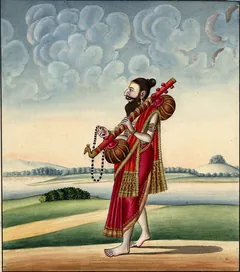 1.97 billion years ago
Nārada, the Wandering Sage and Divine Messenger
In Hindu tradition Nārada is a celestial sage and musician, born from the mind of Brahmā, who travels among the heavens,…
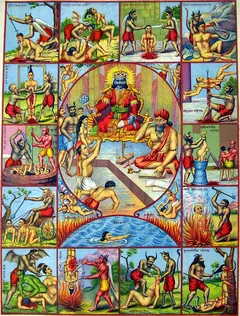 1.97 billion years ago
Naraka, the Hells Beneath the Earth
Naraka, also called Yamaloka, is the Hindu realm of post-mortem punishment, located south of the world and beneath the e…
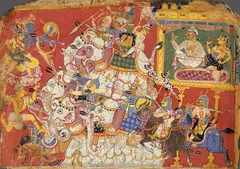 1.97 billion years ago
Narakāsura, Legendary King of Prāgjyotiṣa
In Purāṇic tradition Narakāsura is an asura king of Prāgjyotiṣa, son of the Earth goddess and Viṣṇu's boar form, slain b…
 1.97 billion years ago
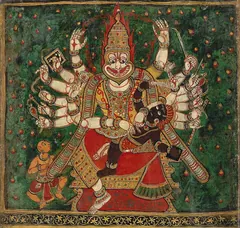
Narasiṃha, the Man-Lion Avatāra
Narasiṃha, the man-lion, is honoured as the fourth of Viṣṇu's ten principal avatāras. The Purāṇas tell how he appeared a…
 1.97 billion years ago
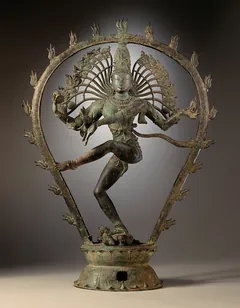
Śiva Naṭarāja, Lord of the Cosmic Dance
Naṭarāja is the depiction of Śiva as the divine cosmic dancer, whose dance is called the tāṇḍava. Described in Tamil and…
- 1.97 billion years ago
Pārvatī, Daughter of the Mountain and Consort of Śiva
Pārvatī, also called Umā and Gaurī, is a major goddess of Hindu tradition, venerated for power, nourishment, devotion an…
 1.97 billion years ago
Pātāla, the Subterranean Realms
In Indian religious cosmology Pātāla means the subterranean realms beneath the earth. Often rendered underworld or nethe…
- 1.97 billion years ago
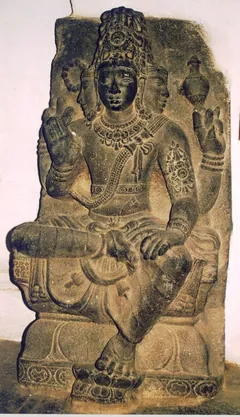
Prahlāda and the Narasiṃha avatāra
In the Purāṇas, Prahlāda is a young asura prince whose steadfast devotion to Viṣṇu provokes his father, King Hiraṇyakaśi…
 1.97 billion years ago
Prajāpati, Lord of Creatures in Vedic and Purāṇic Thought
Prajāpati, meaning lord of creatures, is a major deity of the early Vedic religion, identified with the creator Brahmā. …
- 1.97 billion years ago
Pralaya, the Dissolution of Worlds
Pralaya is the Hindu doctrine of cosmic dissolution, in which the universe returns to an unmanifest state at the end of …
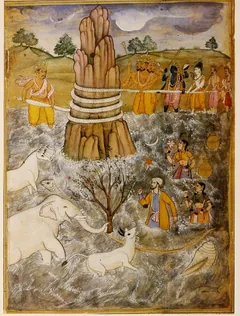 1.97 billion years ago
Samudra Manthana: Churning of the Ocean
The churning of the cosmic ocean is a celebrated episode of Hindu sacred narrative, told at length in the Viṣṇu Purāṇa a…
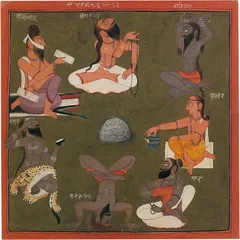 1.97 billion years ago
The Saptarṣi, Seven Sages of the Vedic Tradition
The Saptarṣi are the seven seers revered in Vedic and later Hindu literature, and identified with a well-known group of …
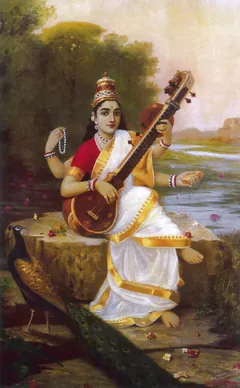 1.97 billion years ago
Sarasvatī, Goddess of Speech and Learning
Sarasvatī is among the principal goddesses of Hinduism, honoured as patron of knowledge, speech, music and the arts. Beg…
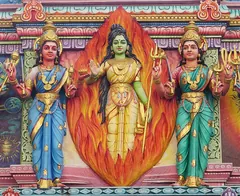 1.97 billion years ago
Satī and the Sacrifice of Dakṣa
In Purāṇic tradition Satī, daughter of Dakṣa and first wife of Śiva, attends her father's fire-sacrifice uninvited, is h…
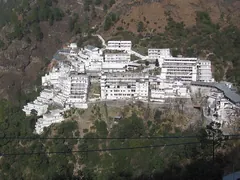 1.97 billion years ago
The Śākta Pīṭhas: Seats of the Goddess
The Śākta pīṭhas are pilgrimage shrines of Śaktism said to mark places where the body of the goddess Satī fell. Purāṇic …
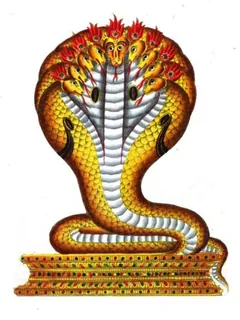 1.97 billion years ago
Śeṣa, the Serpent Who Bears the Worlds
In the Purāṇas, Śeṣa, also called Anantaśeṣa, is the primordial serpent king who supports the planets on his hoods while…
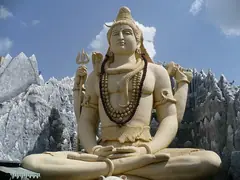 1.97 billion years ago
Śiva in Hindu Tradition
Śiva, whose name means 'the auspicious one' and who is also called Mahādeva, the Great God, stands among the principal d…
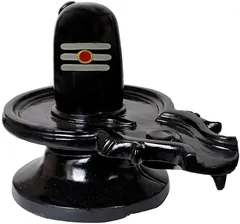 1.97 billion years ago
The Śiva Liṅga as Emblem of the Formless
The liṅga is the aniconic form in which Śiva is most widely worshipped in Śaiva tradition. The Sanskrit word means sign …
 1.97 billion years ago
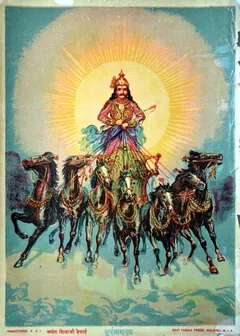
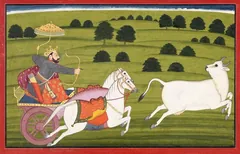
Sūrya, the Sun God and His Long Worship
Sūrya is the Sun as a deity in Hinduism, counted among the five principal gods of the Smārta tradition. Shown driving a …
- 1.97 billion years ago
Svarga, the Celestial Realm of the Devas
Svarga, also called Indraloka or Svargaloka, is the luminous heavenly abode of the devas in Hindu cosmology, counted amo…
- 1.97 billion years ago
Svāyambhuva Manu, First of the Fourteen Manus
In Purāṇic cosmology Svāyambhuva Manu is the first of fourteen Manus, the progenitor figure of humankind in a cosmic age…
 1.97 billion years ago
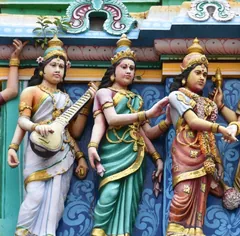
Tridevi: The Triad of Great Goddesses
The Tridevi is a divine triad of goddesses, usually Sarasvatī, Lakṣmī and Pārvatī, understood either as a feminine count…
 1.97 billion years ago
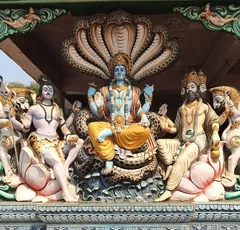
The Trimūrti: Three Faces of the Divine
The Trimūrti is a Hindu concept of a triple deity in which creation, preservation and dissolution are personified as Bra…
- 1.97 billion years ago
Tulasi Vivāha, the Ritual Wedding of Tulasi and Viṣṇu
Tulasi Vivāha is a Hindu ritual in which a holy basil plant, honoured as Lakṣmī, is symbolically married to a śāligrāma …
- 1.97 billion years ago
Vaikuṇṭha, the Eternal Abode of Viṣṇu
Vaikuṇṭha, also called Viṣṇuloka, is in Vaiṣṇava belief the eternal realm of Viṣṇu and Lakṣmī and the destination of lib…
 1.97 billion years ago
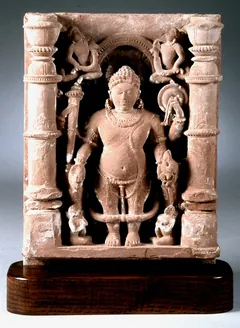
Vāmana, the Dwarf Avatar of Viṣṇu
Vāmana, the dwarf, is counted as the fifth avatar of Viṣṇu. In the Purāṇas he wins back the three worlds from the daitya…
 1.97 billion years ago
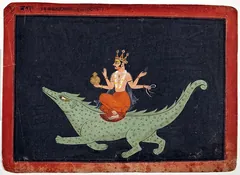
Varuṇa, Guardian of Ṛta and Lord of the Waters
Varuṇa is among the oldest Hindu deities. In the Ṛgveda he is a sovereign god of the sky who upholds ṛta, the moral and …
 1.97 billion years ago
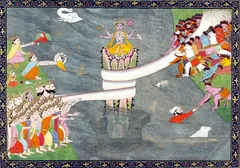
Vāsuki, King of the Nāgas
In Hindu tradition Vāsuki is a king of the nāgas, bearing a jewel called Nāgamaṇi on his head and often shown coiled aro…
 1.97 billion years ago
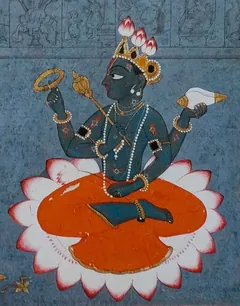
Viṣṇu, the Preserver
Viṣṇu, also called Nārāyaṇa and Hari, is among the principal deities of Hinduism and the supreme being for Vaiṣṇavas. Mo…
- 1.97 billion years ago
Viśvakarmā, Divine Architect of the Gods
Viśvakarmā is the craftsman deity and architect of the devas in later Hinduism. Early texts knew the divine craftsman as…
 1.97 billion years ago
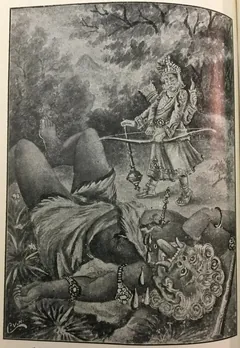
Indra Slays Vṛtra and Frees the Waters
In Vedic hymns the warrior god Indra kills the serpent-like Vṛtra, who has blocked the rivers, and releases the waters. …
 1.97 billion years ago
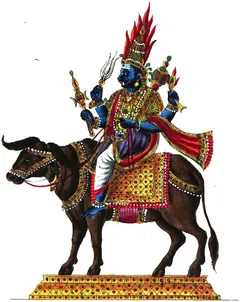
Yama, Lord of the Departed and of Dharma
In Vedic tradition Yama is the first mortal to have died and found the path to the heavens, and so becomes ruler of the …
 1.7 billion years ago
Pṛthu, the First Consecrated King in the Purāṇas
In Puranic tradition Pṛthu, son of Vena, is remembered as the first consecrated king, the ruler from whom the Earth take…
- 300 million years ago
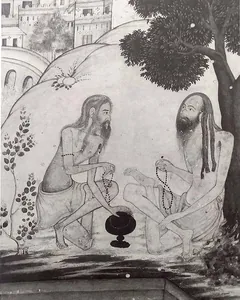
Manvantara: the age of a Manu
In Purāṇic cosmology a manvantara is the vast span presided over by one Manu, the forefather of humankind. Fourteen such…
 120 million years ago
Ikṣvāku Founds the Solar Dynasty of Kosala
Hindu and Jain scriptures remember Ikṣvāku as the first king of Kosala and founder of the Sūryavaṃśa, the solar line, sa…
- 119.99 million years ago
Purūravas, First King of the Lunar Line
Purūravas is remembered in Vedic and Puranic literature as the first ruler of the Lunar dynasty, the Candravaṃśa, and as…
- 3.89 million years ago
The Yuga Cycle of Four World Ages
In Hindu cosmology a yuga is an age of the world. Post-Vedic texts usually mean by it the caturyuga, a great cycle made …
 3.89 million years ago
Satya Yuga, the Age of Truth
In Hindu cosmology, Satya Yuga, also called Kṛta Yuga, opens each cycle of four world ages. The Purāṇas describe it as t…
 2.16 million years ago
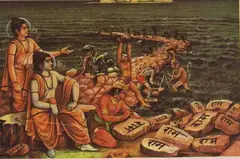
Tretā Yuga, the second world age
In Purāṇic cosmology, the Tretā Yuga is the second of four world ages within a single yuga cycle. It follows the Kṛta or…
 2 million years ago
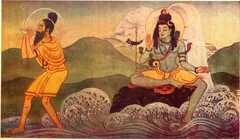
Bhagīratha brings the Gaṅgā to earth
Bhagīratha is a legendary king of the Ikṣvāku line in Hindu literature. He is remembered above all for the story in whic…
 2 million years ago
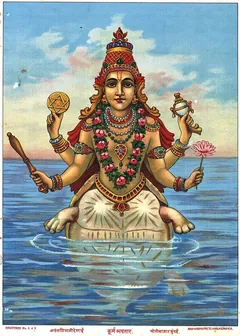
Kūrma, the Tortoise Avatāra of Viṣṇu
In Purāṇic tradition Kūrma, the tortoise, is the second of the ten principal avatāras of Viṣṇu listed in the Daśāvatāra.…
 2 million years ago
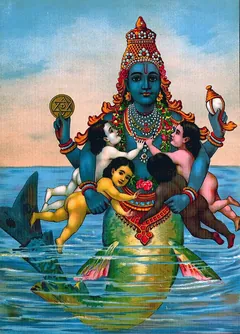
Matsya, the Fish Avatar of Viṣṇu
Matsya, meaning fish, is the form in which Viṣṇu is said to have saved Manu, the first man, from a great flood. Often co…
 2 million years ago
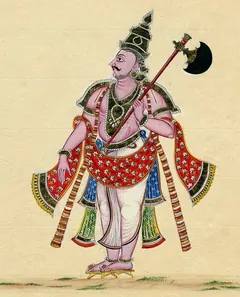
Paraśurāma, the Axe-Bearing Avatāra
Paraśurāma, 'Rāma of the axe', is counted as the sixth of Viṣṇu's ten avatāras. Son of the sage Jamadagni and Reṇukā, he…
 2 million years ago
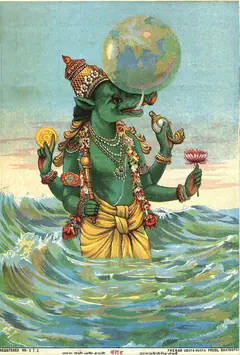
Varāha, the boar avatāra of Viṣṇu
Varāha is the form of Viṣṇu as a boar, usually counted third among the ten principal avatāras. In the Purāṇic narrative …
- 867,102 years ago
Dvāpara Yuga, the third world age
In Purāṇic cosmology the Dvāpara Yuga is the third of four repeating world ages, following the Tretā and giving way to t…
- 500,000 years ago
Emperor Bharata, Ancestor of the Kauravas and Pāṇḍavas
Bharata is the legendary universal monarch of the Lunar dynasty, son of Duṣyanta and Śakuntalā in the Ādi Parva of the M…
- 3102 BCE
Kali Yuga begins
In Hindu cosmology the Kali Yuga is the last and briefest of the four world ages that make up one yuga cycle, following …