Era · c. 200 BCE–550 CE
Classical & Gupta
230 moments in this era.
- 200 BCE
The Early Cholas of Tamilakam
The Early Cholas were one of the three main kingdoms of ancient Tamilakam, alongside the Pandyas and Cheras, active befo…
- 200 BCE
The Indo-Greek Kingdoms Rule the Northwest
After the Graeco-Bactrian king Demetrius I invaded India about 200 BCE, a series of Hellenistic kingdoms ruled the north…
- 200 BCE
Kodumanal, an Ancient Trading Town on the Noyyal
Kodumanal, a village in Erode district of Tamil Nadu on the northern bank of the Noyyal River, was once a thriving ancie…
 200 BCE
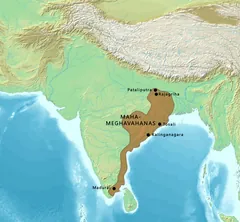
Mahāmeghavāhana Dynasty Rules Kaliṅga
The Mahāmeghavāhana dynasty ruled Kaliṅga after the Maurya decline, from the second or first century BCE into the early …
 200 BCE
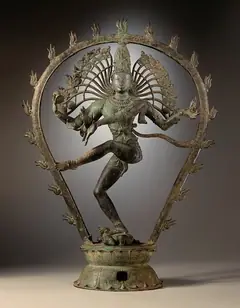
Nāṭyaśāstra, Bharata's treatise on the performing arts
The Nāṭyaśāstra is a Sanskrit treatise on drama, dance and music ascribed to the sage Bharata. Scholars usually place it…
- 200 BCE
Nyāya, the School of Logic
Nyāya is one of the six orthodox schools of Hindu philosophy, known for developing a systematic theory of logic, method …
 200 BCE
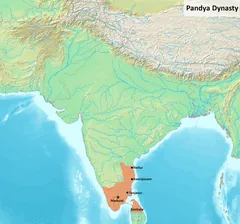
The Pāṇḍya Dynasty of Madurai
The Pāṇḍyas of Madurai were one of the three great kingdoms of ancient Tamilakam with the Cholas and Cheras, attested by…
- 200 BCE
Piṅgala's Chandaḥśāstra and the Science of Metre
Piṅgala, active around the third or second century BCE, composed the Chandaḥśāstra, the foundational Sanskrit treatise o…
 200 BCE
Tamil-Brāhmī, Earliest Writing of the South
Tamil-Brāhmī, or Tamiḻi, was a variant of the Brāhmī script used in southern India to write inscriptions in Old Tamil. B…
 200 BCE
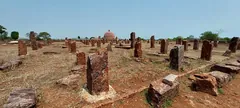
Thotlakonda, a Buddhist Hilltop Monastery by the Sea
Thotlakonda is a Buddhist monastic complex on a hill near Bheemunipatnam, close to Visakhapatnam in Andhra Pradesh. It o…
- 200 BCE
Vaiśeṣika, the Atomist School of Indian Philosophy
Vaiśeṣika is one of the six classical schools of Hindu philosophy, known for its naturalism and a form of atomism. Attri…
 200 BCE
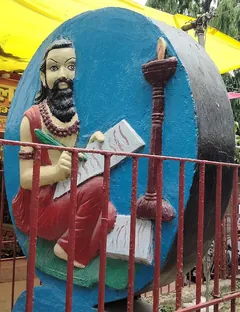
Kaṇāda's Vaiśeṣika Sūtra and the Atomist View of Nature
The Vaiśeṣika Sūtra, ascribed to the sage Kaṇāda, is the foundation text of the Vaiśeṣika school. Compiled between about…
 190 BCE
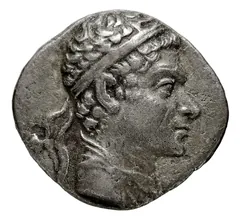
Agathocles the Just, Greco-Bactrian King
Agathocles I Dicaeus, 'the Just', was a Greco-Bactrian and Indo-Greek king who reigned around 190 to 180 BCE. He was pro…
 185 BCE
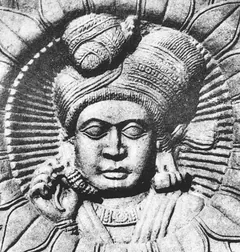
Puṣyamitra Śuṅga Founds the Śuṅga Dynasty
Puṣyamitra Śuṅga ruled from about 185 to 149 BCE as founder of the Śuṅga Empire, which succeeded the Mauryas. An inscrip…
- 185 BCE
Śuṅga dynasty takes power in Magadha
Around 185 BCE Puṣyamitra Śuṅga displaced the last Mauryas and founded the Śuṅga dynasty, ruling from Pāṭaliputra over m…
- 180 BCE
Sirkap, the Greek-Planned City Across from Taxila
Sirkap is an archaeological site near Taxila in Punjab, Pakistan, founded around 180 BCE by the Greco-Bactrian king Deme…
- 170 BCE
Khāravela of Kaliṅga and the Hāthīgumphā Inscription
Khāravela was a Jain king of Kaliṅga on India's eastern coast in the second or first century BCE. His main source is the…
 150 BCE
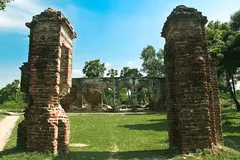
Arikamedu, a Coromandel Port Trading with Rome
Arikamedu, near Puducherry, was an ancient port identified with the Podouke of Greek and Roman sources. Excavations by W…
- 150 BCE
The Arjunayanas, a Republican People of the North
The Arjunayanas were an ancient people of northern India, active from the Shunga period. Samudragupta's Allahabad Pillar…
 150 BCE
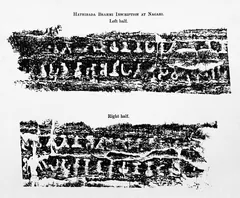
Hathibada Ghosundi: Oldest Sanskrit Inscriptions in Brāhmī
The Hathibada Ghosundi inscriptions, found near Chittorgarh in Rajasthan, are the earliest known Sanskrit records in Brā…
- 150 BCE
Menander I, Indo-Greek King and Buddhist Patron
Menander I, called Milinda in Pali, ruled an Indo-Greek kingdom in north-western South Asia and Central Asia from about …
- 150 BCE
Patañjali's Mahābhāṣya Comments on Pāṇini
The Mahābhāṣya, the great commentary on Sanskrit grammar by a Patañjali, is firmly datable to the second century BCE. Sc…
 150 BCE
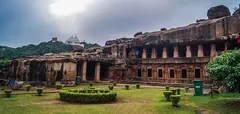
Udayagiri and Khandagiri Jain Caves
On two neighbouring hills just south of Bhubaneswar in Odisha, a group of partly natural, partly carved caves was fashio…
 150 BCE
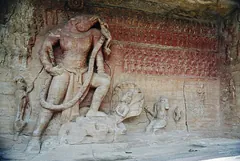
Vidisha, City of Besnagar
Vidisha, in Madhya Pradesh about sixty kilometres northeast of Bhopal, was known anciently as Besnagar and Bhaddalpur. I…
- 131 BCE
Vasumitra, Fourth Emperor of the Śuṅga Dynasty
Vasumitra was the fourth Śuṅga emperor, reigning from 131 to 124 BCE, and some manuscripts of the Matsya Purāṇa call him…
 125 BCE
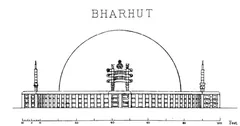
Bharhut stūpa reliefs
Bharhut, a village in Satna district of Madhya Pradesh, gave its name to an early Buddhist stūpa whose carved railings r…
 113 BCE
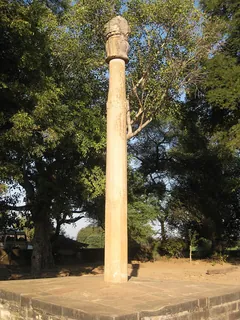
Heliodorus Raises a Garuḍa Pillar at Besnagar
Around 113 BCE the Greek ambassador Heliodorus, sent by the Indo-Greek king Antialcidas, set up a stone pillar at Besnag…
 100 BCE
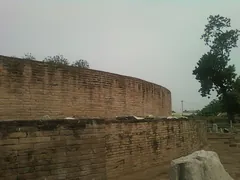
The Great Stūpa of Amarāvatī
Built in phases from about the third century BCE to roughly 250 CE in what is now Andhra Pradesh, the Amarāvatī stūpa is…
 100 BCE
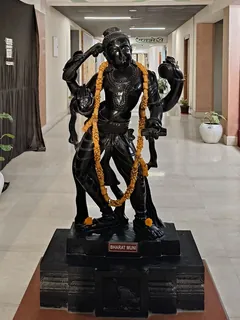
Bharata Muni and the Nāṭyaśāstra
Bharata Muni is traditionally credited as the author of the Nāṭyaśāstra, the great Sanskrit treatise on drama, dance, po…
 100 BCE
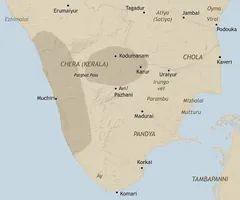
The Early Cheras of Kerala and Muziris
The Cheras, one of the three crowned kings of Tamilakam with the Cholas and Pāṇḍyas, are attested from the third century…
- 100 BCE
Eṭṭuttokai, the Eight Anthologies of Sangam Poetry
The Eṭṭuttokai, or Eight Anthologies, is a classical Tamil collection within Sangam literature and, with the Pattuppāṭṭu…
 100 BCE
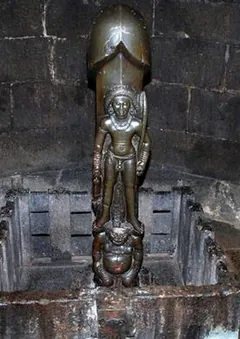
The Gudimallam Liṅga and Its Early Image of Śiva
The Gudimallam Liṅga, in the Paraśurāmeśvara temple near Tirupati in Andhra Pradesh, is a very early liṅga with a standi…
 100 BCE
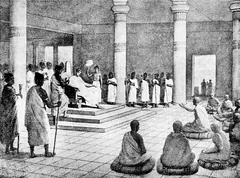
The Milindapañha, Questions of King Milinda
The Milindapañha is a Buddhist work, composed between about 100 BCE and 200 CE, that records a dialogue between the sage…
 100 BCE
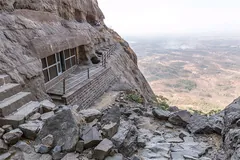
Nāṇeghāṭ Cave Inscriptions and the Early Sātavāhanas
Nāṇeghāṭ is a Western Ghats pass on an ancient trade route above the Konkan coast, famous for a cave with Brāhmī inscrip…
 100 BCE
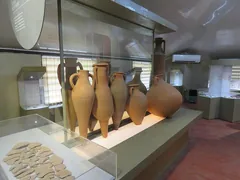
Pattanam, Probable Port of Muziris
Excavations at Pattanam in Kerala have uncovered the remains of an ancient trading port, widely believed to be Muziris, …
 100 BCE
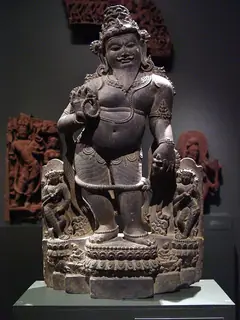
Sangam Literature of Tamilakam
The Sangam corpus is the earliest known body of classical Tamil literature and the oldest literature of South India. Tam…
 100 BCE
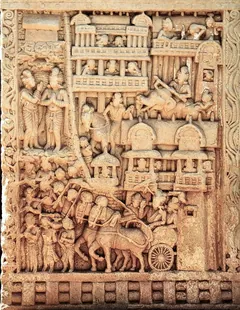
Sātavāhana dynasty of the Deccan
The Sātavāhanas, called Āndhras in the Purāṇas, ruled much of the Deccan from about the late second century BCE to the e…
- 100 BCE
The Tolkāppiyam, Oldest Tamil Grammar
The Tolkāppiyam is the earliest surviving Tamil grammar and the oldest surviving lengthy work in Tamil. Its three books …
 90 BCE
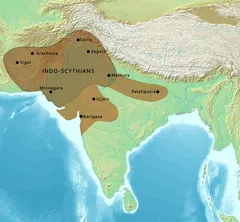
The Indo-Scythians Settle the North-West
From the mid-second century BCE, nomadic Saka groups of Iranic origin moved south into Afghanistan and the north-western…
- 73 BCE
The Kaṇva Dynasty Replaces the Śuṅgas in Magadha
The Kaṇva dynasty ruled Magadha from about 73 to 28 BCE. Its founder Vāsudeva, a minister, killed the Śuṅga king Devabhū…
- 57 BCE
The Legend of Vikramāditya and the Vikrama Era
Vikramāditya is a legendary king of Indian story, famed in the Vetālapañcaviṃśati and Siṃhāsana Dvātriṃśikā, usually rul…
 50 BCE
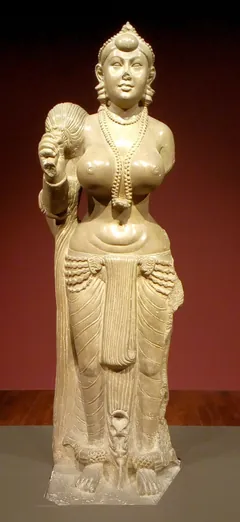
The Didarganj Yakṣī, a Polished Stone Sculpture from Patna
The Didarganj Yakṣī is a life-size, mirror-polished sandstone figure holding a fly-whisk, found near Patna in 1917 and n…
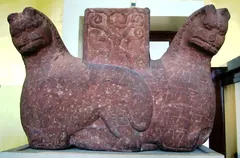 1 CE
Mathura Lion Capital Records Indo-Scythian Gifts
This Indo-Scythian sandstone pillar top from Mathura, dated to 1 to 10 CE, was dedicated under the satrap Rajuvula. Its …
- 19 CE
Gondophares and the Indo-Parthian Kingdom
Gondophares I, called Guduvhara, founded the Indo-Parthian kingdom and was its most prominent king, reigning roughly fro…
- 30 CE
Kujula Kadphises Unites the Yuezhi and Founds the Kushan Empire
Kujula Kadphises was a Yuezhi prince who united the confederation in Bactria in the first century CE and became the earl…
- 35 CE
The Western Satraps Govern Western and Central India
The Western Satraps, or Western Kṣatrapas, were Śaka rulers of Scythian origin who governed western and central India be…
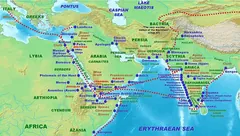 50 CE
Indo-Roman Trade Opens the Red Sea Route
After Augustus conquered Egypt in 30 BCE, trade between India and the Roman world shifted from overland caravans to the …
- 50 CE
Muziris, Spice Port of the Malabar Coast
Muziris, known in Tamil as Muciṟi, was a major port of the Chera country near the Periyar's mouth on the Malabar Coast. …
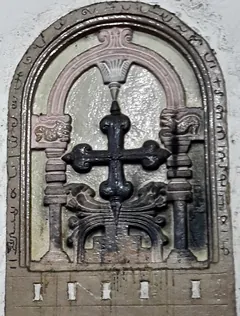 52 CE
St Thomas Christians of Kerala
The St Thomas Christians, or Syrian Christians of Kerala, are an Indian Christian community who trace their origins to t…
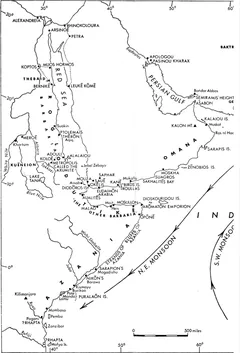 60 CE
The Periplus Records Indian Ocean Trade Routes
The Periplus of the Erythraean Sea is a Greek sailor's guide written in the first century CE, describing ports and tradi…
 78 CE
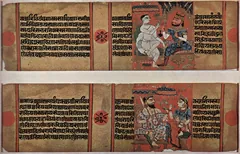
The Śālivāhana Era Begins in 78 CE
The Śālivāhana or Śaka era counts years from 78 CE and is used in many parts of the Deccan and South India, as well as i…
- 80 CE
Aśvaghoṣa, Buddhist Poet and Dramatist
Aśvaghoṣa, who lived roughly from 80 to 150 CE and was born at Sāketa (Ayodhya), was a Buddhist philosopher, poet and pl…
 85 CE
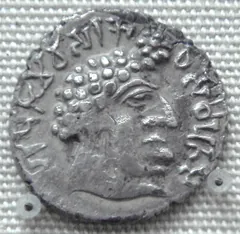
Vāsiṣṭhīputra Pulumāvi, Sātavāhana King
Vāsiṣṭhīputra Pulumāvi, son of Gautamīputra Sātakarṇi, was a Sātavāhana king whose reign is now generally placed about 8…
 100 CE
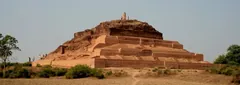
Ahichchhatra, Capital of Northern Pañcāla
Ahichchhatra, near Ramnagar in Bareilly district of Uttar Pradesh, was the ancient capital of northern Pañcāla, a kingdo…
 100 CE
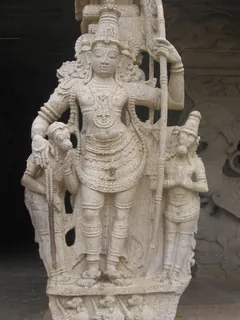
The Akanāṉūṟu Anthology of Love Poems
The Akanāṉūṟu is a Sangam-era Tamil anthology, one of the Eight Anthologies, holding 400 akam love poems by 144 poets. I…
- 100 CE
Āyurveda: An Ancient Indian Medical Tradition
Āyurveda is a system of traditional medicine with roots in the Indian subcontinent, shaped over more than two thousand y…
 100 CE
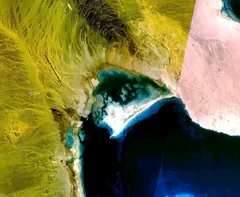
Berenike: Red Sea Port in the India Trade
Berenike, a Red Sea port of Egypt founded around 275 BCE by Ptolemy II, became a gateway for Roman-era trade with India.…
- 100 CE
Guṇāḍhya's Lost Bṛhatkathā, the Great Narrative
The Bṛhatkathā, or Great Narrative, was an ancient epic of tales said to have been composed by Guṇāḍhya in the little-un…
 100 CE
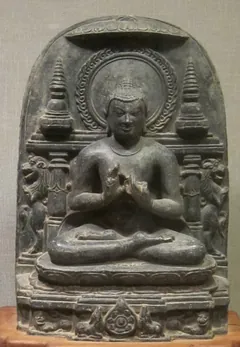
Aśvaghoṣa Composes the Buddhacarita
The Buddhacarita, 'Acts of the Buddha', is a Sanskrit mahākāvya about Gautama Buddha's life, composed by Aśvaghoṣa of Sā…
 100 CE
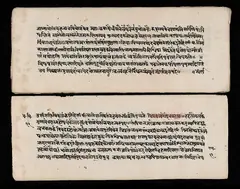
Caraka Saṃhitā, foundational text of Āyurveda
The Caraka Saṃhitā is a Sanskrit treatise on Āyurveda attributed to Caraka and later revised by Dṛḍhabala. Reworking the…
 100 CE
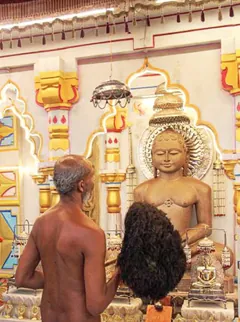
Digambara, the Sky-Clad Tradition of Jainism
Digambara, meaning sky-clad, is a principal branch of Jainism, alongside Śvetāmbara. Its monks renounce clothing as a si…
 100 CE
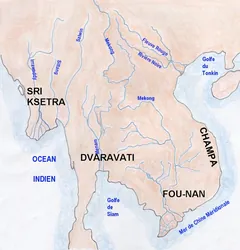
Funan, Southeast Asia's Earliest Indianised Polity
Funan was a loose network of Indianised states in the Mekong Delta region, flourishing from about the first to the seven…
 100 CE
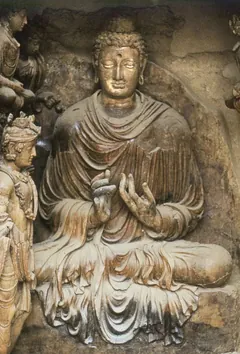
Gandhāra Greco-Buddhist Art
Gandhāran or Greco-Buddhist art blended Buddhist subjects with Hellenistic and Greco-Roman styles in the northwest of th…
- 100 CE
The Gāhā Sattasaī, Prakrit Love Poems
The Gāhā Sattasaī, or Gāthā Saptaśatī, is an ancient anthology of Maharashtri Prakrit love poems, traditionally credited…
- 100 CE
Kanheri, Buddhist Monastery in the Black Mountain
The Kanheri Caves, cut into a basalt hill on Salsette island at Mumbai's edge, form a Buddhist monastic site of 109 cave…
- 100 CE
Kapilar, Most Prolific Sangam Poet
Kapilar was the most productive poet of the Tamil Sangam age, credited with 206 poems, nearly a tenth of the classical c…
 100 CE
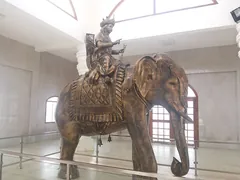
Karikāla, Great King of the Early Cholas
Karikāla, remembered as the greatest of the Early Cholas, ruled Tamilakam from Uraiyūr and later Pukār. He is credited w…
 100 CE
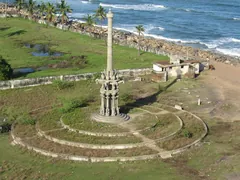
Kāvērippūmpaṭṭiṉam, Port of the Early Cholas
Poompuhar, called Kāvērippūmpaṭṭiṉam in ancient Tamil literature, was a flourishing port at the mouth of the Kāveri that…
- 100 CE
Lakulīśa, Teacher of the Pāśupatas
Lakulīśa, whose name means lord of the staff, was a Śaiva preceptor of the Pāśupata doctrine. Some scholars call him fou…
 100 CE
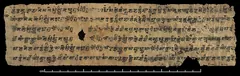
The Lotus Sūtra, a Pillar of Mahāyāna Buddhism
The Lotus Sūtra, or Saddharma Puṇḍarīka, is one of the most influential Mahāyāna scriptures. Composed in Sanskrit in Ind…
- 100 CE
Mahārāṣṭrī Prakrit, Language of Satavahana Verse
Mahārāṣṭrī was a Prakrit of ancient and medieval India, widely used in western and southern regions and the court langua…
 100 CE
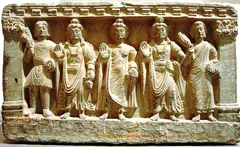
The Rise of Mahāyāna Buddhism
Mahāyāna, the Great Vehicle, emerged in ancient India from about the first century BCE and became the largest branch of …
- 100 CE
The Malavas, a Confederation of Ancient India
The Malavas were an ancient tribal confederation of north and central India, attested in several regions and giving thei…
 100 CE
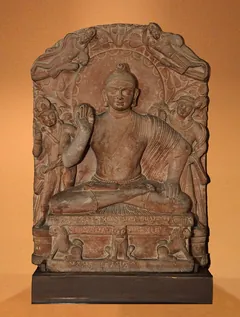
The Mathura School of Sculpture
The Mathura school was a major centre of Indian sculpture in the early centuries CE, working in local red sandstone unde…
- 100 CE
Pāśupata Śaivism, the First Major Śaiva School
Pāśupata Śaivism was the first major Śaiva school. The movement may have existed from the first or second century CE and…
 100 CE
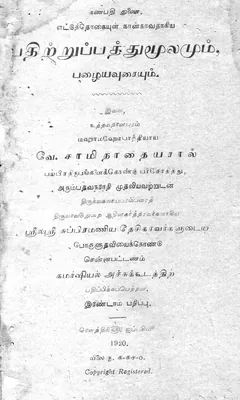
Patirruppattu, the Chera Panegyric Anthology
The Patirruppattu, or Ten Tens, is a Tamil poetic collection in the Sangam corpus that praises the Chera kings of ancien…
 100 CE
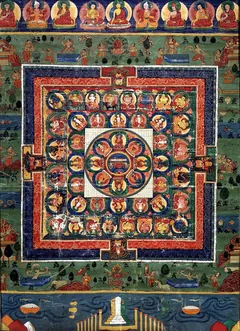
Prajñāpāramitā Sūtras and the Perfection of Wisdom
The Prajñāpāramitā, the 'Perfection of Wisdom', names both a central Mahāyāna ideal and a family of sūtras, including th…
- 100 CE
Prakrit Languages Carry Early Jain and Buddhist Literature
Prakrit names a family of Middle Indo-Aryan vernaculars used in India from about the fifth century BCE to the twelfth ce…
- 100 CE
Puṟanāṉūṟu, the Tamil Anthology of Heroic Poems
The Puṟanāṉūṟu is a classical Tamil anthology of 400 poems about kings, war and public life, counted as the last of the …
 100 CE
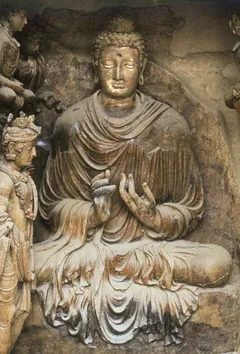
The Sarvāstivāda School and Its Abhidharma
The Sarvāstivāda, an early Buddhist school dating from about Aśoka's time, held that phenomena exist in past, present an…
 100 CE
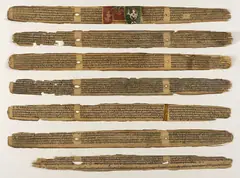
Suśruta Saṃhitā, treatise on medicine and surgery
The Suśruta Saṃhitā is a Sanskrit compendium of medicine and one of the founding texts of Āyurveda, alongside the Caraka…
 100 CE
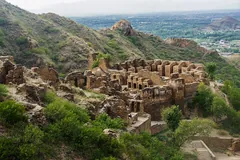
Takht-i-Bahi Buddhist Monastery in Gandhāra
Takht-i-Bahi, near Mardan in Khyber Pakhtunkhwa, is the ruin of a Buddhist monastery founded in the first century CE and…
- 100 CE
Tirukkuṟaḷ of Valluvar
The Tirukkuṟaḷ is a Tamil classic of 1,330 two-line couplets on ethics, ascribed by tradition to Tiruvaḷḷuvar. Arranged …
 100 CE
Triveṇī Saṅgama, the Sacred Meeting of Three Rivers
In Hindu tradition a triveṇī saṅgama is the confluence of three rivers, a holy site where bathing is said to wash away s…
 106 CE
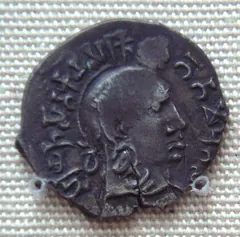
Gautamīputra Śātakarṇi Restores Sātavāhana Power
Gautamīputra Śātakarṇi, the Sātavāhana ruler of the Deccan, is regarded as the greatest of his dynasty. His reign falls …
 127 CE
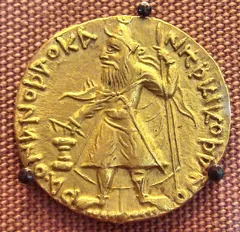
Kaniṣka and the Kushan Empire at its height
Kaniṣka I ruled the Kushan Empire at its peak, around 127 to 150 CE, over lands stretching from Central Asia and Gandhār…
 127 CE
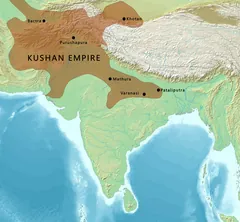
The Kushan Empire Spans Bactria and North India
The Kushan Empire, formed by Yuezhi peoples in the early first century CE, ruled from Bactria across much of Afghanistan…
 127 CE
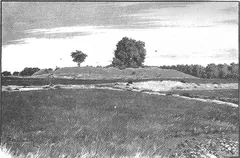
Kanishka's Great Stupa Near Peshawar
The Kanishka Stupa was a monumental Buddhist stupa raised by the Kushan king Kanishka in the second century CE at Shaji-…
- 130 CE
Uthiyan Cheralathan, Earliest Known Chera Ruler
Uthiyan Cheralathan, active around 130 CE, is the earliest Chera ruler known from Sangam literature, which speaks of the…
- 150 CE
The Āy Chiefs of Vizhinjam and Nanjinad
The Āy dynasty, a Tamil-speaking line also called Kupaka in later times, held the south-western tip of the peninsula, in…
 150 CE
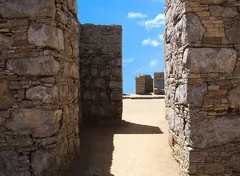
Jaulian Monastery Rises at Taxila
Jaulian, whose name means seat of saints, is a Buddhist monastery at Taxila in present-day Pakistan, dated to the second…
 150 CE
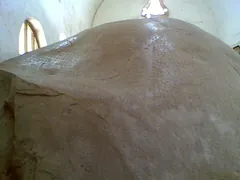
Rudradāman's Junagadh Inscription on Sudarśana Lake
The Junagadh rock inscription of the Western Kṣatrapa ruler Rudradāman I, set up near Girnār around 150 CE, is an early …
 150 CE
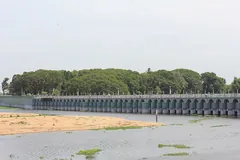
Kallanai, the Grand Anicut on the Kāveri
Kallanai, or the Grand Anicut, is a stone weir across the Kāveri in Tamil Nadu, traditionally attributed to the Cōḻa kin…
 150 CE
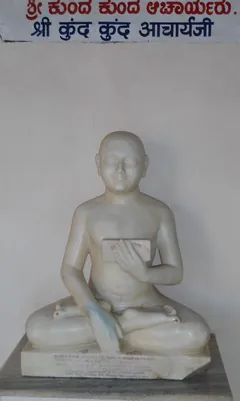
Kundakunda and the Digambara Mystical Texts
Sixteen influential Digambara Jain texts are credited to Kundakunda, who may be one author or several, including the Sam…
 150 CE
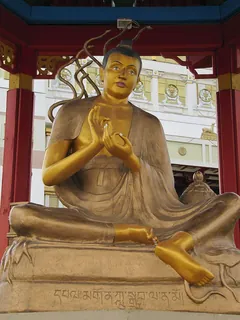
Madhyamaka, the Buddhist Philosophy of the Middle Way
Madhyamaka, 'the middle way', is a Buddhist philosophical school traced to the monk Nāgārjuna, who lived about 150 to 25…
 150 CE
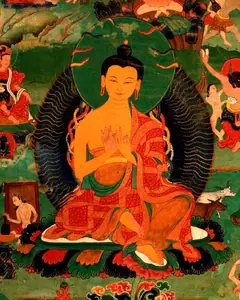
Nāgārjuna and the Madhyamaka school
Nāgārjuna, a South Indian Mahāyāna monk of roughly the second and third centuries CE, founded the Madhyamaka or Middle W…
- 150 CE
Nyāya Sūtras, Foundation of Indian Logic
The Nyāya Sūtras, attributed to Akṣapāda Gautama, are the founding text of the Nyāya school of philosophy. Their date is…
 150 CE
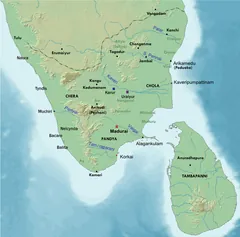
Paṭṭiṉappālai, Sangam Poem of Kāveripattinam
Paṭṭiṉappālai is a 301-line poem of the Tamil Sangam corpus, composed by Kaṭiyalūr Uruttiraṅkaṇṇaṉār around the first or…
- 150 CE
Pattuppāṭṭu, the Ten Long Poems of Sangam Literature
The Pattuppāṭṭu, or Ten Lays, is a collection of ten long Tamil poems in Sangam literature, ranging from about 100 to 80…
 150 CE
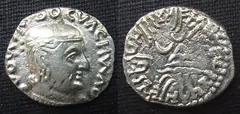
Rudradāman I and the Junagadh Rock Inscription
Rudradāman I, a Śaka ruler of the Western Kṣatrapas, reigned from about 130 to 150 CE and took the title Mahākṣatrapa. H…
- 150 CE
The Mahāvibhāṣā and the Vaibhāṣika School
The Abhidharma Mahāvibhāṣā Śāstra, an encyclopedic Buddhist work on Abhidharma, is thought to have been composed around …
 150 CE
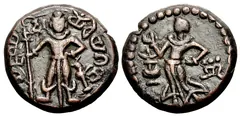
The Yaudheya Republic and Its Warrior Reputation
The Yaudheyas were an ancient warrior confederation, a gaṇasaṅgha or republic, in the region of modern Haryana. Their na…
- 180 CE
Ceṅkuṭṭuvaṉ, the Righteous Chera King
Ceṅkuṭṭuvaṉ, famed as the most celebrated early Chera ruler, is placed around 180 CE. Praised in Sangam poetry by Paraṇa…
- 191 CE
Vāsudeva I, Last of the Great Kushans
Vāsudeva I was a Kushan emperor and the last of the 'Great Kushans', whose reign lasted from 191 at the latest to 232 CE…
 200 CE
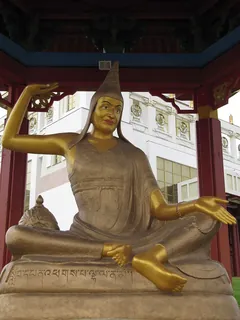
Āryadeva, Disciple of Nāgārjuna
Āryadeva was a Buddhist philosopher of the Madhyamaka school, traditionally a pupil of Nāgārjuna and active around the t…
- 200 CE
Bhāsa, Early Sanskrit Dramatist Before Kālidāsa
Bhāsa is one of the earliest known Sanskrit playwrights, predating Kālidāsa. His thirteen attributed plays are usually d…
 200 CE
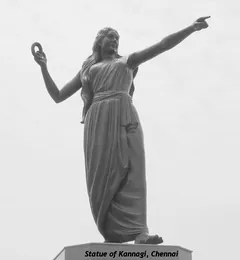
Kannagi, the Chaste Heroine of the Cilappatikāram
Kannagi is the central figure of Iḷaṅkō Aṭikaḷ's Tamil epic Cilappatikāram, one of the Five Great Epics of Tamil literat…
- 200 CE
The Sautrāntika School of Early Buddhist Thought
The Sautrāntikas were an early Buddhist school that grew out of the Sarvāstivādins and held that the sūtras, not the lat…
 200 CE
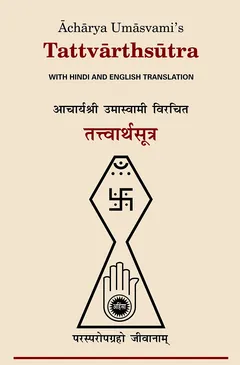
Umaswami's Tattvartha Sutra Summarises Jain Doctrine
The Tattvartha Sutra, composed in Sanskrit by Acharya Umaswami between about the second and fifth centuries CE, presents…
 200 CE
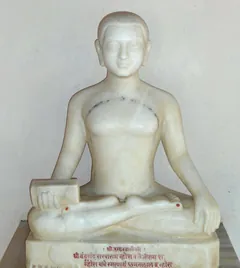
Umāsvāti Composes the Tattvārtha Sūtra
Vācaka Umāsvāti, an Indian scholar placed between the second and fifth centuries CE, wrote the Tattvārtha Sūtra, the ear…
- 200 CE
Viṣṇu Smṛti, a Late Dharmaśāstra with a Devotional Turn
The Viṣṇu Smṛti is among the latest works of the Dharmaśāstra tradition and unusual for its strong bhakti orientation, u…
 200 CE
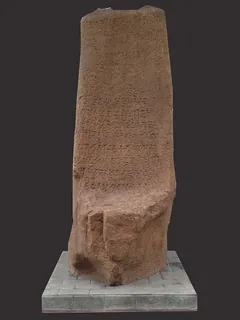
Võ Cạnh Inscription: Early Sanskrit Writing in Southeast Asia
The Võ Cạnh inscription, a stone stele found in 1885 near Nha Trang, Vietnam, is the oldest Sanskrit inscription known f…
- 203 CE
The Ābhīra Dynasty in the Western Deccan
The Ābhīra dynasty ruled the western Deccan from about 203, perhaps succeeding the Sātavāhanas, until roughly 270 or 370…
 250 CE
Nagarjunakonda under the Ikṣvākus
Nagarjunakonda, in Andhra Pradesh, flourished in the third century CE as a large Buddhist monastic centre under the Ikṣv…
- 250 CE
Kalittokai, the Kali-Metre Anthology of Love
The Kalittokai is a Tamil anthology of 150 poems in the kali metre, the sixth of the Eight Anthologies of Caṅkam literat…
 250 CE
The Nāgas of Padmāvatī Between Kushanas and Guptas
The Nāga dynasty held stretches of north-central India in the third and fourth centuries, between the decline of the Kus…
- 250 CE
Śabara and the Śābara-bhāṣya on the Mīmāṃsā Sūtras
Śabara, or Śabara-svāmin, wrote the Śābara-bhāṣya, the main early commentary on Jaimini's Pūrva Mīmāṃsā Sūtras, later ex…
- 250 CE
Rise of the Vākāṭaka Dynasty
The Vākāṭakas emerged in the Deccan around the middle of the third century CE, founded by Vindhyaśakti. Successors to th…
- 250 CE
Vātsyāyana and the Kāmasūtra
Mallanāga Vātsyāyana, author of the Kāmasūtra, is placed by scholars between the second or third century and the fifth c…
- 250 CE
Vāyu Purāṇa, an Early Puranic Compendium
The Vāyu Purāṇa ranks among the eighteen principal Purāṇas of the Hindu tradition and is often judged among the oldest o…
 270 CE
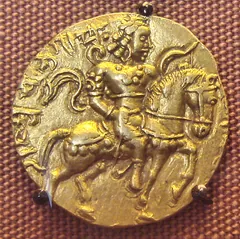
Śrī Gupta, Founder of the Gupta Line
Śrī Gupta, active in the late third century CE, is regarded as the first ruler of the Gupta dynasty in eastern India. Th…
- 270 CE
The Yavanajātaka, Where Indian and Greek Astrology Meet
The Yavanajātaka is an early Sanskrit text on astrology that blends Indian and Greek astral science. David Pingree dated…
 275 CE
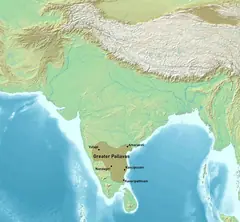
Pallava dynasty of Kāñcī
The Pallavas ruled much of south-eastern India from about 275 to 897 CE, with Kāñcīpuram as their capital. Former feudat…
- 275 CE
Pravarasena I, the Vākāṭaka Emperor
Pravarasena I ruled the Vākāṭaka dynasty from about 275 to 335 CE, succeeding its founder Vindhyaśakti. He alone among V…
 300 CE
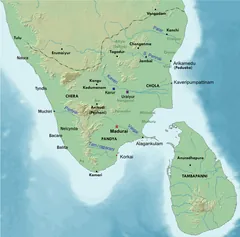
The Kalabhras and the Obscure Centuries of Tamilakam
The Kalabhras ruled all or parts of the Tamil country at some point between the 3rd and 6th centuries CE, after the earl…
- 300 CE
The Śālaṅkāyana Kings of Vengi
The Śālaṅkāyana dynasty ruled part of Andhra between the Godavari and Krishna rivers from about 300 to 440. Their capita…
 300 CE
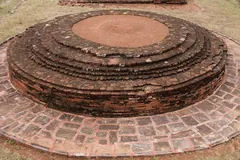
Salihundam, Buddhist Hill Site of Kalinga
Salihundam, a hill village above the Vamsadhara's southern shore in Srikakulam district, Andhra Pradesh, is a significan…
 300 CE
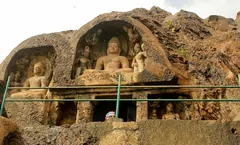
Sankaram, a Long-Lived Buddhist Hill Site in Andhra
Sankaram, near Anakapalli in Andhra Pradesh, preserves Buddhist rock-cut caves on the adjoining hills of Bojjannakonda a…
 300 CE
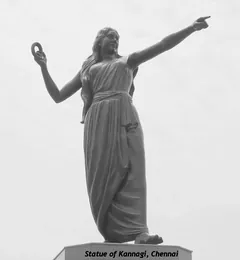
Cilappatikāram, the Tale of an Anklet
The Cilappatikāram, attributed to the Jain prince-monk Iḷaṅkō Aṭikaḷ, is the earliest Tamil epic, a poem of 5,730 lines …
 300 CE
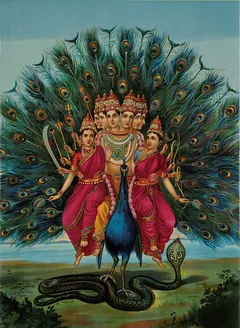
Nakkīrar's Tirumurukāṟṟuppaṭai Honours Murugan
The Tirumurukāṟṟuppaṭai is an ancient Tamil devotional poem of Sangam literature, composed by Nakkīrar and dedicated who…
 300 CE
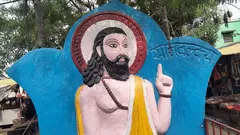
Yājñavalkya Smṛti, a Systematic Dharmaśāstra
The Yājñavalkya Smṛti is a Sanskrit Dharmaśāstra dated between the third and fifth centuries CE, composed after the Manu…
 320 CE
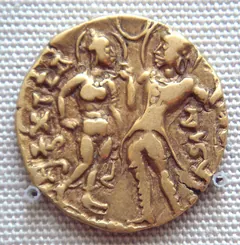
Chandragupta I Takes the Title Mahārājādhirāja
Chandragupta I, reigning about 319 to 335 CE, appears to have been the first Gupta ruler to hold the imperial title Mahā…
- 320 CE
Rise of the Gupta Empire
The Gupta dynasty ruled much of northern India from the third to the sixth century CE, with conventional imperial reckon…
- 335 CE
Ānanda Gotrikas of Kandarapura
The Ānanda Gotrikas ruled coastal Andhra from the capital Kandarapura, near Chejerla in Guntur district, from about 335 …
 345 CE
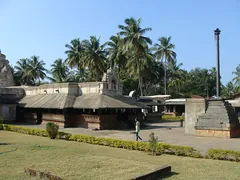
Banavasi, Ancient Capital of the Kadambas
Banavasi, a temple town near Sirsi in Karnataka, served as the early capital of the Kadamba rulers. The Kadambas ruled o…
- 345 CE
Kadamba Dynasty Founded at Banavāsi
Around 345 CE Mayūraśarman established the Kadamba kingdom, ruling northern Karnataka and the Konkan from Banavāsi. The …
- 350 CE
Asaṅga and the Foundations of Yogācāra
Asaṅga, who lived in the fourth century CE, is regarded as the founder of the Yogācāra school of Mahāyāna Buddhism. With…
- 350 CE
Īśvarakṛṣṇa and the Sāṃkhyakārikā
The Sāṃkhyakārikā is the oldest surviving work of the Sāṃkhya school within Indian philosophy, attributed to Īśvarakṛṣṇa…
 350 CE
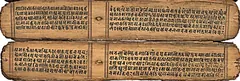
Mārkaṇḍeya Purāṇa and the Devī Māhātmya
The Mārkaṇḍeya Purāṇa is one of the eighteen major Purāṇas and is thought to be among the earliest. It is best known for…
 350 CE
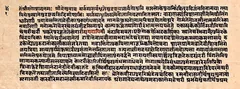
Matsya Purāṇa and the Definition of a Purāṇa
The Matsya Purāṇa, named for Viṣṇu's fish incarnation, is among the older and better preserved of the eighteen Mahāpurāṇ…
 350 CE
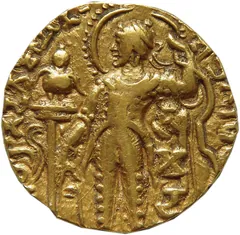
Samudragupta Builds a Gupta Empire
Samudragupta, son of Chandragupta I and the Licchavi princess Kumāradevī, ruled in the fourth century and turned the Gup…
 350 CE
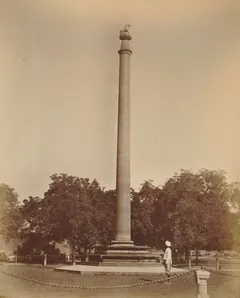
Samudragupta's Prayāga Praśasti on the Allahabad Pillar
The Allahabad Pillar is an Aśokan stambha bearing Maurya-era edicts, made especially famous by a later inscription prais…
 350 CE
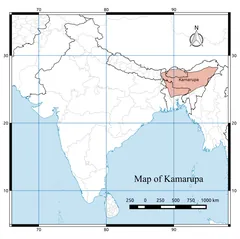
Varman Dynasty Founds Historic Kāmarūpa
The Varman dynasty, ruling from about 350 to 650 CE, was the first historical royal house of Kāmarūpa in ancient Assam. …
- 350 CE
Western Gaṅgas Rule Ancient Karnataka
The Western Gaṅga dynasty governed much of ancient Karnataka from about 350 to 1004 CE, first from Kolar and then from T…
- 350 CE
Yogācāra: The Buddhist School of Consciousness
Yogācāra, the school of the yogins, was one of the two most influential Mahāyāna Buddhist traditions in India alongside …
 375 CE
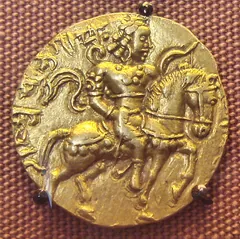
Candragupta II Vikramāditya, Gupta emperor
Candragupta II, also titled Vikramāditya, ruled the Gupta Empire from about 375 until about 415 CE. Continuing his fathe…
 375 CE
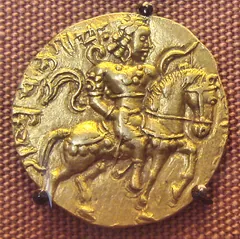
Rāmagupta and the Devīcandraguptam Tradition
Rāmagupta, a Gupta ruler of the late fourth century CE, is known mainly from the fragmentary Sanskrit play Devīcandragup…
- 385 CE
Rudrasena II Marries Prabhāvatīguptā
Rudrasena II headed the Pravarapura-Nandivardhana line of the Vākāṭakas from about 385 to 390. He married Prabhāvatīgupt…
 388 CE
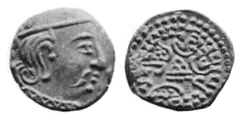
Traikūṭaka Kings Govern the Northern Konkan
The Traikūṭakas formed a royal line that held sway between about 388 and 456 CE across northern Konkan, Aparānta and nor…
- 399 CE
Faxian's pilgrimage to India
Faxian was a Chinese Buddhist monk who set out around the age of sixty to obtain Buddhist scriptures from India. Travell…
- 400 CE
Kālidāsa's Abhijñānaśākuntalam Brought to the Stage
Kālidāsa's Sanskrit play Abhijñānaśākuntalam, usually rendered as The Recognition of Śakuntalā, dramatises an episode fr…
- 400 CE
Aulikara Dynasty of Daśapura Dominates Northern India
The Second Aulikara dynasty ruled the kingdom of Daśapura, modern Mandsaur, between the fourth and sixth centuries CE. A…
- 400 CE
The Brahma Sūtras Take Their Surviving Form
The Brahma Sūtras, also called the Vedānta Sūtra, are 555 aphorisms in four chapters attributed to Bādarāyaṇa, which pre…
 400 CE
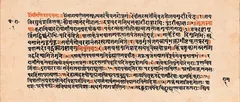
The Brahmanda Purana Takes Shape as a Cosmic-Egg Compendium
The Brahmanda Purana, the eighteenth of the major Puranas, is named for the cosmic egg of Hindu cosmology. Scholars thin…
 400 CE
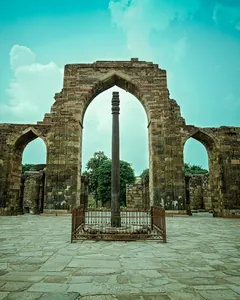
The Iron Pillar of Delhi
A wrought-iron column about 7.2 metres tall and more than six tonnes in weight, the Iron Pillar is linked to the Gupta k…
 400 CE
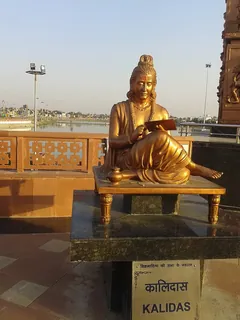
Kālidāsa, Classical Sanskrit Poet and Dramatist
Kālidāsa, active around the 4th to 5th century CE, is widely held to be the finest poet and playwright of classical Sans…
 400 CE
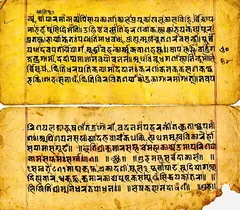
Kālidāsa's Kumārasambhava, the Birth of Kumāra
The Kumārasambhava is a Sanskrit court epic by Kālidāsa recounting the union of Śiva and Pārvatī and the birth of their …
 400 CE
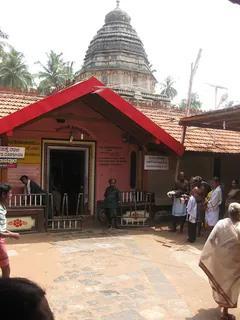
Mahabaleshwar Temple of Gokarna
The Mahabaleshwar Temple at Gokarna on the Karnataka coast houses an aniconic liṅga known as the Ātmaliṅga. Dated by tra…
 400 CE
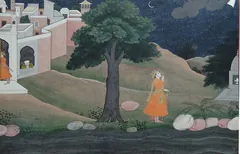
Kālidāsa's Meghadūta, the Cloud Messenger
The Meghadūta, attributed to Kālidāsa around the 4th to 5th century CE, is a Sanskrit lyric poem in which an exiled yakṣ…
- 400 CE
The Little Clay Cart, a Sanskrit Drama of Ordinary Life
The Mṛcchakaṭika, rendered in English as the Clay Cart, is a Sanskrit play in ten acts attributed to Śūdraka, perhaps of…
- 400 CE
Viśākhadatta's Mudrārākṣasa Stages the Rise of Chandragupta
The Mudrārākṣasa, a Sanskrit play by Viśākhadatta, dramatises the rise of Chandragupta Maurya through political intrigue…
 400 CE
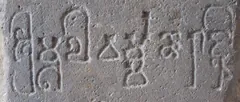
Mūlavarman and the Kutai Yūpa Inscriptions
Mūlavarman was a king of Kutai Martadipura in eastern Borneo around 400 CE. Our knowledge of him rests on seven yūpa ins…
 400 CE
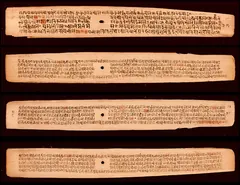
The Nāradasmṛti, a Law Code of Procedure
The Nāradasmṛti is a Dharmaśāstra text focused only on law and court procedure, which sets it apart from works mixing la…
- 400 CE
The Navaratnas, Nine Jewels of a Royal Court
The Navaratnas are the nine learned figures said in tradition to have adorned a great king's court, among them poets, as…
- 400 CE
The Pauliṣa Siddhānta and Greek Astronomy in India
The Pauliṣa Siddhānta names several Indian astronomical treatises, at least one based on a Greek source. An earlier vers…
- 400 CE
Pūrṇavarman Builds Canals and Carves Royal Stones
Pūrṇavarman was a fifth-century king of Tarumanagara in West Java, remembered through stone inscriptions describing a wa…
 400 CE
Kālidāsa's Raghuvaṃśa, Epic of the Raghu Line
The Raghuvaṃśa is a Sanskrit mahākāvya by the poet Kālidāsa, usually placed in the fifth century CE during the Gupta age…
- 400 CE
The Romaka Siddhānta, Astronomy from the West
Known as the Doctrine of the Romans, the Romaka Siddhānta is one of five astronomical systems summarised in Varāhamihira…
 400 CE
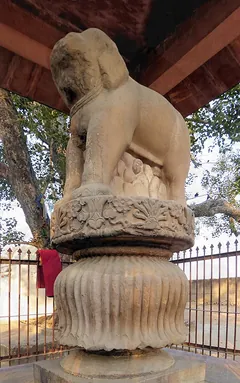
Sāṅkāśya, Where the Buddha Descended From Heaven
Sāṅkāśya, now identified with Sankisa Basantapur in Uttar Pradesh, is revered in Buddhist tradition as the place where t…
- 400 CE
Īśvarakṛṣṇa Systematises Sāṃkhya
The Sāṃkhya school sees reality as two independent principles, conscious puruṣa and active prakṛti. Its earliest survivi…
 400 CE
Sūrya Siddhānta, an Astronomical Treatise
The Sūrya Siddhānta is a Sanskrit astronomical text in the siddhānta tradition, presented as a revelation from the Sun g…
- 400 CE
Tarumanagara, an Early Indianised Kingdom in West Java
Tarumanagara was an early Indianised kingdom in western Java whose king Pūrṇavarman left the oldest known inscriptions o…
 400 CE
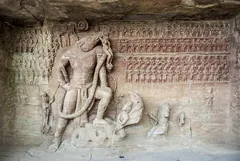
Udayagiri Caves and the Great Boar Relief
The Udayagiri caves near Vidiśā, in Madhya Pradesh, are rock-cut shrines carved in the early fifth century under the Gup…
- 400 CE
The Lost Vasishtha Siddhanta of Early Indian Astronomy
The Vasishtha Siddhanta was one of the earliest astronomical systems used in India, ascribed to the sage Vasishtha. The …
 400 CE
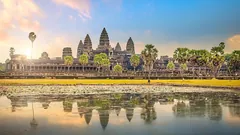
Vāstu Śāstra, the Traditional Science of Architecture
Vāstu Śāstra is the traditional Indian system of architecture and spatial design, set out in ancient texts on layout, me…
 400 CE
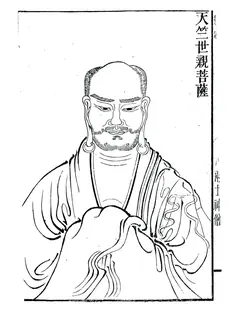
Vasubandhu and Yogācāra Philosophy
Vasubandhu, a Buddhist monk active around the fourth to fifth centuries CE, ranks among India's most influential philoso…
 401 CE
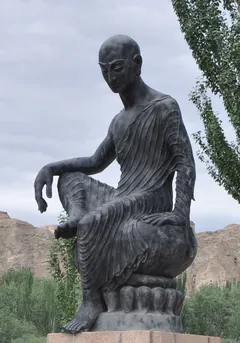
Kumārajīva Settles in Chang'an as Translator
Kumārajīva, a Buddhist monk from Kucha who lived from 344 to 413 CE, settled in Chang'an around 401 and led a team that …
 412 CE
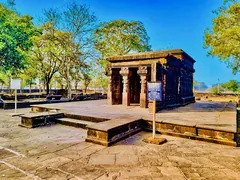
Kankali Devi Temple at Tigawa
The Kankali Devi temple at Tigawa in Madhya Pradesh, dated to about 400-425 CE, is a small Gupta-period shrine and one o…
 415 CE
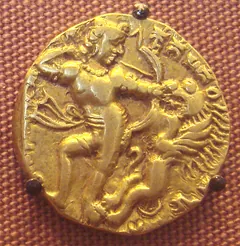
Kumāragupta I, Gupta Emperor of a Long Peace
Kumāragupta I, also called Mahendrāditya, ruled the Gupta empire from about 415 to 455 CE. Son of Candragupta II, he hel…
 420 CE
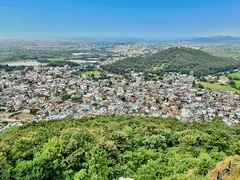
Ramṭek Hill Becomes a Vākāṭaka Sanctuary
Shrines have stood on Ramṭek Hill, near Nagpur in Maharashtra, since at least the early fifth century CE, when the Vākāṭ…
- 420 CE
Pravarasena II of the Vākāṭaka Dynasty
Pravarasena II ruled the Vākāṭaka line of Nandivardhana-Pravarapura from about 420 to 455 CE. His mother Prabhāvatīguptā…
- 420 CE
The Vishnukundinas Rule the Deccan from Denduluru
The Vishnukundina dynasty ruled parts of Andhra Pradesh, Telangana, Maharashtra and Odisha between the fifth and seventh…
 425 CE
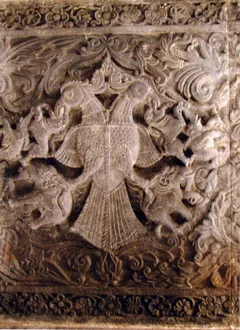
Kākusthavarman Raises Kadamba Power to Its Height
Kākusthavarman ruled the Kadamba kingdom of South India from about 425 to 450 CE, succeeding his brother Raghu. Under hi…
 427 CE
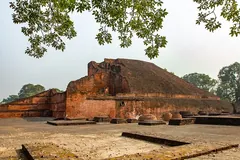
Founding of Nālandā Mahāvihāra
Nālandā was a great Buddhist monastery in Magadha, near Rājagṛha in present-day Bihar, established around 427 CE under t…
- 430 CE
Buddhaghosa at the Mahāvihāra of Anurādhapura
Buddhaghosa, a Theravāda monk of the fifth century, worked at the Mahāvihāra monastery in Anurādhapura, Sri Lanka. His V…
- 450 CE
Bhartṛhari and the Philosophy of Language
Bhartṛhari, who flourished about the fifth to sixth century CE, was a Sanskrit grammarian and philosopher of language. H…
- 450 CE
Haḷmiḍi Inscription, Earliest Known Kannada Record
The Haḷmiḍi inscription is the oldest known inscription in the Kannada language, written in the Kadamba script and usual…
 450 CE
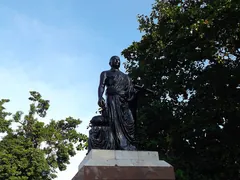
Ilango Adigal and the Song of the Anklet
Ilango Adigal, a Jain monk of the Chera royal family, is traditionally credited with the Tamil epic Cilappatikaram, the …
- 450 CE
Kāmandaka Composes the Nītisāra on Statecraft
The Nītisāra, or Essence of Statecraft, is an ancient Indian treatise on politics attributed to Kāmandaka, traditionally…
- 450 CE
Undavalli Rock-Cut Caves Near Vijayawada
The Undavalli caves, cut into a sandstone hill in Guntur district of Andhra Pradesh southwest of Vijayawada, are monolit…
- 450 CE
Bhartṛhari Composes the Trikāṇḍī on Language
Bhartṛhari, a fifth-century grammarian and philosopher, wrote the Trikāṇḍī, a Sanskrit work in three books on the philos…
 455 CE
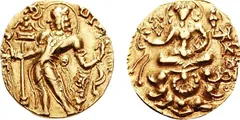
Skandagupta, Last of the Great Guptas
Skandagupta ruled the Gupta Empire of northern India from about 455 to 467 CE. His Bhitari pillar inscription claims tha…
 460 CE
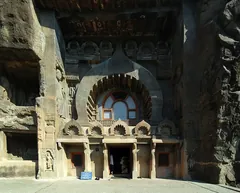
Ajanta Caves
The Ajanta Caves in Maharashtra are about thirty rock-cut Buddhist monasteries and prayer halls carved into a horseshoe …
 464 CE
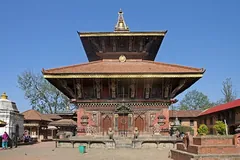
Manadeva's Inscription at Changu Narayan
Changu Narayan, a Viṣṇu temple on a hill near Bhaktapur in Nepal, is among the oldest Hindu temples in the country. Its …
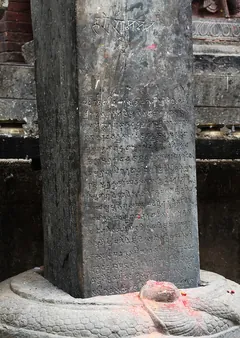 464 CE
Mānadeva Rules Licchavi Nepal
King Mānadeva of the Licchavi dynasty of Nepal, who lived from 464 to 505, was the son of Dharmadeva. He subdued feudal …
 475 CE
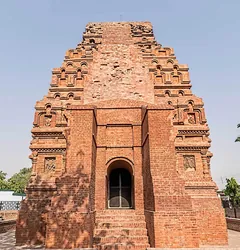
The Brick Temple at Bhitargaon
The Bhitargaon temple near Kanpur in Uttar Pradesh is the largest brick temple to survive from the Gupta period. Dated t…
 475 CE
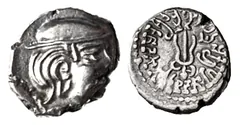
Maitrakas of Valabhi Rise After the Guptas
The Maitraka dynasty held the Valabhi kingdom of western India between about 475 and 776 from Vallabhi. Founded by Bhaṭā…
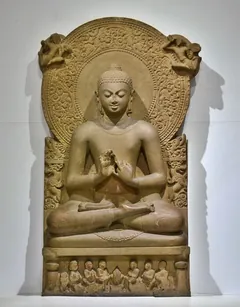 475 CE
The Buddha Preaching, Sarnath Sculpture
A fifth-century stone relief from Sarnath shows the Buddha in the teaching posture, turning the wheel of dharma. Excavat…
- 477 CE
Budhagupta Rules the Late Gupta Empire
Budhagupta, son of Purugupta and successor to Kumāragupta II, reigned as a Gupta emperor from about 476 to 495 CE. He wa…
- 480 CE
Dignāga Founds Buddhist Logic and Epistemology
Dignāga, who lived around 480 to 540 CE, was a Buddhist philosopher regarded as a founder of Indian logic and of the Bud…
- 480 CE
Harisena and the Vakataka Patronage of Ajanta
Hariṣeṇa, who reigned from about 480 to 510, was the final known king of the Vākāṭaka dynasty's Vatsagulma line and foll…
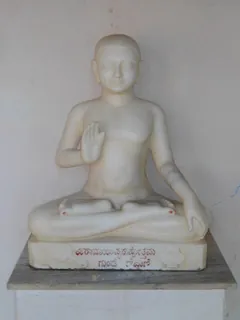 480 CE
Siddhasena Divakara, Jain Logician of the Sanmatitarka
Siddhasena Divakara was a Shvetambara Jain monk of about the fifth century CE who wrote on Jain philosophy and epistemol…
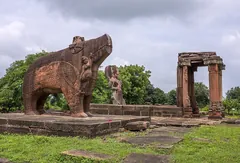 484 CE
Eran, Gupta-Age Mint Town and Home of the Great Boar
Eran, in Madhya Pradesh, was an ancient mint town and administrative centre of the Gupta Empire. Its fifth- and sixth-ce…
- 493 CE
Toramāṇa Leads the Alchon Huns into India
Toramāṇa, king of the Alchon Huns from about 493 to 515, made himself master of the Punjab and pushed into central and n…
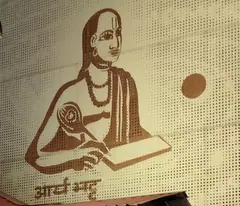 499 CE
Aryabhata composes the Āryabhaṭīya
The astronomer Aryabhata states that he completed the Āryabhaṭīya in 499 CE, at the age of twenty-three. The short Sansk…
 500 CE
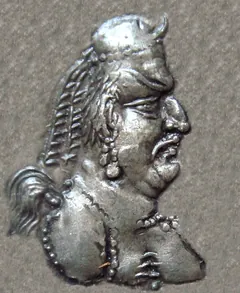
Alchon Huns Invade North India
The Alchon Huns were a nomadic people who built states in Central Asia and the north-western subcontinent from the late …
 500 CE
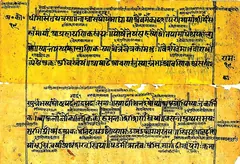
The Amarakośa, a Sanskrit Thesaurus by Amarasiṃha
The Amarakośa, formally the Nāmaliṅgānuśāsana, is a Sanskrit thesaurus by Amarasiṃha, probably of about the sixth centur…
 500 CE
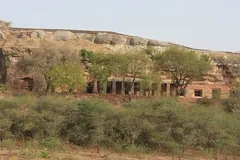
Bagh Caves and Their Murals
The Bagh Caves are nine rock-cut Buddhist monuments on the southern slopes of the Vindhya hills near Bagh in Dhar distri…
- 500 CE
The Gupta-Era Śiva Temple at Bhumara
The Bhumara temple near Satna in Madhya Pradesh is a Gupta-period stone shrine to Śiva from the fifth or sixth century. …
 500 CE
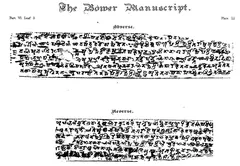
Bower Manuscript, Early Indian Medicine on Birch Bark
The Bower Manuscript is a group of seven fragmentary Sanskrit treatises on birch bark, found in a stupa near Kucha in no…
 500 CE
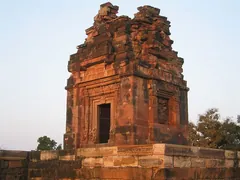
Daśāvatāra Temple at Deogarh
The Daśāvatāra Temple at Deogarh, in Lalitpur district of Uttar Pradesh near the Betwa River, is a Gupta-period shrine t…
 500 CE
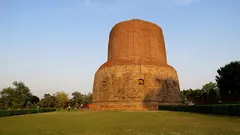
Dhamek Stūpa Marks the First Sermon at Sārnāth
The Dhamek Stūpa is a massive monument in the Deer Park at Sārnāth, Uttar Pradesh, built to mark where the Buddha first …
- 500 CE
Indian Mathematicians Devise the Decimal Place-Value System
Between about the first and fourth centuries, Indian mathematicians developed the base-ten positional numeral system now…
 500 CE
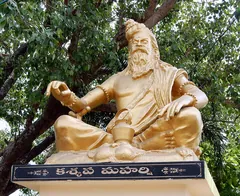
Kāśyapa Saṃhitā, an Ayurvedic Treatise on Childhood
The Kāśyapa Saṃhitā, also called Vṛddha Jīvakīya Tantra, is an Ayurvedic treatise attributed to the sage Kāśyapa and cou…
- 500 CE
Maṇimēkalai, the Buddhist Tamil Epic
Maṇimēkalai is a Tamil epic by Cīttalai Cāttaṉār, a sequel to the Cilappatikāram that follows the daughter of Kōvalaṉ an…
 500 CE
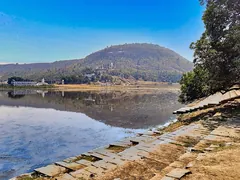
Nachna Temples, Early Stone Shrines of Central India
Hindu temples at Nachna-Kuṭhārā, in Madhya Pradesh's Panna district, rank with the oldest stone temples still standing i…
- 500 CE
Nālaṭiyār, Four Hundred Quatrains of Jain Ethics
The Nālaṭiyār is a Tamil didactic poem of four hundred quatrains, composed by Jain authors in the post-Sangam age, rough…
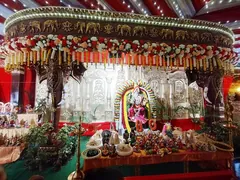 500 CE
Navarātri, Nine Nights Honouring the Goddess
Navarātri is an annual Hindu festival of nine nights honouring Śakti through the worship of nine forms of the goddess Du…
- 500 CE
Praśastapāda and the Vaiśeṣika Compendium
Praśastapāda was an ancient Indian philosopher who wrote the Padārthadharmasaṅgraha, a collection on the properties of t…
- 515 CE
Mihirakula, Last Alchon Hun King, Reigns in the Northwest
Mihirakula, son of Toramāṇa, was the second and final king of the Alchon Huns in north-west India, ruling from 515 to 54…
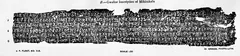 520 CE
Matṛceṭa's Sun Temple Inscription at Gwalior
A sixth-century Sanskrit inscription from Gwalior Fort records the building of a Sūrya temple on the Gopa hill. Though l…
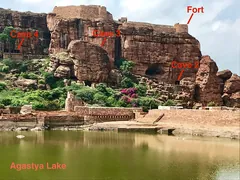 540 CE
Badami Cave Temples Carved in Chalukya Vātāpī
The Badami cave temples, cut into sandstone at Vātāpī, the early Chalukya capital in Karnataka, include Hindu, Jain and …
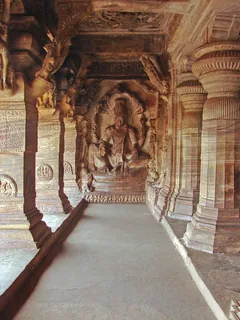 543 CE
Pulakeśin I Founds Vātāpi and Claims Sovereignty
Pulakeśin I, who reigned from about 543 to 566 CE, was the earliest sovereign king of the Chalukyas of Vātāpi, now Bādām…
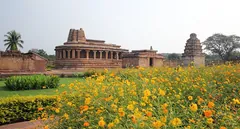 550 CE
Aihole, Cradle of Chalukya Temple Experiment
Aihole, in Karnataka's Bagalkot district, holds over a hundred Hindu, Jain and Buddhist stone and cave monuments, built …
- 550 CE
The Buddhas of Bamiyan Carved in the Afghan Valley
The two colossal Buddhas of the Bamiyan Valley in Afghanistan, 38 and 55 metres tall, were carved into a cliff in the si…
- 550 CE
Bhāravi and the Kirātārjunīya
Bhāravi, a sixth-century poet, wrote the Kirātārjunīya, one of the six great mahākāvyas of classical Sanskrit. The poem …
- 550 CE
Daṇḍin and the Tale of Ten Princes
Daṇḍin was a Sanskrit author traditionally credited with the Daśakumāracarita, 'Adventures of the Ten Princes', a lively…
- 550 CE
Varāhamihira Compiles the Pañcasiddhāntikā at Ujjain
The Pañcasiddhāntikā is a sixth-century Sanskrit work by the astronomer-astrologer Varāhamihira, written at Ujjain. It c…
- 550 CE
Uddyotakara Defends Nyāya in the Nyāyavārttika
Uddyotakara, a sixth-century philosopher of the Nyāya school, wrote the Nyāyavārttika to defend Vātsyāyana's commentary …
- 550 CE
Varāhamihira and the Bṛhat Saṃhitā
Varāhamihira (c. 505 to 587 CE), an astronomer and mathematician of Ujjain, ranks among the leading scholars of classica…